
New research is renewing fears that California’s long-discussed “Big One” earthquake may pose an even larger threat than earlier estimates suggested, with Southern California facing the possibility of severe and far-reaching destruction.
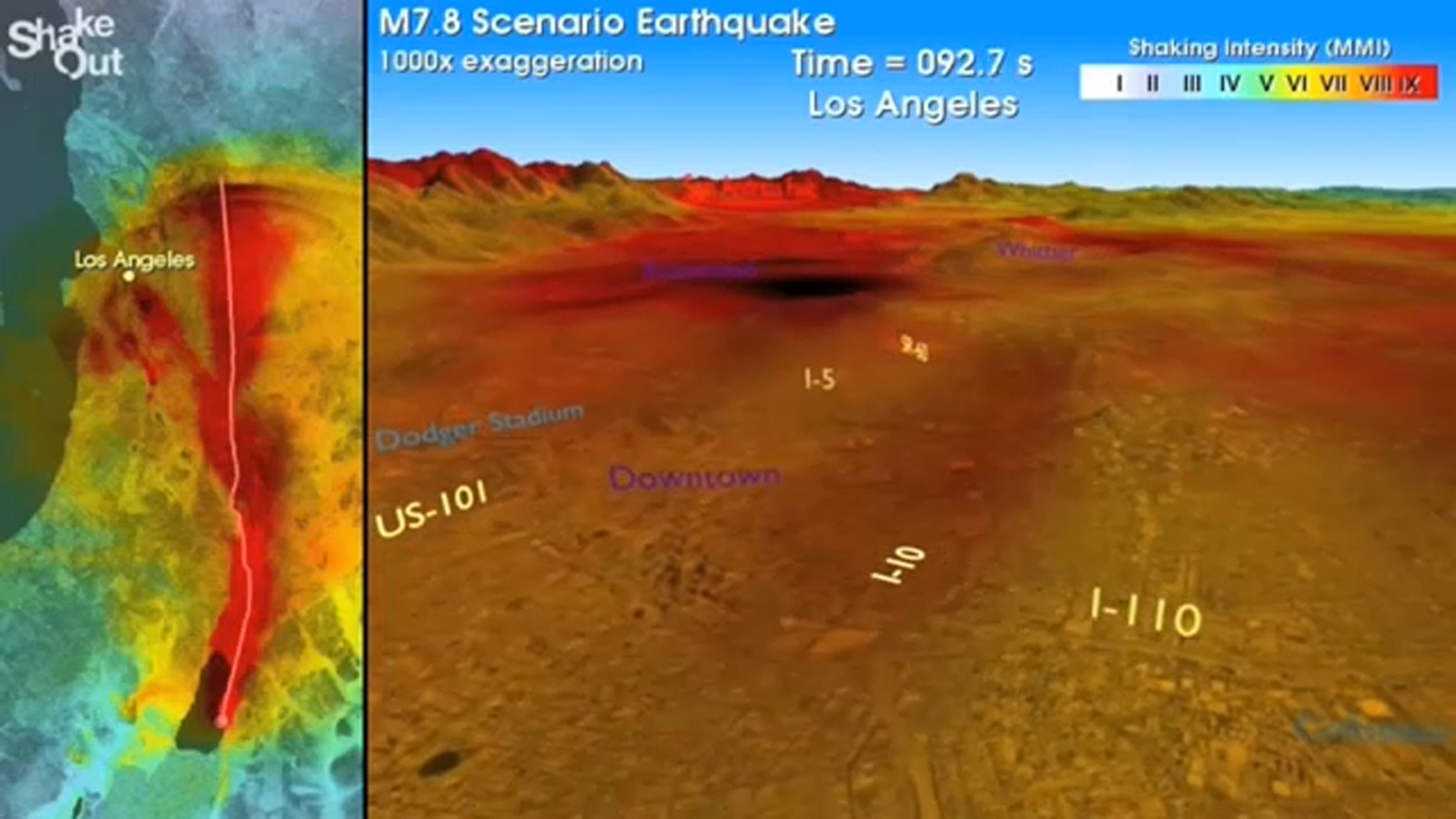
For years, earthquake experts have pointed to the San Andreas Fault as one of the state’s most dangerous seismic hazards. In 2008, scientists created a major earthquake scenario showing what could happen if a magnitude 7.8 rupture tore through the fault, triggering close to two minutes of intense shaking.
“It is the longest fault in California and therefore capable of the biggest earthquakes,” said Dr. Lucy Jones, the Caltech seismologist who played a key role in developing that earthquake model.
According to the simulation, a quake of that size could lead to hundreds of fatalities and cause damage totaling in the billions of dollars.
“We know how it’ll happen. We know what the shaking will be, and that’s what these models are showing that if we run these, this is the best science put together,” Jones said.
Jones said the California earthquake scenario has similarities to the powerful quake that hit Venezuela in June.
“It’s the same type of what’s called a transform fault,” Jones said. “It began west of Caracas and then ruptured towards Caracas, therefore helping focus energy into the heavily populated areas. We think that’ll happen here as well.”
Still, even with decades of scientific study and advanced earthquake modeling, experts stress that no one can predict exactly when a major earthquake will strike.
“It could go another 100 years. It could be tomorrow. It could be, you know, next minute,” Jones said.
The new study found that stress levels along parts of Southern California’s fault system may be higher than previously understood.
READ MORE: Lara Trump, 43, Stuns Fans With Toned Biceps and Ripped Abs in Fitness Photos
“What we’ve found now is that, you know… stresses are naturally high, and they’re actually in some places, the highest that we’ve seen in all of these 1,000 years,” said Liliane Burkhard, a geophysicist at the University of Bern.
Researchers said a significant earthquake at Cajon Pass, where the San Andreas and San Jacinto faults meet, could damage critical infrastructure across several cities.
“Aqueducts actually cross the San Andreas Fault, and if something happens, you might not have water for a while,” Burkhard said.
California has spent decades preparing for major earthquakes through mandatory building retrofits and updates to building codes. However, Jones said the consequences of a major quake could extend beyond physical damage.
“We underestimate the social disruption and the economic disruption. We are so focused on our fear of dying, that we forget to be afraid of being bankrupted,” Jones said.
Experts continue to encourage residents to prepare for future earthquakes by retrofitting their homes, maintaining emergency supplies and establishing communication plans.
Jones said taking immediate protective action during an earthquake can save lives.
“If you use those few seconds to get under a strong table, you now can at least get dug back out. So we say drop, cover, hold on, and it really is the safest thing to do,” she said.
CNN contributed to this report.
Copyright © 2026 KABC Television, LLC. All rights reserved.