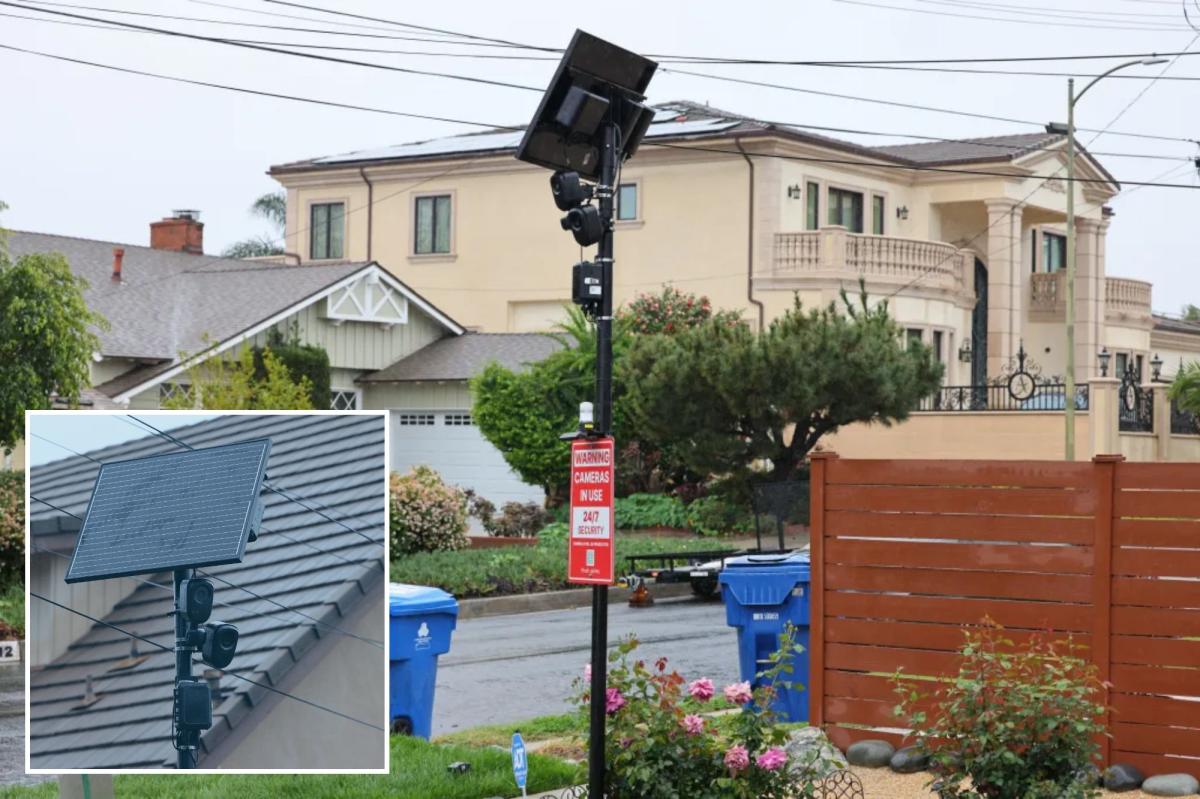
San Diego is shutting down roughly 500 automated license plate readers after intense public backlash over how police used the surveillance technology.
The City Council voted 7–0 Monday to suspend the Flock Safety cameras. In a separate and unexpected 5–2 vote, council members also moved to stop the city’s Smart Streetlights program, potentially paving the way to cancel a nearly $12 million contract covering both systems.
San Diego Police Chief Scott Wahl told the California Post that the department respected the council’s decision and would coordinate with Flock Safety to deactivate the network.
“I want to acknowledge the work that our teams have put in over the years on these technologies,” Wahl said.
“Our officers and detectives will continue to provide the highest quality service when investigating crimes throughout our city.”
San Diego police officials told The Post they expected to present a plan by the end of the week for dismantling the hundreds of cameras installed across the city.
Officer access to the system was cut off at noon Tuesday, and all of the cameras had been switched off by 10 p.m. that night.
The decision followed three hours of public testimony Monday, as residents—including Gen Z students and millennials—questioned who could access the data and whether federal immigration authorities might obtain it, according to The Times.
However, the program’s use in a police internal affairs investigation appears to have pushed one of its former supporters to change course.
Councilmember Raul Campillo said he reconsidered his position after learning that police had used license plate data in an investigation involving an officer who had a relationship with a domestic violence victim.
Voice of San Diego reported that officers used the technology to track the victim. The department said its policy permitted investigators to use the readers as part of the case involving the officer, according to CBS8.
The officer has since left the department.
“I expected more,” Campillo told Wahl during the meeting. He said council members had trusted the department to understand “the bigger picture of what the public expectation was.”
KEEP READING: Students at $90K-a-Year College Fight Off Dorm Intruder Accused of Choking Woman
Residents also cited two cases previously reported by The Times. In one, an incorrect plate-reader alert led to a man spending months in jail for a crime he did not commit. In another, a stolen-vehicle alert came before police shot a 19-year-old passenger, even though the vehicle’s owner said it had not been stolen.
Councilmember Sean Elo-Rivera said the incidents raised fundamental concerns about the presumption of innocence. “ALPRs seem to turn that whole thing upside down,” he said, referring to automated license plate readers.
Police defended the cameras as an investigative tool that allowed detectives to work more quickly.
Councilmember Marni von Wilpert, who sought a pause and clearer rules before the vote, said the readers had assisted police in more than 900 cases involving kidnappings, homicides, stolen vehicles and gun recoveries.
Mayor Todd Gloria, a longtime supporter of the program, said before the vote that he would respect whatever decision the council made.
“Flock Safety and the City’s use of this technology have clearly lost public trust, and that cannot be ignored,” Gloria said in a statement to the outlet.
A Flock Safety spokesperson told The Post that the company respected San Diego’s decision and would work with the city on next steps, while warning that ending the program could affect public safety.
“The San Diego Police Department has solved countless crimes and made a measurable public safety impact with Flock technology,” the company said. “When a tool that is actively helping solve violent crimes is removed, public safety moves backward.
“That has real consequences: cases will take longer to solve, organized retail theft crews will operate with fewer obstacles, a missing child may not be returned home, and victims may wait longer, or indefinitely, for justice.”
The city’s contract with Flock and Smart Streetlights provider Ubicquia remains in effect for now.
The two systems are bundled under the same agreement. A police department official told council members that withdrawing approval for both programs could give the city grounds to terminate the contract, although officials may also seek to renegotiate its terms.
A $2 million payment for the next year of service is due in December.
The California Post contacted the San Diego City Council for comment.


