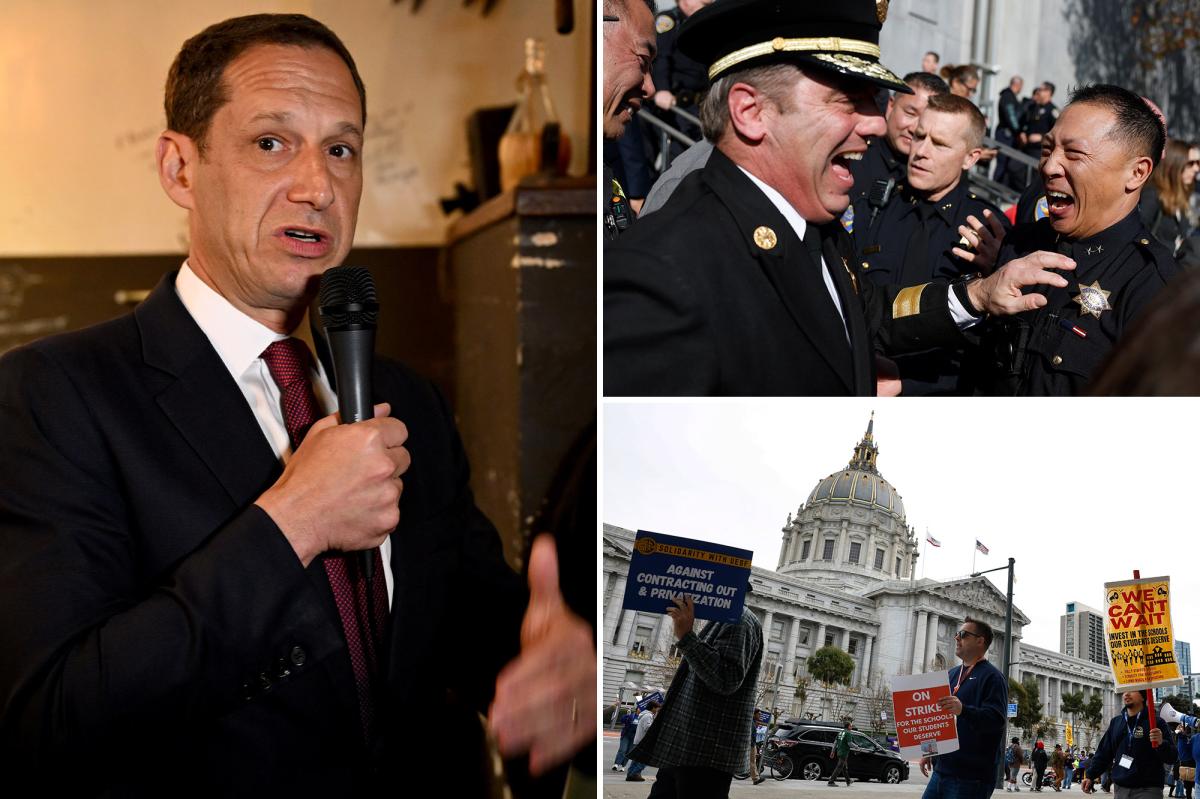


San Francisco Mayor Daniel Lurie has unveiled a historic budget of nearly $17 billion, earmarking significant pay increases for police and fire personnel while steering clear of extensive layoffs, even as the city grapples with long-term deficits amounting to hundreds of millions of dollars.
Lurie’s $16.9 billion biennial budget aims to fuel San Francisco’s revival, a theme he frequently champions, while addressing persistent budgetary gaps. However, the plan could result in job losses for several hundred employees dependent on city funding.
“I understand the profound impact of these decisions. Yet, if we do not take action now, our structural deficit could escalate to $1 billion, making today’s tough choices even more challenging and costly in the future,” Lurie stated in his prepared remarks on Monday.
Lurie expressed optimism about the city’s progress, stating, “You can feel the momentum. Employment is rising. New businesses are launching. Muni ridership is reaching its highest levels since the pandemic.”
City unions are bracing for the impact following Lurie’s issuance of layoff notices to 127 city employees.
Meanwhile, workers in the nonprofit sector are anticipating up to 1,000 job cuts as the city scales back its large nonprofit agreements, which have exceeded $1.6 billion in recent years, according to a report by the San Francisco Standard.
“We are pleased and relieved to see that Mayor Lurie did not include further layoffs in the next year’s fiscal budget. San Francisco is at a pivotal moment in its recovery, and we cannot afford to go backward,” SEIU 1021 Vice President Kristen Hardy told the San Francisco Standard.
Police and firefighters will get hefty raises from Lurie’s budget amounting to 14% over four years as part of a labor agreement hashed out last month.
Lurie said a hiring freeze implemented last year had saved the city $130 million.
The budget comes just ahead of a critical June 2 election with potentially big implications for the city economy.
San Francisco voters are set to decide on Prop. D, a divisive ballot measure labeled the “Overpaid executive tax” that would slap an additional gross receipts levy on businesses with a large disparity between the compensation of local workers and top execs.
Lurie and allies in the business community have fiercely opposed the measure, claiming it will drive companies out of town and hurt San Francisco’s economic comeback.
A similar measure passed in 2020 by huge margins, but the tax was quietly undercut in a subsequent tax reform effort as city leaders strained to lure big businesses back downtown.
Prop. D proponents, who include the city’s major unions, claim the tax would raise $250 million annually.
Lurie told reporters he would not update the budget if Prop D. passes, saying the city needs to tighten its belt.