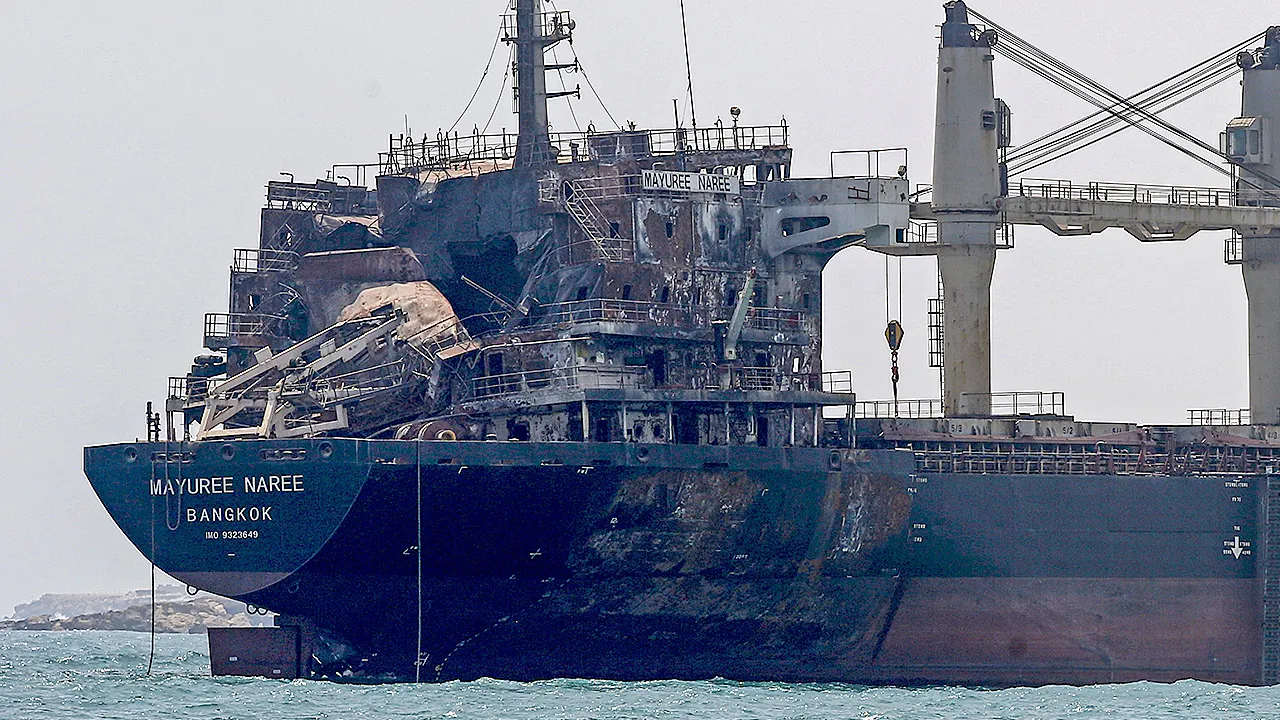

Sea mines have emerged once again as a major threat in the Strait of Hormuz after Iran said on Oct. 17 that two oil tankers caught fire when they struck the explosives, intensifying concerns about navigation through one of the world’s most vital shipping corridors.
The claim came as the International Maritime Organization (IMO) warned that mines posed a serious danger to ships using the strategic waterway. Tehran has also continued operating an unauthorized shipping route within its territorial waters.
“The information we have is that there are still mines in the traffic separation scheme. While the conflict is ongoing, it is very difficult for us to use third parties to verify that the area is clear of these hazards,” IMO Secretary-General Arsenio Dominguez told News Outlet.
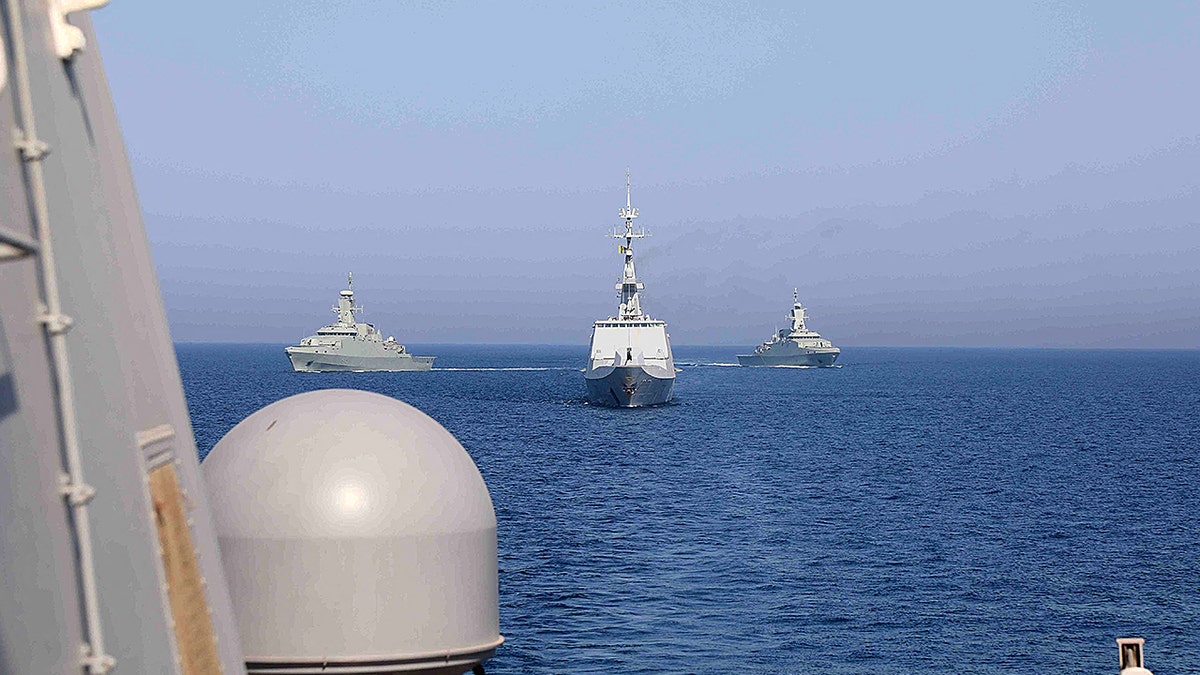
Mine countermeasures ship USS Dextrous (MCM 13) (not pictured) sails with ships participating in the Oman-led exercise Khunjar Hadd in the Gulf of Oman. Dextrous is deployed to the U.S. 5th Fleet area of operations to help ensure maritime security and stability in the Middle East Region. (U.S. Naval Forces Central Command/U.S. 5th Fleet/Handout via REUTERS)
“In the meantime, we cannot guarantee that a vessel attempting to transit that route will not strike a mine.”
Iran’s Islamic Revolutionary Guard Corps (IRGC) navy said Saturday that two oil tankers caught fire after hitting naval mines while passing through the Strait of Hormuz, Reuters reported, citing Iran’s official Islamic Republic News Agency (IRNA).
According to Reuters, Iranian state media said the two vessels were carrying approximately 2 million barrels of crude oil.
IRNA said the tankers had turned off their positioning and radar equipment before attempting to follow a route through the strategic waterway that Iran had not authorized.
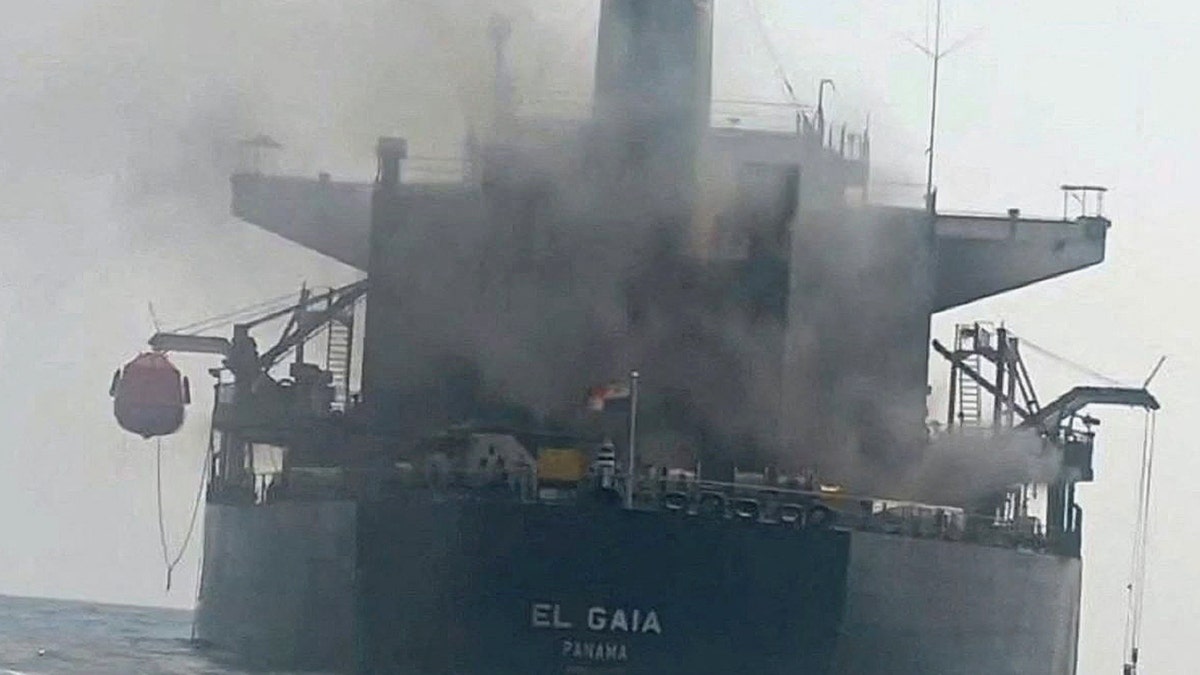
Smoke column rises from tanker El Gaia after incident in Strait of Hormuz
Reuters reported that the second tanker was disabled after striking a mine.
The alleged incidents occurred as Tehran continued operating a transit route within Iranian territorial waters and charging tolls and safety fees overseen by the IRGC. Washington and the IMO have rejected the arrangement, saying it conflicts with international maritime law.
For decades, international shipping through the narrow chokepoint has depended on an IMO-approved traffic separation scheme adopted in 1968.
“At present, there is only one route adopted in 1968 that is approved and recognized by the IMO and shown on the charts used by vessels,” Dominguez said.
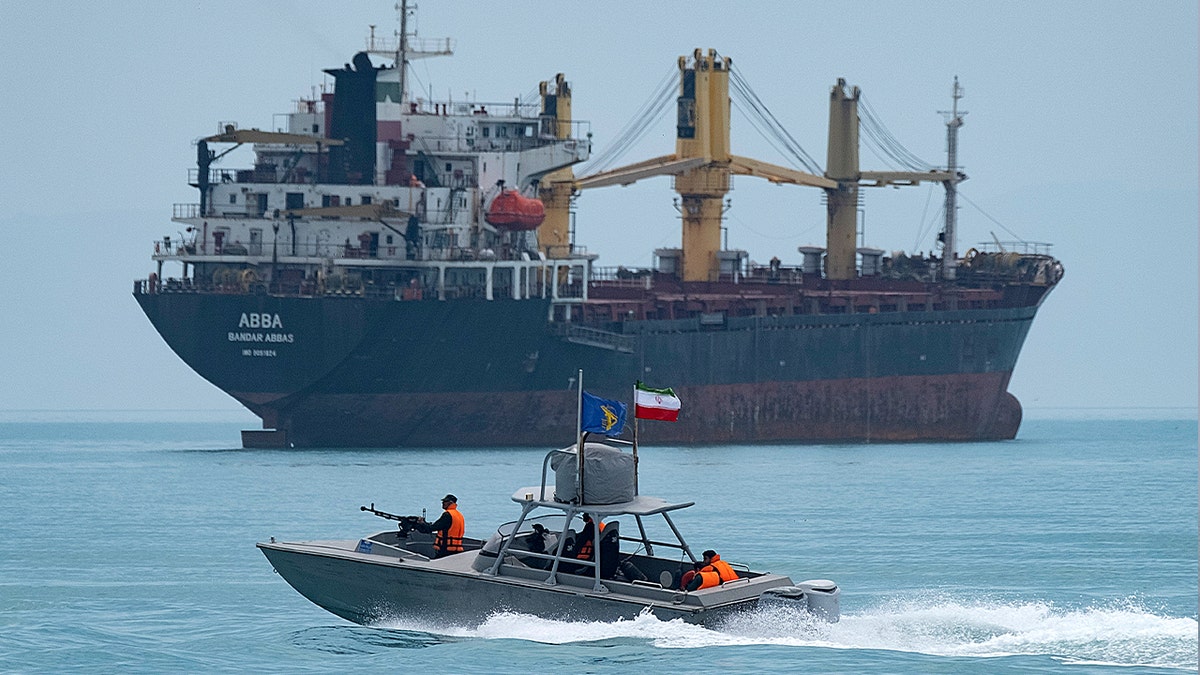
Attacks on vessels around the Strait of Hormuz have surged over the past two weeks. Senior Iranian officials also told Reuters that Tehran has shifted its strategy for attacking commercial vessels during that period. (Morteza Nikoubazl/NurPhoto via Getty Images)
“Only one route should be used for transit, but it is not currently clear of mines, meaning it is unsafe.”
“We have received confirmation from Iran that it established a temporary route in its waters,” he said, adding that the route had not received “official confirmation or a decision from the organization.”
CHECK THIS OUT: Trump Snaps at Reporter in Heated Exchange: ‘What’s Wrong With You?
“Any alternative route must be submitted to the organization and pass through the required processes, and we have not received that submission.”
“Iran has communicated with us about using that route because of the conflict,” Dominguez said.
“That is how it has been presented. However, anything we are asked to approve must go through the procedures of the international maritime organizations, with member states given the opportunity to review it.”
The latest developments came as negotiations between Washington and Tehran remained stalled over efforts to end the conflict and restore normal maritime traffic.
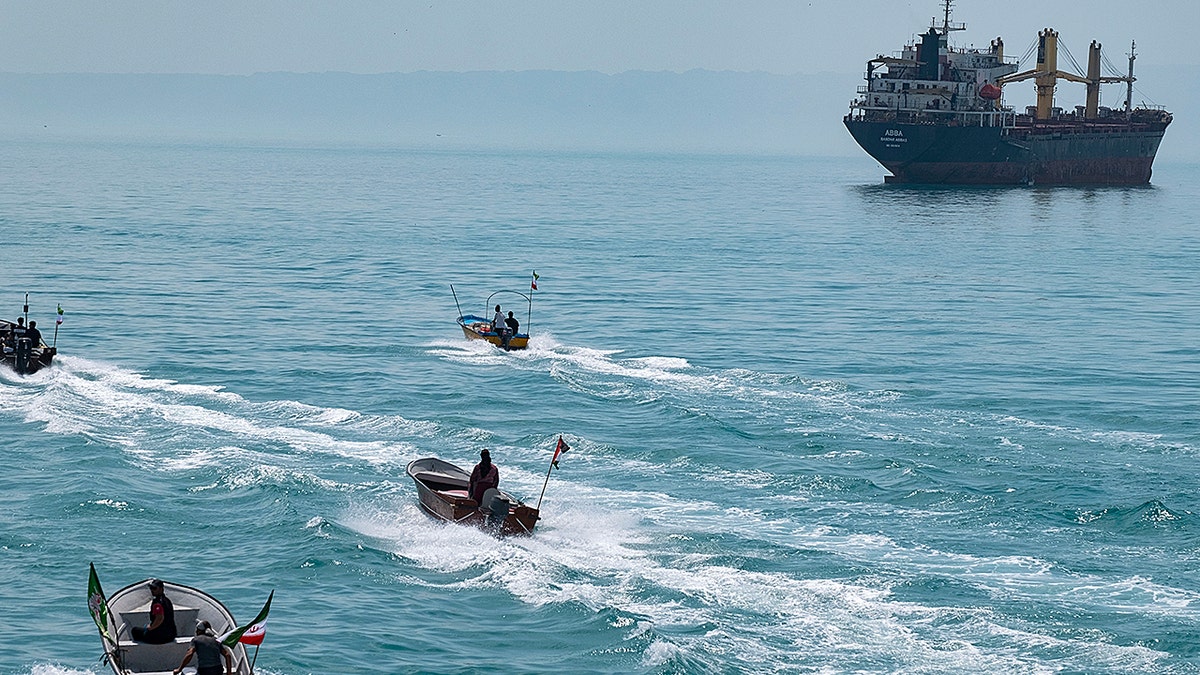
Basij paramilitary force speed boats are sailing along the Persian Gulf near a general cargo vessel ( Morteza Nikoubazl/NurPhoto via Getty Images)
Mohsen Rezaei, secretary of Iran’s Supreme National Security Council and a former Revolutionary Guard commander, said Tehran considered Washington’s latest response to negotiations “insufficient,” Reuters reported, according to IRNA.
Rezaei said the U.S. had accepted some of Iran’s seven conditions but that other issues remained unresolved, adding that Tehran was no longer responding to Washington and that the U.S. needed to clarify the outstanding matters.
Iranian Foreign Minister Abbas Araghchi said that Tehran had submitted a proposal to Washington through Qatar, which is mediating the negotiations, outlining conditions under which the Strait of Hormuz could reopen and normal maritime traffic resume within seven days.
“Our situation is clear and based on the seven-day proposal presented to the US. They shared comments which we are reviewing, but our proposal is still on the table and if there is any honesty on the US part, which there isn’t, the way to reopening the Strait of Hormuz is obvious,” Araqchi said in Baghdad, Reuters reported
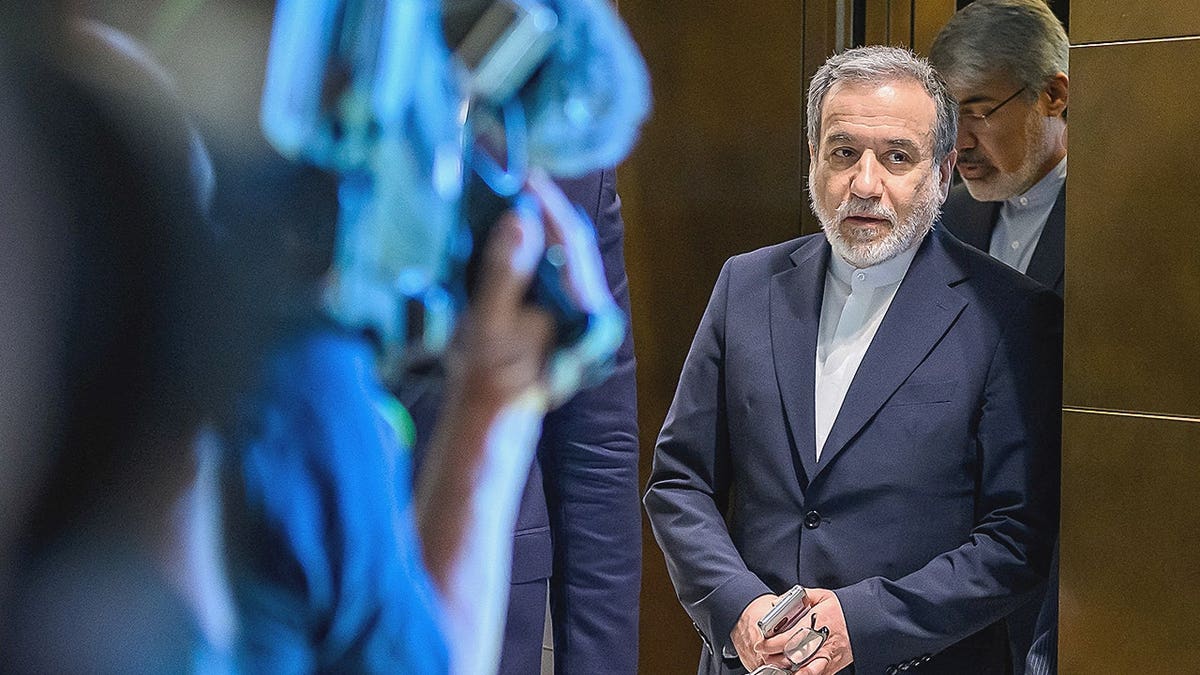
As U.S.-Iran talks opened Sunday in Switzerland, a dispute over who controls and monitors billions of dollars in potentially unfrozen Iranian assets emerged (Fabrice Coffrini/Pool via REUTERS)
Meanwhile, attacks on commercial vessels around the Strait of Hormuz have surged over the past two weeks.
Senior Iranian officials also told Reuters that Tehran has shifted its strategy for attacking commercial vessels during that period.
For commercial shipping operators, Dominguez warned that the continued threat of mines and attacks means the waterway has yet to return to normal operations.
The Strait of Hormuz is “not open for business in the way that it was before the conflict started,” he said.
“Our role right now is to prepare for when we have the opportunity to go back, resume the operations, follow all the procedures at IMO, but not until the root causes are addressed and those are beyond IMO.”
News Outlet reached out to U.S. Central Command (CENTCOM) for comment.