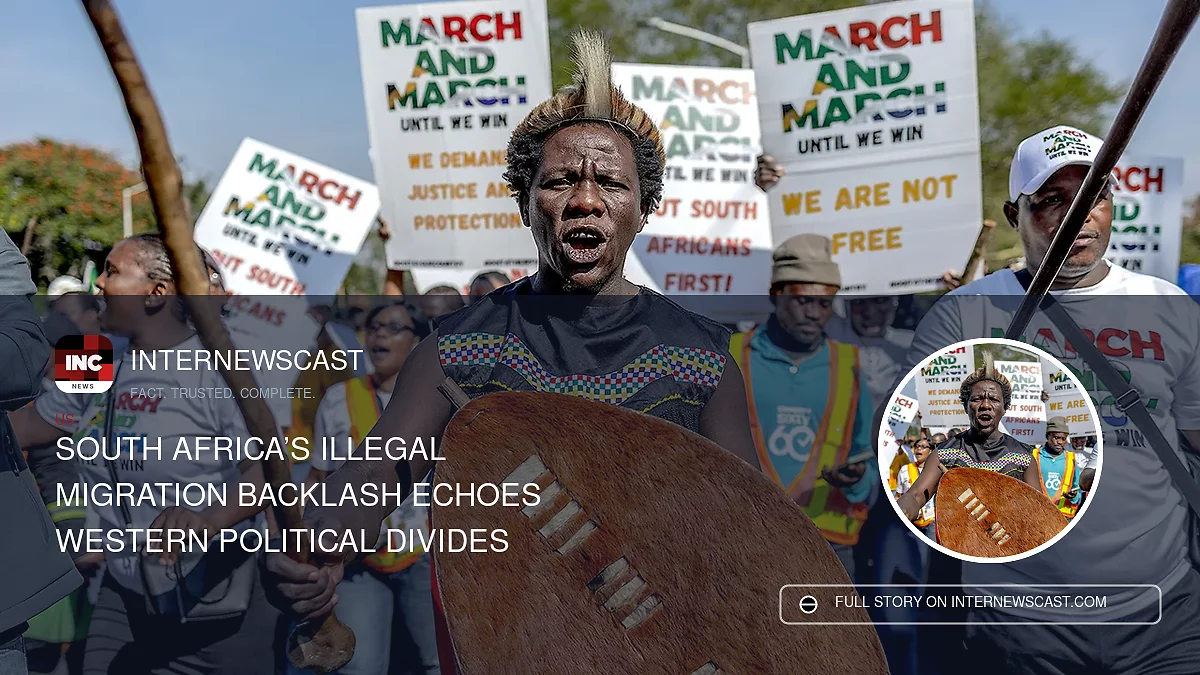

More than 160,000 undocumented migrants have left South Africa amid growing public anger over immigration enforcement, as large crowds of citizens have staged demonstrations demanding that foreign nationals without legal status depart the country. The unrest reflects a wider frustration, seen in parts of the West as well, over what critics describe as weak border controls and a lack of decisive government action.
One South African group has alleged that the country could be home to as many as 30 million undocumented immigrants, compared with an official citizen population of roughly 63 million. Many of those migrants are accused by opponents of contributing to crime, competing for scarce jobs, and placing additional pressure on public hospitals and state schools.
Tensions have played out sharply in communities including Soweto, outside Johannesburg, where some groups have reportedly moved from house to house ordering foreign nationals to leave by set deadlines. Reuters reported earlier this month that 900 people were detained during a day of protests across the country. Although many demonstrations remained peaceful, police intervened in several areas to break up violent crowds. One fatality was reported in the Johannesburg region.
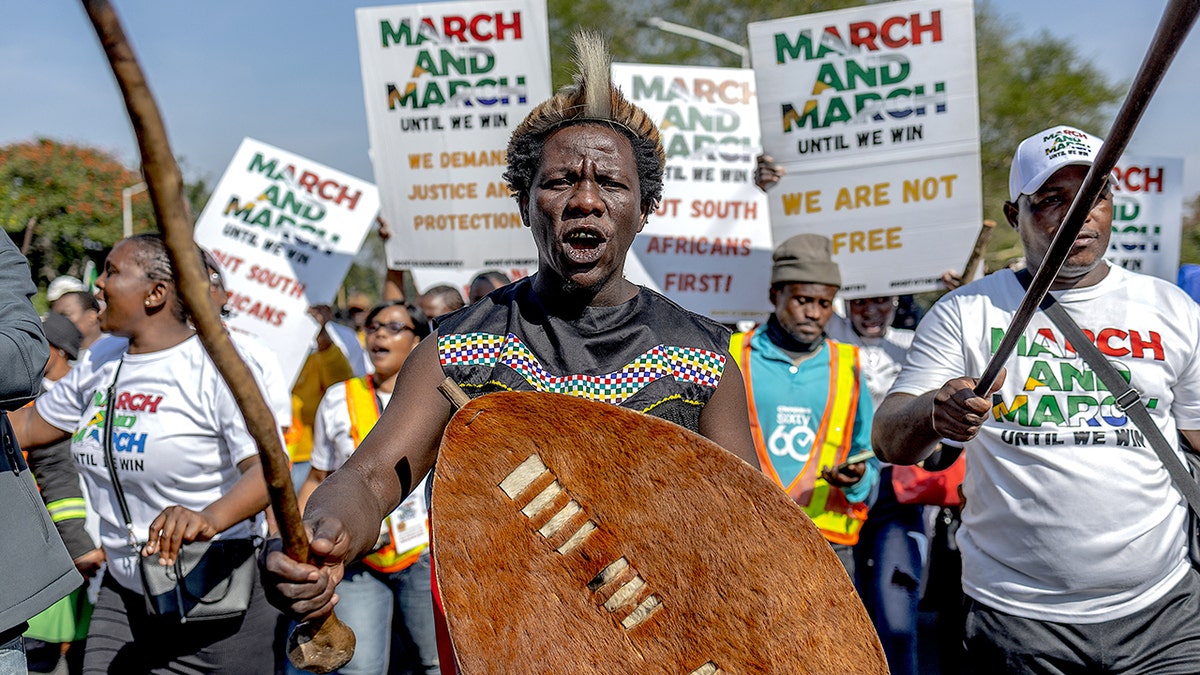
Members of the March and March movement carry placards and chant during a protest in Pinetown, south of Durban, on July 16, 2026. (Rajesh Jantilal/AFP via Getty Images)
Some migrants have boarded buses to leave South Africa, while others have been flown home through repatriation efforts organized by their countries of origin across the African continent. In one June flight bound for Ghana, South Africa’s border authority said 321 of the 332 Ghanaians attempting to depart from Johannesburg’s OR Tambo International Airport were determined to have been living in the country unlawfully.
As many as five migrants have reportedly been killed by protesters this year. Still, the March and March movement, widely regarded as South Africa’s most visible anti-immigration civic organization, insists it does not support violence. Its supporters have taken to the streets in multiple cities, often carrying large traditional sticks known as knobkerries, while urging foreign nationals to leave.
Jacinta Ngobese-Zuma, the founder and leader of the movement, told INC News that South Africans have reached a breaking point. “We’ve had enough,” she said, claiming the number of undocumented immigrants in the country is “between 15 and 30 million,” while acknowledging that the figure remains disputed and frequently debated.
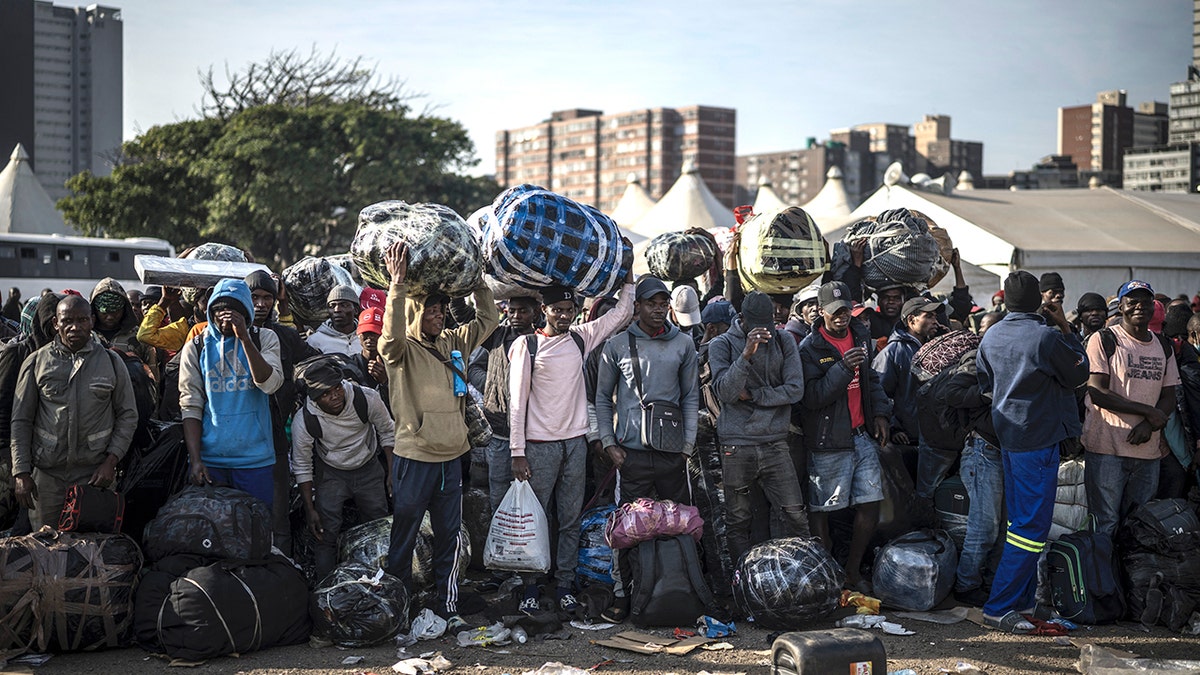
Undocumented migrants gather near a bus at the Durban Drive In in Durban on June 29, 2026, as they prepare to leave before the camp is closed and the operation is moved to the Zimbabwe border. South African President Cyril Ramaphosa pledged on June 25 to stop any efforts to destabilize the country ahead of planned anti-immigrant marches, following a surge in xenophobic tensions. (Marco Longari/AFP via Getty Images)
The number 30 million is contentious. The only official published figures are from a census taken in 2022 by Statistics SA, queried by some critics because the organization is controlled by the ANC government, under attack for reportedly causing the illegal immigration crisis and therefore seen to be benefiting from low statistics. The body claims there are up to 3 million immigrants in the country, but Ngobese-Zuma points out this figure includes people who have documents “they’re just using the numbers from those who were admitted to being in the country legally.”
Immigrants have frequently been seen running away when requested by officials, including Stats SA officials, to show their documents. The head of Statistics SA, Risenga Maluleke, even admitted to the local Eyewitness News that his officials don’t check information on the occasions that they can find immigrants, saying “when people say I was born outside South Africa, we take what they say because we have not had a way of proving it other than relying on what they say.”
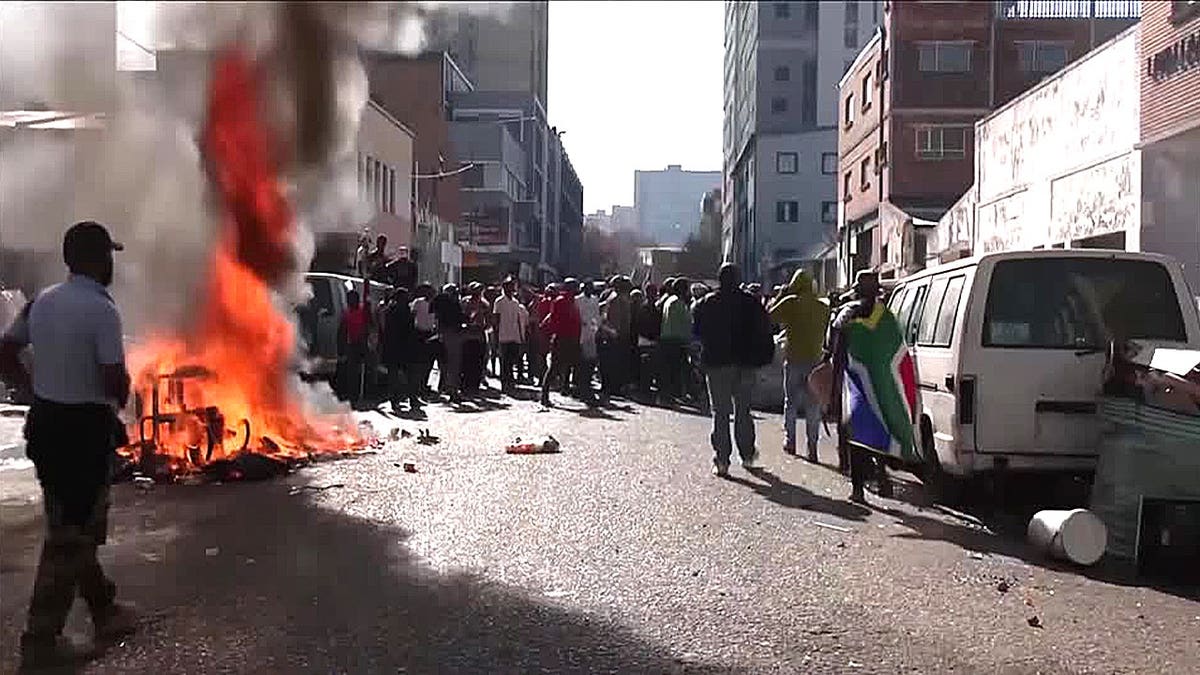
Protesters start a fire in the streets of Johannesburg, South Africa, on June 30, 2026. (Reuters)
Ngobese-Zuma added, “The country is being invaded, and we decided to do something about it. There’s too much crime going on at the hands of foreign nationals. The actual truth is that a lot of them go unfound because nobody knows who they are. They’re not on record. Their fingerprints are not on the system. So there [are] a lot of cases actually that are outstanding when it comes to the issue of illegal immigrants.”
Statistics South Africa recently reported that the official unemployment rate for the country is 32.7%. Yet almost all illegal immigrants have found work here, with the country’s president, Cyril Ramaphosa, admitting to the nation in a televised address last month, “Some employers hire undocumented immigrants because they pay them wages that are well below the minimum wage and make them work longer hours without due compensation.”
DHS ISSUES $84B IN FINES TO ILLEGAL IMMIGRANTS UNDER TRUMP ADMINISTRATION
This led March and March’s Ngobese-Zuma to say, “The issue of jobs is also very important. In our community, where there’s the highest unemployment in the world, it only makes sense that South Africans are out there demanding that they be prioritized when it comes to employment.”
Several reports claim that in a local Johannesburg government hospital, built to offer practically free care to South Africa’s citizens, patients, even in the ER, have to wait up to 36 hours to be seen, because so many foreigners come to the hospital and use the facilities. At least one patient has died waiting to be seen at the Helen Joseph hospital, near to the center of the city.
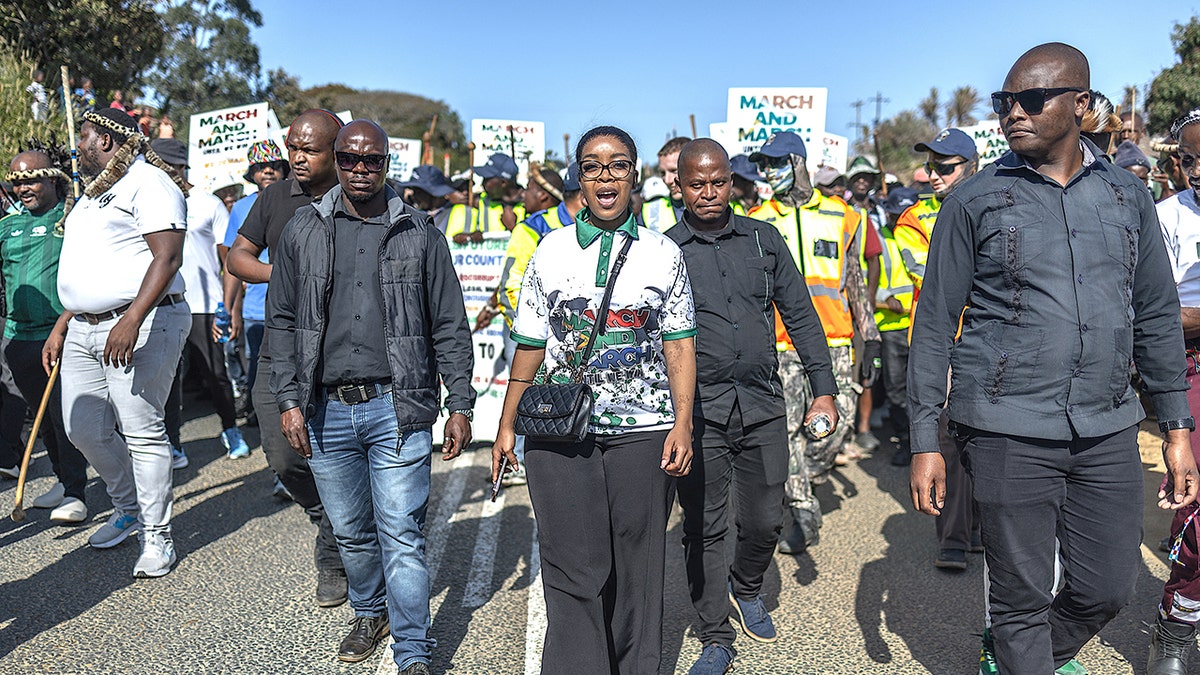
March and March leader Jacinta Ngobese-Zuma leads a demonstration in Mtwalume, south of Durban, on July 9, 2026. (Rajesh Jantilal/AFP via Getty Iamges)
Ngobese-Zuma pointed out, “We have a welfare (health and education) system in the country, and currently people are flocking in from all over the African continent and the world to come and take advantage of these free things that they think are free when it’s actually taxpayers that are paying for it.”
Border controls are so lax that it’s said hundreds of thousands have simply waded across low rivers in some cases to enter South Africa, with crocodiles a bigger problem than police or immigration officials. Bribery and corruption at border posts is endemic. But following the public outcry, and perhaps significantly with local elections coming up, President Ramaphosa has now vowed to “crack down” on immigration issues. As of July 11, the government claims a total of 53,449 foreign nationals have been processed for deportation and repatriation.
This represents less than 0.2% of the illegal immigrants said to be in the country by March and March. Public pressure groups, and politicians such as Herman Mashaba, are calling on the government to do much, much more. Mashaba is president of Action SA, a small but campaigning party in South Africa’s parliament that has been battling illegal immigration for 10 years.
Mashaba told INC News, “Action SA is deeply frustrated by the government’s weak and reactionary response to South Africa’s immigration crisis, which is ultimately the consequence of three decades of ANC (the ruling party) failure to secure our borders,”
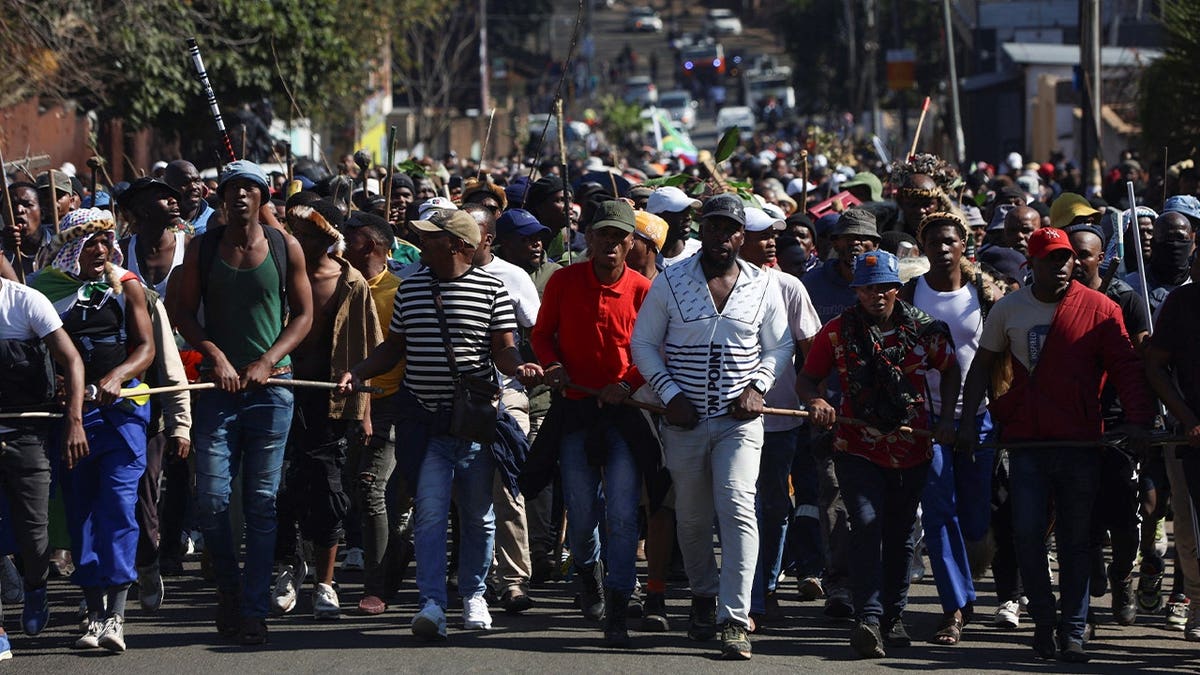
Anti-immigrant marchers walk through the streets of Johannesburg on the day of an unofficial deadline set by anti-immigrant groups for all undocumented migrants to leave, in Johannesburg, South Africa, June 30, 2026. (Reuters/Oupa Nkosi)
“Rather than presenting a meaningful shift in approach, which we believe must center on mass deportations and the urgent strengthening of immigration enforcement capacity, the government appears determined to simply repackage the same failed and outdated policies that have done nothing to address the consequences of weak border controls and chronic underinvestment in enforcing our immigration laws.”
“As in Europe, South Africans have turned against their government on immigration policy,” analyst Frans Cronje told INC News. Cronje, president of the Washington-based Yorktown Foundation for Freedom, added, “Polls conducted earlier this year ranked immigration as the second most pressing concern from South Africans behind unemployment. Overall, 23% of South Africans cited unemployment as the most pressing issue for the government to address, followed by 11.7% who cited immigration, 10.1% who cited corruption and 9.8% who cited crime.”
Cronje continued, “Black South Africans (82% of the population) were three times as likely as their White counterparts to see immigration as a problem for the government to address. Hostility toward immigrants runs very high with regular protest marches and threats and intimidation directed at immigrant communities who are accused of taking jobs and businesses from South Africans, and driving high levels of crime”.
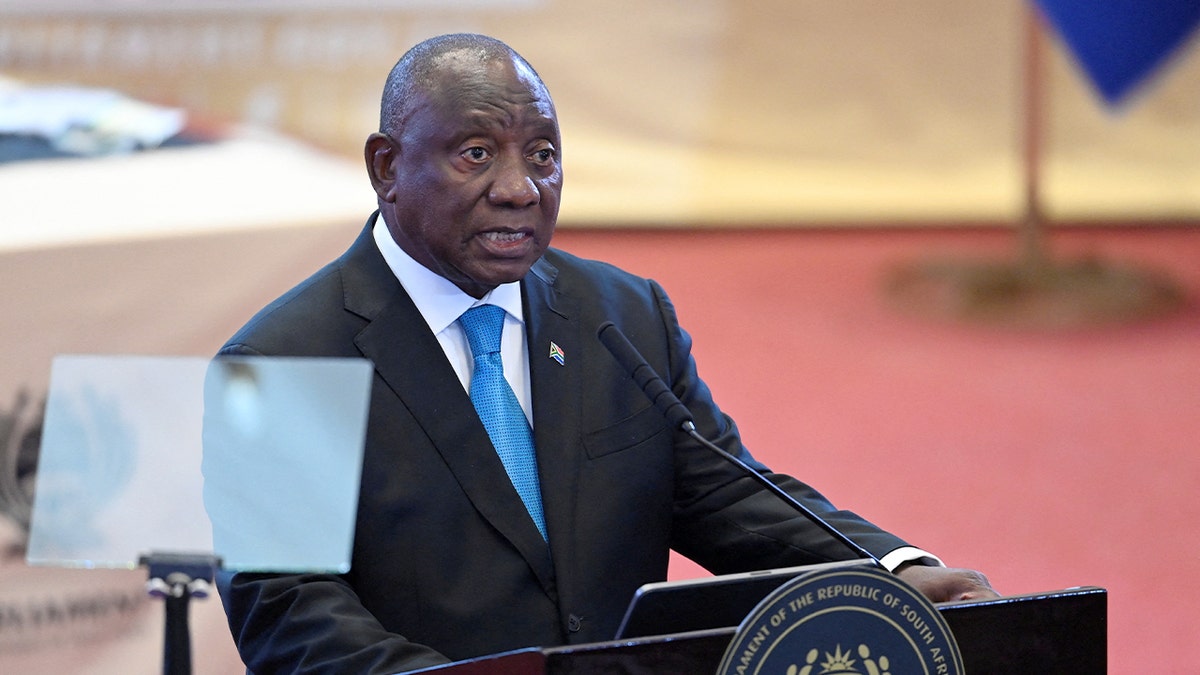
South African President Cyril Ramaphosa delivers the State of the Nation address in Cape Town, South Africa, on Feb. 12, 2026. (Rodger Bosch/Pool via Reuters)
Responding when asked why activists such as March and March are taking action, Ngobese-Zuma said, “It’s the government that should be the one that’s making sure that when people say that they don’t want certain people in their communities, they remove them before the communities remove them themselves. I think the government is complacent about not only the issue of immigration, our government is just complacent about a lot of things, especially that have to do with crime.”
Protests against immigrants have turned nasty in previous years. Sixty-two were killed in riots in 2008, and at least five in 2015.
Ngobese-Zuma agrees March and March members are gatvol – Afrikaans slang, politely put to mean completely fed up – telling INC News, “We don’t care which country comes forward and tells us that we are xenophobic. We’ve had enough, and nobody can tell us that we must now accept people staying in our country illegally.”
INC News reached out to the South African government, but did not receive a response.