

Spain is sending military personnel to Ceuta, its North African enclave, after thousands of migrants crossed the border from Morocco in a sudden surge that has stretched local authorities and triggered an urgent security operation. Officials said at least nine people died during the attempted crossings.
The Spanish government said the Armed Forces will reinforce the Civil Guard as authorities work to regain control in the territory, where local leaders have warned that services are overwhelmed. Prime Minister Pedro Sánchez and Interior Minister Fernando Grande-Marlaska are expected to travel to Ceuta as Madrid moves to manage the escalating crisis.
The influx is among the largest to reach Ceuta since 2021, when more than 8,000 people entered the Spanish enclave in just two days, setting off a major diplomatic rift between Spain and Morocco.
“The situation is absolute chaos,” Rachid Sbihi, who leads an association representing Spain’s Civil Guard officers in Ceuta, told The Associated Press. “It’s not possible to give precise numbers, but there are thousands of migrants crossing.”

Migrants celebrate as they move toward Spain’s North African enclave of Ceuta after crossing from Morocco on Thursday. (AP)
Spain’s government delegation in Ceuta confirmed that at least nine people died Thursday, although officials did not immediately provide details on how the deaths occurred. The AP reported that bodies were visible in the water as rescue teams and security forces continued their operations.
Footage from the border showed large crowds entering Ceuta through the Tarajal area, with many migrants swimming around coastal barriers that divide Moroccan territory from the Spanish enclave. Most of those seen crossing appeared to be young men, though women, children and families were also among the arrivals.
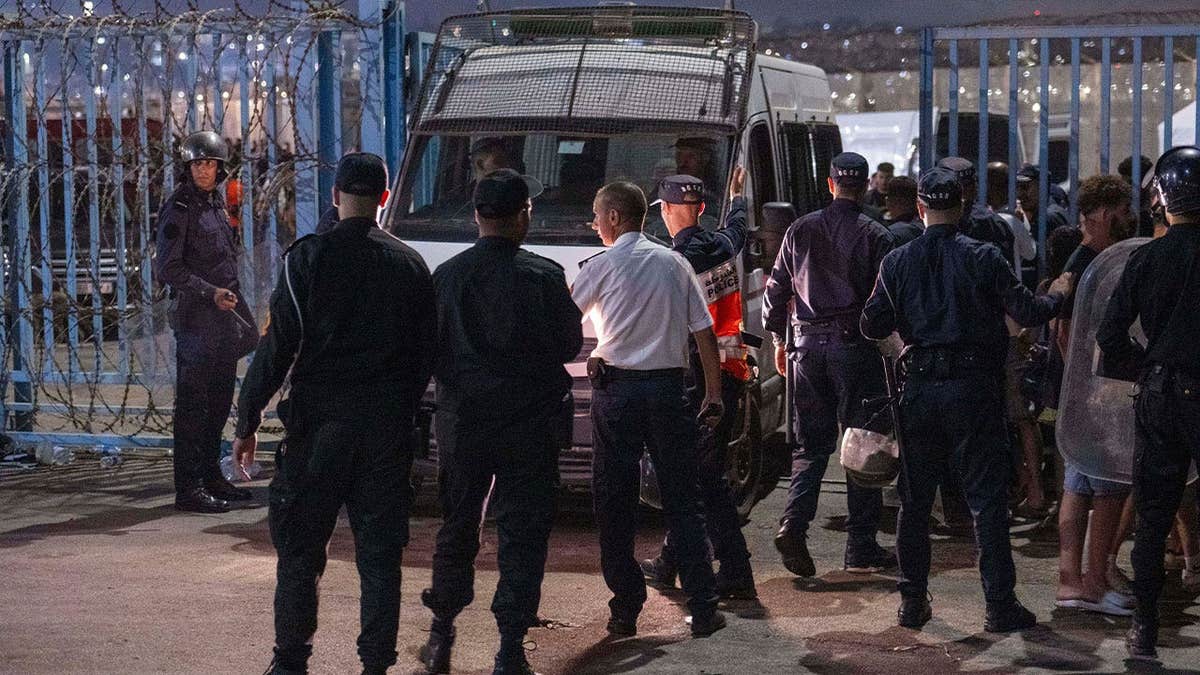
Spanish security forces stand watch as people try to cross from the Moroccan town of Fnideq into Spain’s North African enclave of Ceuta on July 30, 2026. Spain said it would deploy the military after thousands of migrants entered the territory. (AP Photo/undefined)
Spanish authorities said Morocco is cooperating with efforts to regain control of the border. Spain’s Interior Ministry said Moroccan police have intercepted numerous migrants attempting to cross and that both governments are working to return those who entered the territory illegally as quickly as possible.
Authorities have not identified a single cause for the sudden surge, though Ceuta officials have pointed to a recent Spanish Supreme Court ruling that limits the immediate return of migrants who arrive by sea without due process. Some migration advocates, however, questioned whether the ruling alone could explain the dramatic increase, arguing many migrants would likely have been unaware of the decision.
The crisis has reverberated beyond Spain. Italian Prime Minister Giorgia Meloni threatened to suspend Italy’s participation in the Schengen open-border agreement with Spain, saying the move would be necessary “to defend our borders and ensure the safety of our citizens.”
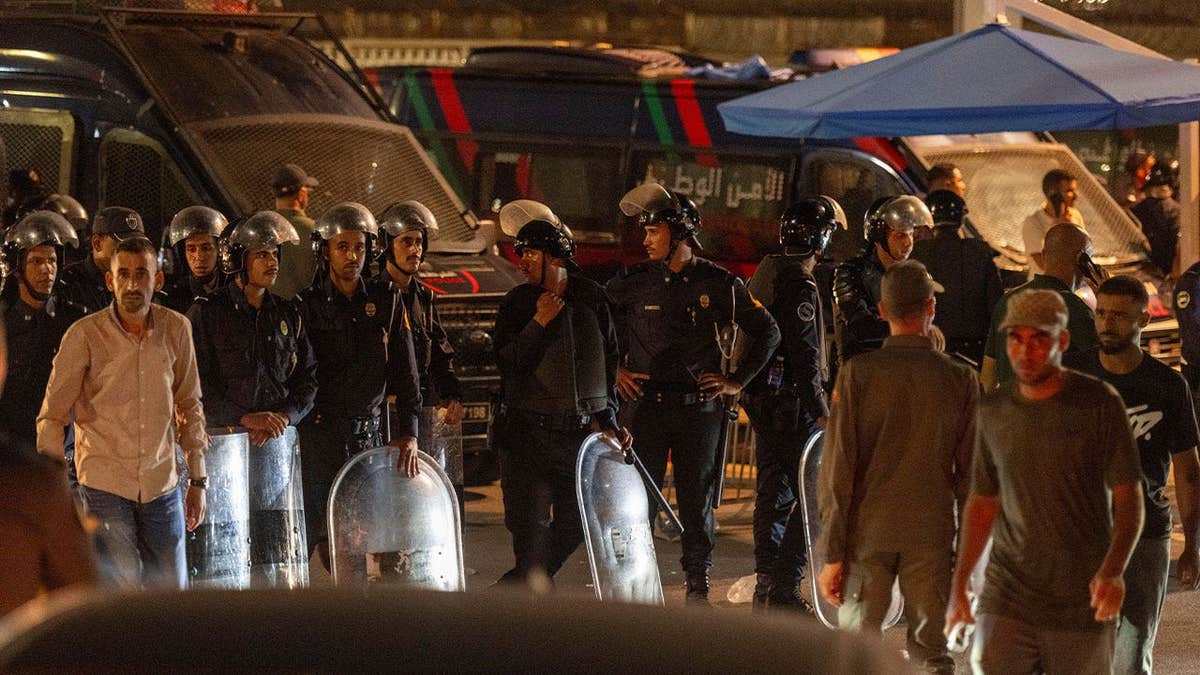
Security forces stand guard along the border as people attempt to cross from the Moroccan town of Fnideq into Spain’s North African enclave of Ceuta on July 30, 2026. Spain later announced it would deploy its military following the mass migrant surge. (AP Photo/undefined)
Ceuta, a small Spanish territory on Morocco’s Mediterranean coast, has long been one of Europe’s most active migration flashpoints.
Migrants from across Africa regularly attempt to reach the enclave by swimming from Morocco or scaling the heavily fortified border fence in hopes of gaining entry into the European Union.
Spain’s Interior Ministry said nearly 3,000 migrants had entered Ceuta by land or sea this year through mid-July, before this week’s crossings dramatically increased those figures.
News Outlet has reached out to Spain’s Embassy in Washington, the Department of Homeland Security, the Center for Immigration Studies and the Migration Policy Institute for comment.