

Amidst plans to inject $40 million into revitalizing Los Angeles’ MacArthur Park, the initiative has come under fire for overlooking critical issues, as highlighted by mayoral candidate Spencer Pratt. The ambitious project aims to revamp the park, notorious for its drug-related challenges, yet critics argue it misses addressing the most pressing problems plaguing the area.
During an Earth Day event, Councilmember Eunisses Hernandez, alongside city officials, introduced a comprehensive redesign for the park’s lake, focusing on environmental sustainability. The plan envisions a greener MacArthur Park, emphasizing stormwater capture, enhanced water quality, and new public amenities, all intended to breathe new life into one of the city’s most beleaguered spaces.
“This initiative is about reimagining our stewardship of this space,” Hernandez declared, emphasizing the benefits of capturing, treating, and reusing stormwater to diminish pollution and improve the park’s environment for the local community.
However, no sooner had the project details been shared than Pratt voiced his concern, directing attention not toward the engineering feats proposed but toward what he perceives as the city’s oversight.
“How about clean the park of fenty zombies,” he commented on X, pointing to the stark reality that has come to define everyday life in MacArthur Park.
For some time now, The California Post has chronicled the park’s decline, depicting it as an epicenter for fentanyl use. Residents and business owners have described the area as rife with individuals succumbing to the drug’s effects, engaged in open drug use perilously close to children’s play areas, with frequent overdoses and emergency responses becoming the norm.
Locals say the park has become less a public space and more a magnet, a place where services, handouts, and lack of enforcement have drawn a growing population of users and dealers into a concentrated zone of chaos.
The city says its plan leans heavily into infrastructure: reworking the lake to rely less on drinking water, reducing runoff into Ballona Creek and Santa Monica Bay, and adding features like a cascading water system, new landscaping, and educational signage.
“It’s about what this community is owed,” said Board of Public Works Commissioner John Grant, pointing to a vision of a park that reflects pride and investment.
However, the park’s long-troubled conditions remain visible.
The once-iconic fountain that shot jets high above the lake is no longer operational after repeated metal theft stripped key components.
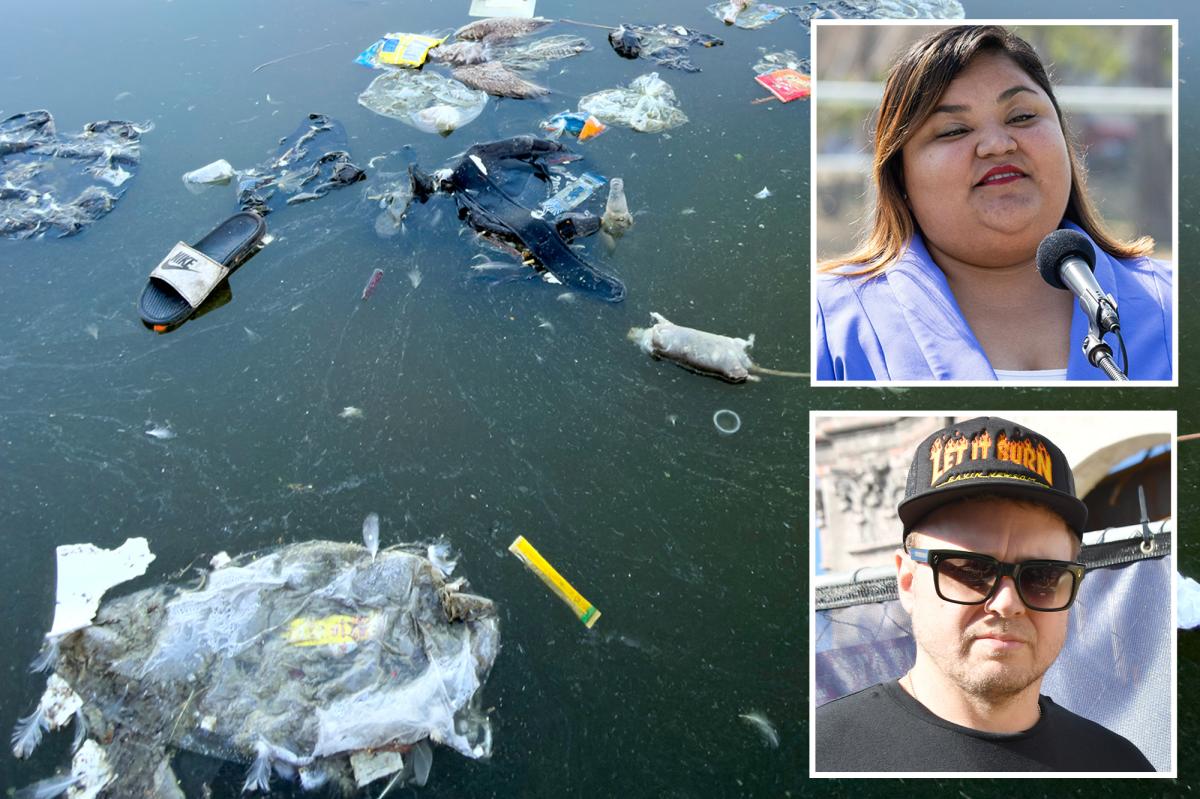
During a recent visit, The Post observed dead birds in the water, human waste along the shoreline, and debris scattered throughout the pond.
City leaders say the proposal builds on more than $27 million already spent on safety and programming around the park, with construction expected to begin this fall.