
Share this @internewscast.com

In a significant breakthrough, Dutch authorities have successfully recovered a priceless ancient golden helmet from Romania, stolen from a museum in the Netherlands last year. The announcement came on Thursday, marking a triumphant moment for both countries involved.
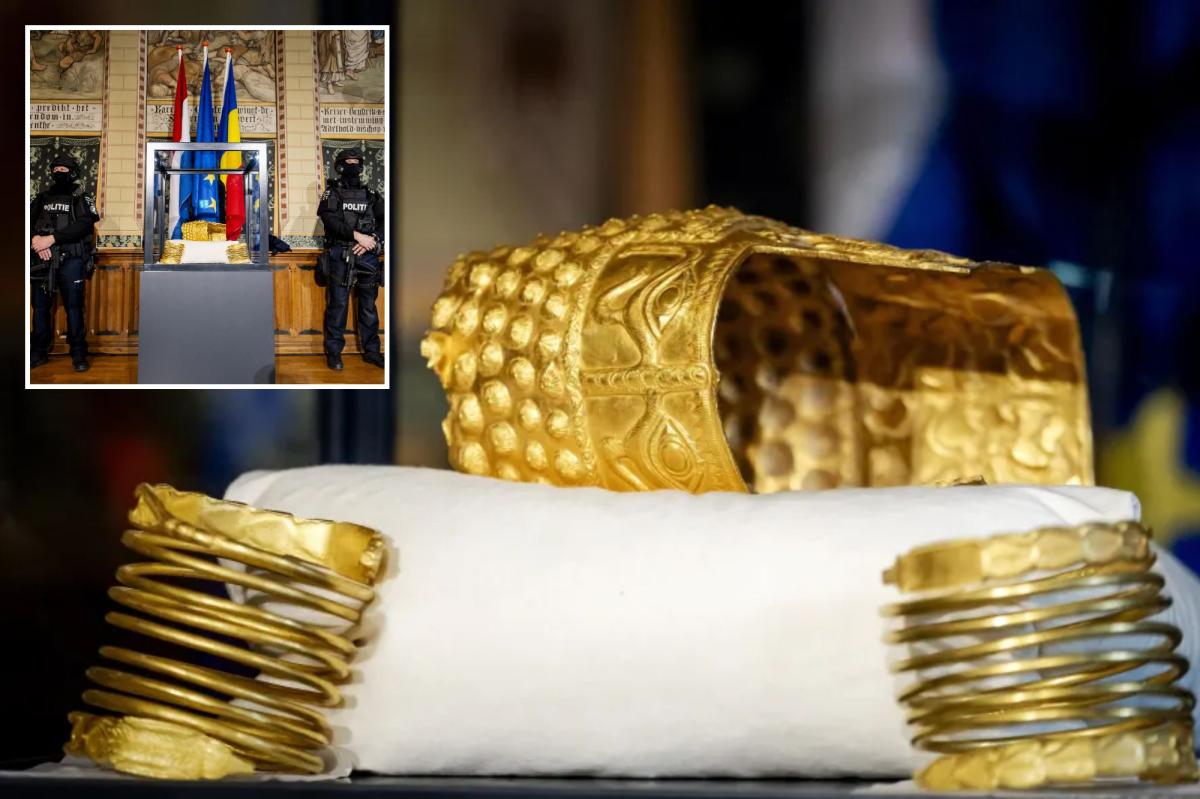
Amid tight security measures, with police clad in balaclavas and heavily armed, the 2,500-year-old Cotofenesti helmet was presented to the public during a press conference in Assen, a city in eastern Netherlands. This helmet is esteemed as one of Romania’s most cherished national artifacts, originating from the ancient Dacia civilization.
“We are incredibly pleased,” expressed Corien Fahner from the prosecution service, addressing the media. She described the recovery process as a “roller-coaster,” emphasizing the emotional and cultural significance for Romania and also for the staff at the Drents Museum, where the theft occurred.
In a related success, two out of three missing armbands were retrieved following a deal with three individuals arrested shortly after the theft. These men, implicated in the heist, are set to face trial later in April.
However, Fahner noted that efforts to locate the remaining armband are still ongoing, indicating that the investigation is far from over.
Fahner said the search for the remaining armband would continue.
The helmet did not return unscathed.
“The helmet is slightly dented, but there will be no permanent damage,” Drents Museum director Robert van Langh said during the news conference. “The armbands are in perfect condition.”
Thieves used a homemade firework bomb and sledgehammer to break into the museum.
Grainy security video distributed by police after the raid appeared to show three people opening a museum door with a large crowbar, followed by an explosion.
The theft put a strain on relations between the Netherlands and Romania.
Romanian Justice Minister Radu Marinescu last year called the incident a “crime against our state” and said recovering the artifacts “is an absolute priority.”