
Share this @internewscast.com
In the United States, extremist factions are seizing the chaotic landscape of social media, leveraging it to propagate violent rhetoric at a pace that surpasses the ability of platforms to effectively manage it. This alarming trend is highlighted in a recent report and echoed by security experts who caution that this issue has transcended beyond just foreign terrorist entities.
A compelling study from New York University’s Stern Center for Business and Human Rights, titled “Digital Aftershocks: Online Mobilization and Violence in the United States,” reveals that while the online presence of violent Islamist groups has diminished—thanks to effective terrorist designations and platform enforcement—domestic extremist movements face fewer restrictions. This disparity, described as an “enforcement asymmetry” in the report, allows various domestic extremist factions, including far-right and far-left groups as well as antisemitic networks, to proliferate on major social media platforms.
The report underscores that this legal imbalance enables domestic extremists to maintain a formidable presence on mainstream digital networks. Meanwhile, foreign terrorist organizations have been pushed into more obscure areas of the internet, limiting their ability to recruit and spread propaganda.
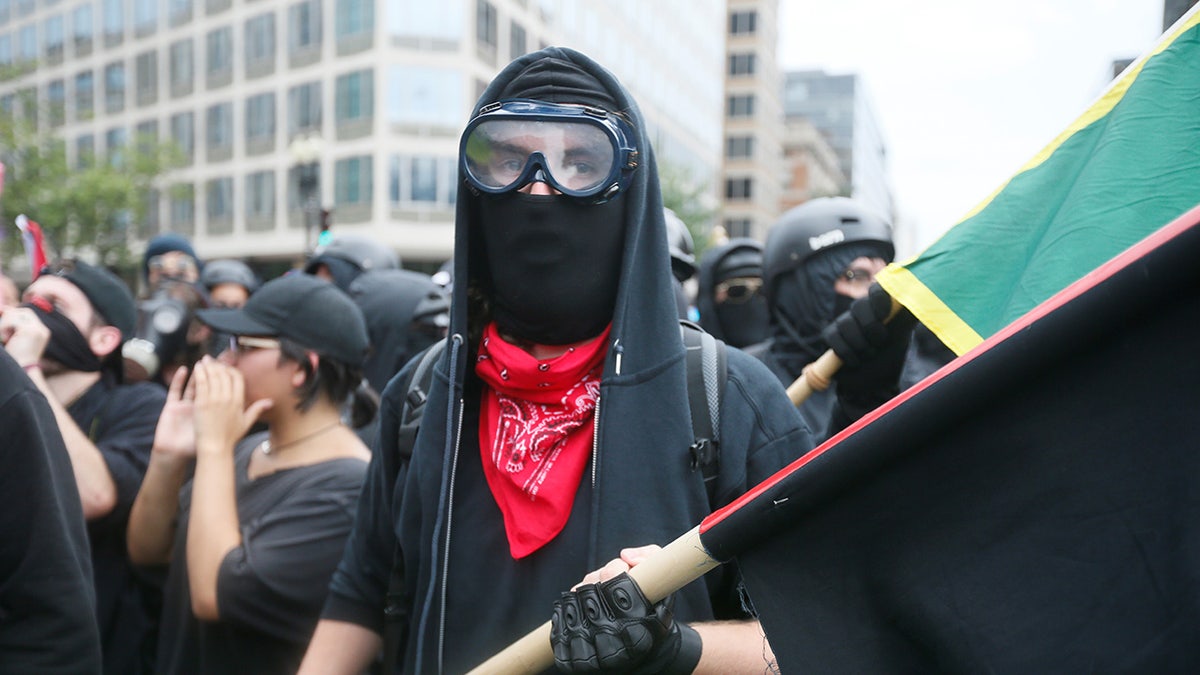
Dr. Casey Babb, a terrorism expert and director of the Promised Land Project at Canada’s Macdonald-Laurier Institute, shared insights with Fox News Digital, emphasizing that policymakers already possess the necessary authority to address domestic extremism. He explained that although the First Amendment protects free speech, not all expressions fall under this protection.
“There are already tools available for policymakers, law enforcement, and intelligence agencies to address domestic extremism,” Babb stated. He clarified that speech intended to incite unlawful actions or violence does not enjoy protection under the First Amendment, nor do statements that pose legitimate threats.
As the digital realm continues to evolve, the challenge remains for social media platforms and authorities to balance the protection of free speech with the need to curb the spread of extremist ideologies that threaten public safety.
The NYU report mirrors that frustration, concluding that the U.S. has “ample tools” to confront extremism but applies them unevenly. It found that when foreign terrorist designations restrict groups like al Qaeda and ISIS, their online reach collapses.
“The ability to designate organized nations and individuals as terrorist entities is a very useful tool,” Babb said. “It’s a tool that policymakers should really lean into and think about, possibly modernizing and reforming to better address a lot of what we’re seeing domestically.”
Babb said extremists are “learning from one another,” adopting propaganda and recruitment methods once pioneered by Islamist organizations.
“Groups like ISIS, al Qaeda and the Muslim Brotherhood were some of the early adopters of these platforms,” he said. “They recognized many, many years ago the power of these social-media outlets to recruit, to disseminate harmful messaging and to really undermine the populations that they target.”
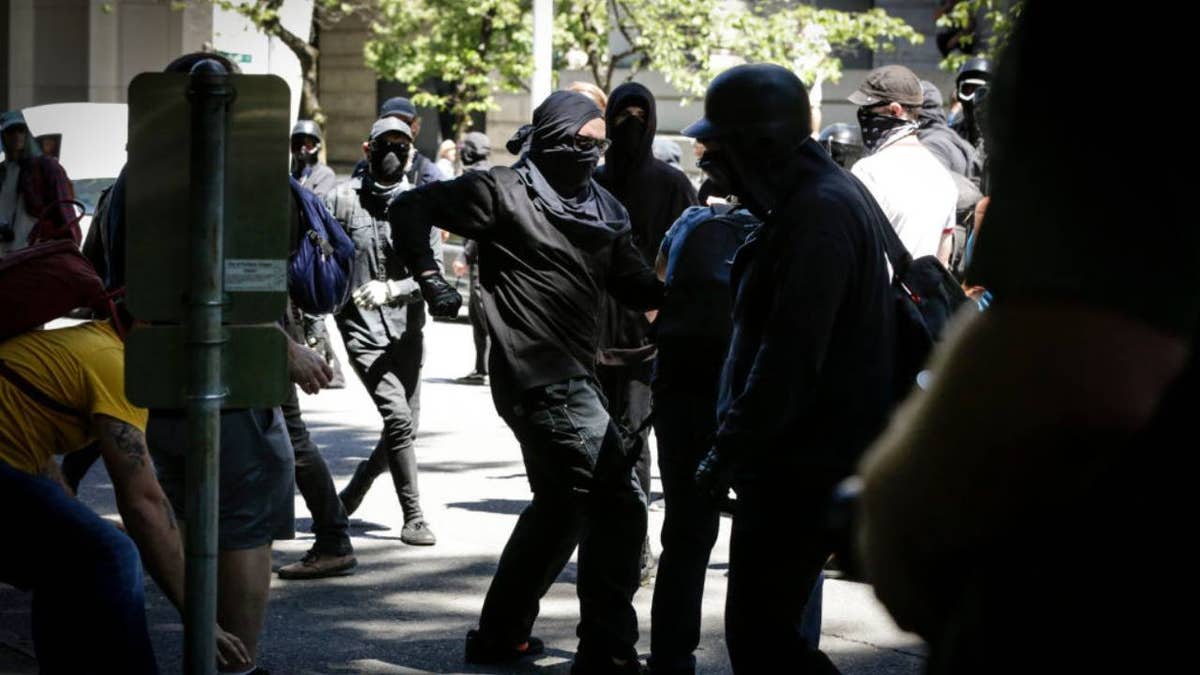
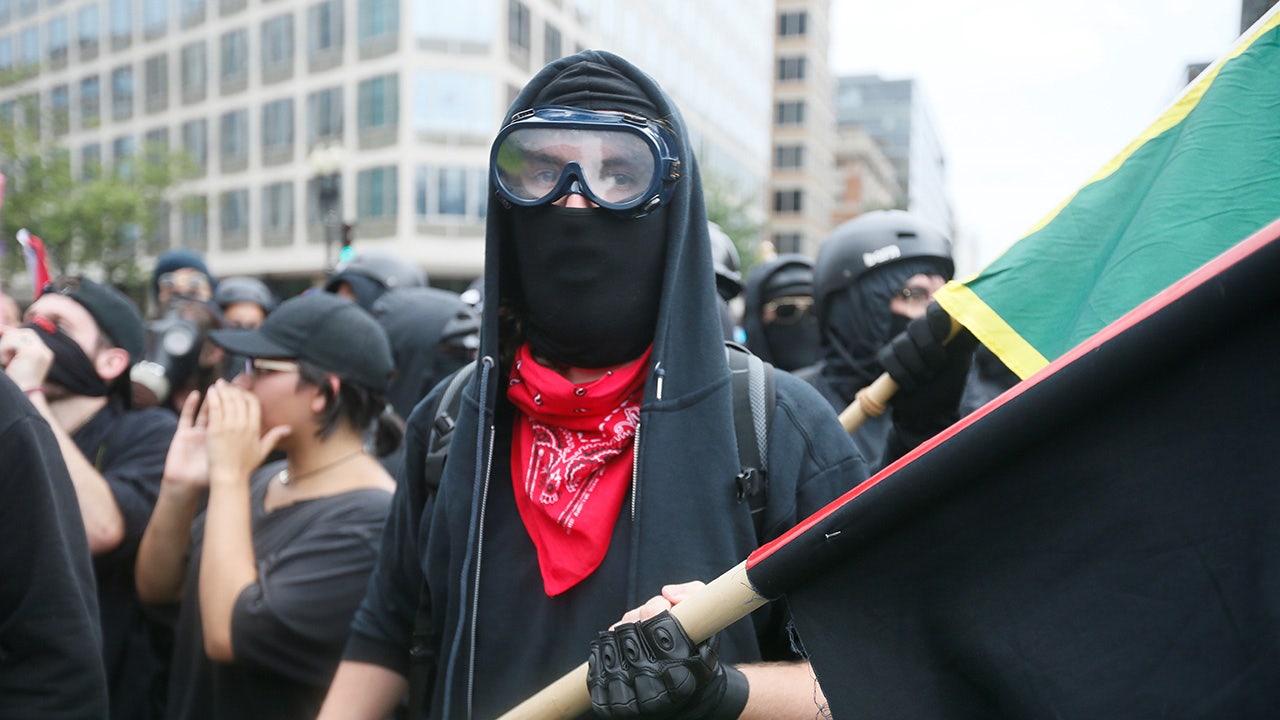
Antifa protesters in Portland, Oregon, on June 19, 2019. (Moriah Ratner/Stringer)
He also blamed social-media companies for enabling the spread of hate.
“There’s frankly no reason that I should be seeing much of what I’m seeing online,” Babb said. “Free speech is one thing; giving a platform for nefarious state and non-state actors to spread divisive language deliberately with the intent of dividing Americans and endangering certain minorities, that’s something else entirely. These platforms reward outrage and they reward divisive content. A lot of people are monetizing this.”
“You shouldn’t be making thousands of dollars a month by spreading the same messages that Adolf Hitler or Yahya Sinwar would spread,” he added.
WATCH: Trump takes Antifa fight abroad with foreign terrorist designation
President Trump once floated designating Antifa a domestic terrorist group, an idea Babb believes deserves renewed attention.
“Designation opens a whole suite of tools,” he said. “It makes adversaries’ lives much more difficult.”
The Digital Aftershocks report concludes that U.S. policymakers and tech platforms must coordinate more aggressively to combat online extremism.