
Share this @internewscast.com

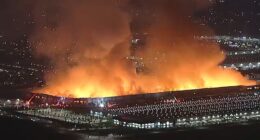
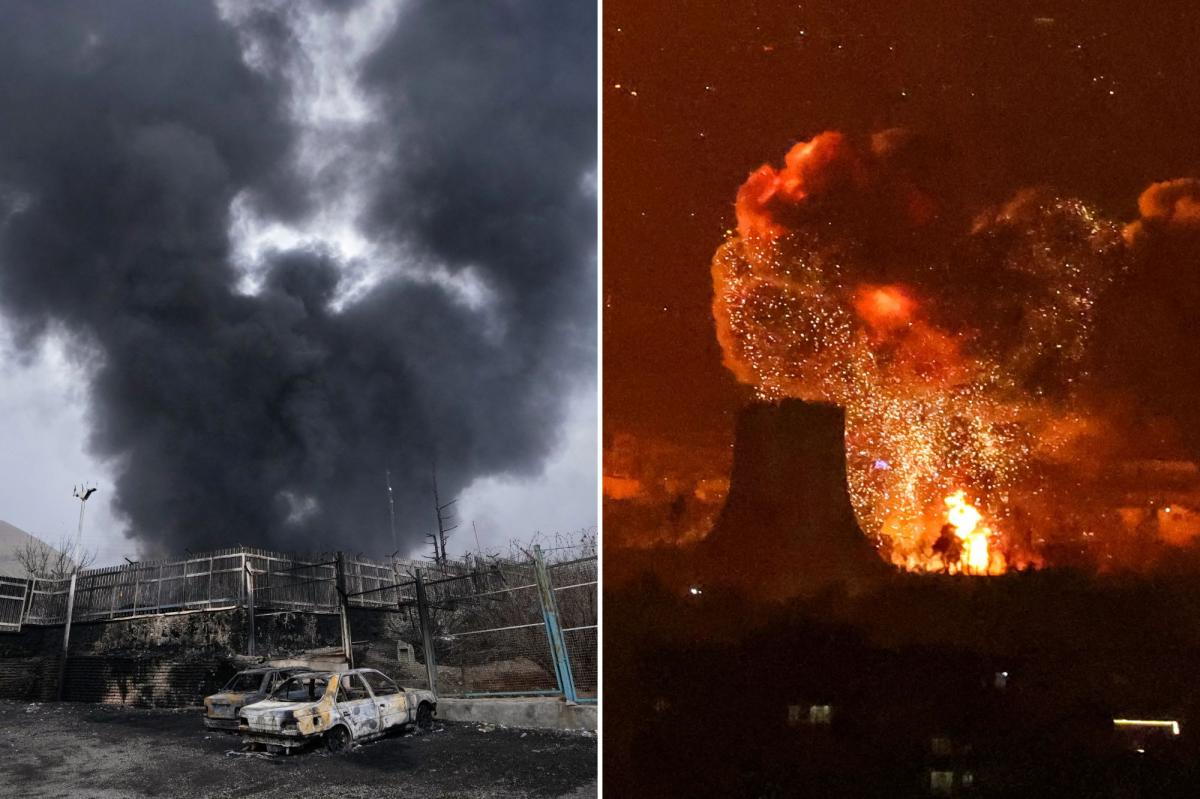
Late Saturday evening, Tehran found itself cloaked in thick, ominous black clouds as a result of Israeli airstrikes targeting the capital’s oil facilities. This marked a significant escalation, being the first assault on Iran’s energy infrastructure since the initiation of “Operation Epic Fury” a week prior.
The morning after, residents of Tehran awoke to an unsettling scene: rooftops and streets were slick with black rainwater, heavily contaminated with oil. This unusual phenomenon painted a grim picture of the city beset by environmental chaos.
Follow The Post’s coverage of the United States’ airstrikes on Iran:
Photographs capturing the aftermath reveal Tehran enveloped in dense smoke and shadowed by dark clouds, a stark reminder of the military action that had decimated several crucial fuel sites just hours before.
The Iranian Red Crescent issued a grave warning concerning the explosions that erupted overnight at the city’s oil depots. They cautioned that these blasts had unleashed “significant quantities of toxic hydrocarbon compounds, sulfur, and nitrogen oxides” into the atmosphere.
Officials highlighted the severe risks posed by this environmental contamination, noting that any subsequent rainfall could become highly acidic and perilous. They urged caution, emphasizing that contact with the rain could result in skin burns and serious lung damage.
The airstrikes specifically targeted four oil storage facilities and a production center in both Tehran and the nearby Alborz province, as reported by Iran’s Fars news agency. The aftermath has left the city grappling with the destructive impact on its infrastructure and the looming threat to public health.
Harrowing video from the Saturday night strikes showed pillars of fire soar up into the sky and lighting up the capital, with the bombs killing four tanker drivers, Fars reported.