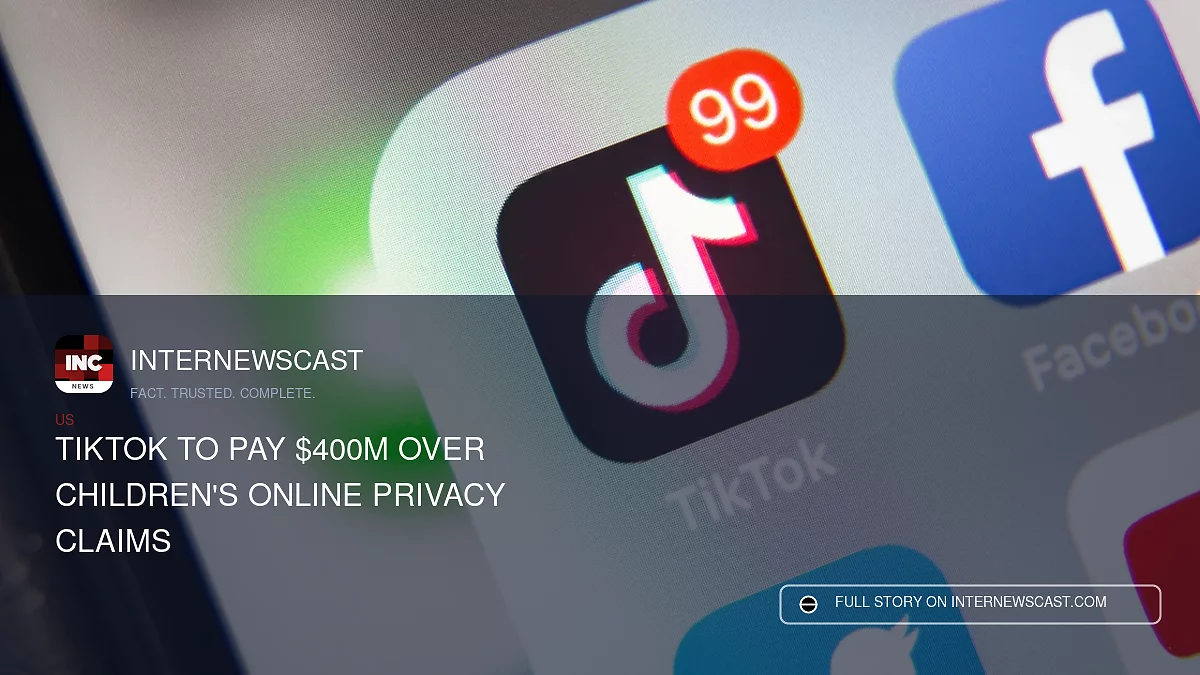

The Justice Department announced Friday that TikTok and its China-based parent company, ByteDance, have agreed to pay $400 million to resolve allegations that the popular social media app violated U.S. children’s online privacy laws.
Federal officials filed the lawsuit against TikTok in 2024, accusing the platform of breaching the Children’s Online Privacy Protection Act by collecting and keeping personal information from younger users without properly notifying parents or securing their consent.
The case, which followed an investigation by the Federal Trade Commission, alleged that TikTok had knowingly allowed children to open accounts and communicate with adults on the app dating back to 2019.
In its Friday statement, the Justice Department said TikTok has since taken substantial steps to change its management structure and strengthen safety measures for younger users, including age-based controls and expanded tools for parental oversight.
“Those developments have materially advanced the public interests underlying the Department’s litigation and have strengthened protections for millions of American families,” the agency said.
In January, TikTok finalized a deal establishing a new ownership structure, a move tied to a Biden-era law requiring the platform to cut ties with ByteDance over national security concerns or risk being banned nationwide. TikTok is now overseen by a joint venture made up largely of U.S.-based investors, including American software company Oracle and private equity firm Silver Lake, along with Abu Dhabi-based MGX.
ByteDance retains a 19.9% stake in the company, leaving it with minority control over TikTok’s U.S. operations.
ByteDance and TikTok did not immediately respond to a request for comment.
TikTok agreed to pay $300 million immediately, and the remaining $100 million “upon entry of an order vacating a prior consent decree entered against TikTok’s predecessor, Musical.ly,” the Justice Department said.
The payment is among the largest settlements ever obtained in a case related to the Children’s Online Privacy Protection Act, according to the agency.
Alain Sherter