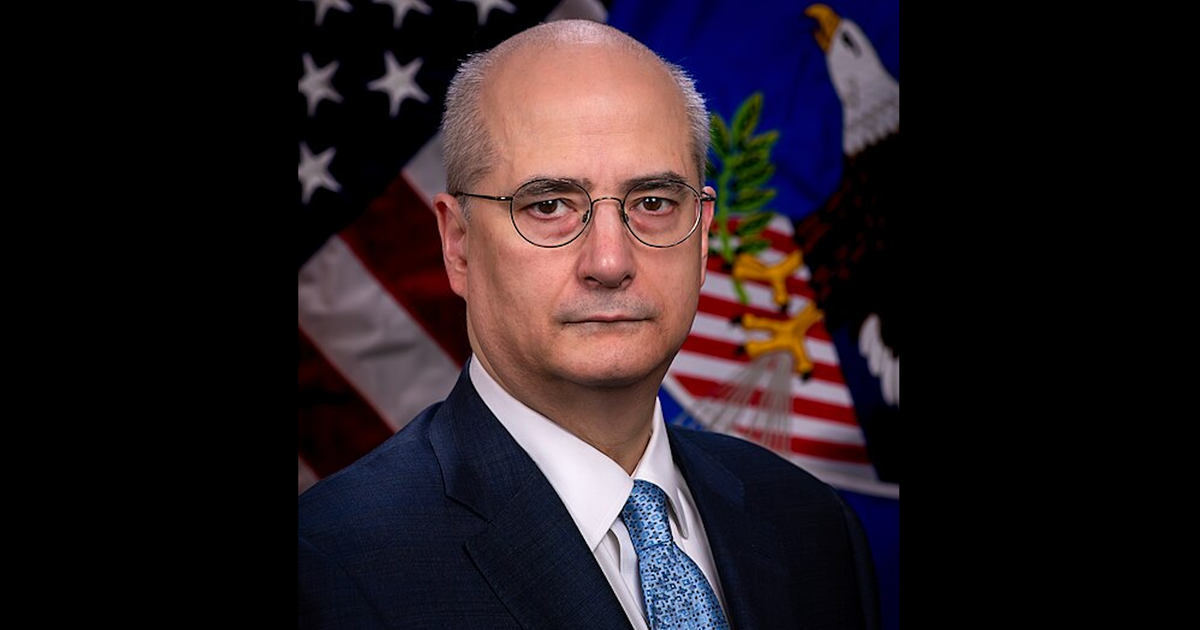

John Eisenberg, the Justice Department’s assistant attorney general for national security, resigned abruptly Friday, according to the department.
Attorney General Todd Blanche announced Eisenberg’s departure on X and praised him for “strengthening our nation’s ability to address threats, both foreign and domestic.”
Eisenberg became the second assistant attorney general to leave the department this week, just two days after Democrats swept the midterm elections and regained control of both the House of Representatives and the Senate.
On Thursday, Harmeet Dhillon, the assistant attorney general overseeing the Civil Rights Division, submitted her resignation. Dhillon had informed the White House before the election that she planned to step down.
Jason Reding Quiñones, a Trump-appointed U.S. attorney for the Southern District of Florida, also resigned Friday.
Unlike Dhillon, Eisenberg kept a relatively low public profile during his time leading the National Security Division, which has seen a significant exodus of career employees over the past year.
Late last year, the division was placed in the difficult position of overseeing redactions to millions of pages of investigative records involving accused sex trafficker Jeffrey Epstein. Congress ordered the massive review as pressure mounted to release the files.
The effort later expanded to include personnel from other Justice Department components, including the FBI, the Criminal Division and the U.S. Attorney’s Office in Manhattan. Together, those offices assigned 400 attorneys to examine roughly 5.2 million pages.
The redactions have drawn intense criticism. Several of Epstein’s victims said their names and personal information were mistakenly made public, while members of Congress accused the department of improperly concealing details about potential unindicted co-conspirators.
MORE ON THIS: Couple Devastated After Toddler Dies in Apartment Window Fall
Established several years after the terrorist attacks of Sept. 11, the National Security Division oversees the Justice Department’s counterterrorism and counterintelligence operations, enforces export controls and reviews foreign investments in U.S. companies.
U.S. attorney’s offices across the country must consult the division—and in some cases obtain its approval—when pursuing certain national security matters.
Since President Trump took office in January, the National Security Division has been involved in several high-profile cases, including leak investigations targeting journalists such as Washington Post reporter Hannah Natanson. Her home was searched earlier this year during an Espionage Act investigation involving a government contractor.
The division has also been central to sweeping changes in domestic terrorism investigations ordered last year by then-Attorney General Pam Bondi.
In December, Bondi directed law enforcement agencies and federal prosecutors to prioritize investigations and prosecutions involving people and groups associated with the anti-fascist antifa movement or labeled “extremist.”
Her directive expanded the range of conduct that could be investigated as domestic terrorism, including doxxing law enforcement officers or participating in a parade intended to obstruct the administration of justice.
This year, the National Security Division helped bring the first-ever case before the Alien Terrorist Removal Court, a secretive federal immigration court created decades ago that relies on classified evidence to deport suspected “alien terrorists,” including people who have never been charged with a crime.
Before the court could consider the constitutional boundaries of the case, however, the target, Nazira Haji Zada, agreed to deportation to Afghanistan rather than challenge the government’s allegation that she was an “alien terrorist.”


