
In recent weeks, the news cycle has been relentless, leaving little room to delve into the details of a significant story emerging from Chicago. This case highlights severe systemic deficiencies and the heavy toll it takes on both the city’s residents and its law enforcement.
The focus is on Alphanso Talley, a 26-year-old with a criminal history dating back to his juvenile years, details of which remain sealed. Talley now faces charges for the murder of Chicago Police Officer John Bartholomew and the serious injury of another officer. Critics argue that the Illinois SAFE-T Act, which introduced cashless bail in 2021, allowed Talley to remain free and ultimately commit these crimes.
Talley’s legal troubles are numerous and complicated. In April 2025, he was charged with armed carjacking and robbery in the Bronzeville area of Chicago. Despite the violent nature of these charges, he was released in December 2025 under electronic monitoring while awaiting trial.
During a hearing in December, Cook County Circuit Judge John Lyke Jr. justified Talley’s release by stating, “There’s no doubt these bails would have been set at monetary amounts that he presumably couldn’t afford.”
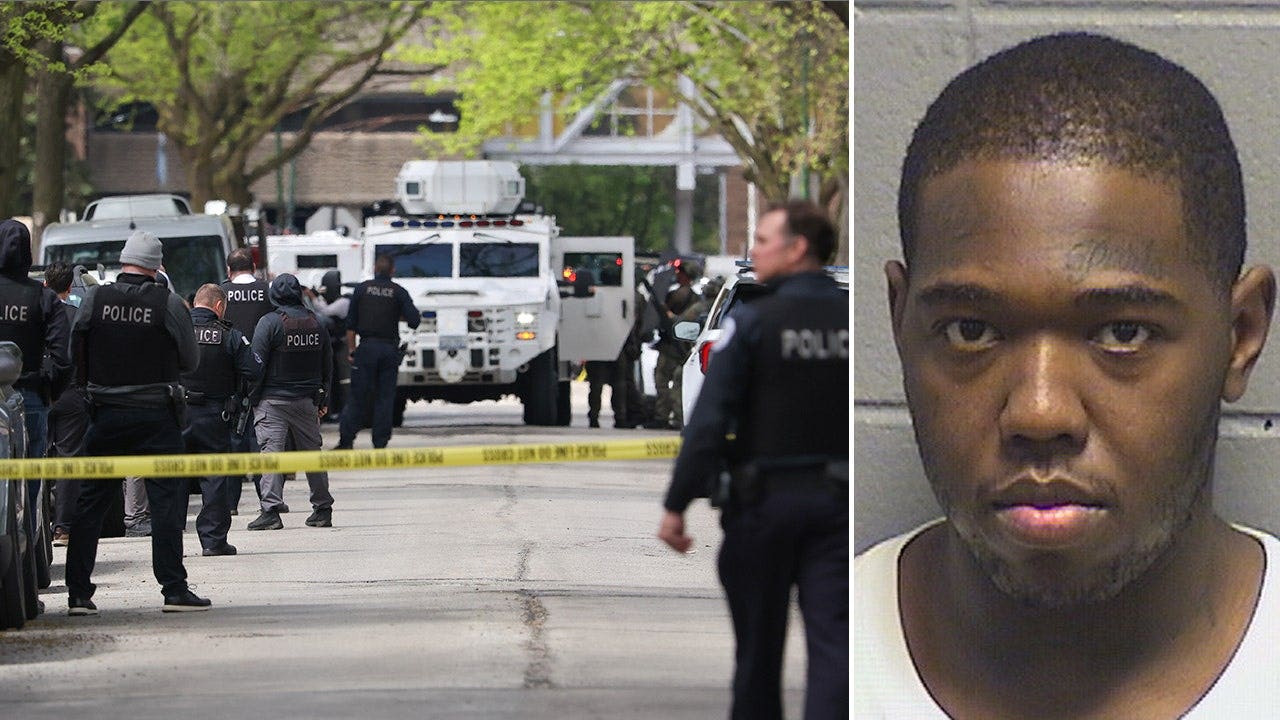
Visuals from the scene of a shooting near Endeavor Health Swedish Hospital on April 25, 2026, in Chicago, along with a booking photo of Alphanso Talley, provide a stark backdrop to these events. (Images courtesy of John J. Kim/Chicago Tribune via AP and Cook County Sheriff’s Office)
Fast forward to March 8, 2026, and Talley is accused of significantly violating the terms of his electronic monitoring. Prosecutors allege he ignored his curfew, staying out overnight. His failure to charge his ankle monitor resulted in a dead battery, prompting an alert that notified the Cook County Chief Judge’s office of his unknown whereabouts. Yet, no action was taken to apprehend Talley.
More than 48 hours later, pretrial services notified Judge Lyke that the ankle monitor went dead and Talley missed a court appearance. Lyke then signed an arrest warrant. No one went and picked up Talley.
Saturday morning, April 25, 2026, one minute after the Family Dollar store opened, Talley and a man alleged as his accomplice, 18-year-old Jeron Tate, followed cashier Maria Velazquez inside, prosecutors allege. Velazquez was robbed at gunpoint and beaten with the pistol so severely her nose was broken. The bruises on her face are punctuated by a knot on her head the size of a golf ball and she can’t sleep.
“I wake up early in the morning, I’m sleeping and I can see his face. I see his face and I can’t sleep,” she said in Spanish to our Fox affiliate in Chicago. For obvious reasons, the single mother of three feared for her life. “If I would have died, what would happen to my children? They are still so young and they depend on me.”
Now, Velazquez has learned that Talley was a frequent visitor of the criminal courts. “They kept letting him out, knowing he had a criminal history. Why did they let him free?” she asked. “This would have never happened. The police officer would not have died.”
John Bartholomew was shot and killed on Saturday, April 25, 2026, at Endeavor Health Swedish Hospital in Chicago. (Chicago Police Department)
Talley was picked up a short time after the Family Dollar was robbed and Velazquez was beaten. No stranger to arrest, Talley executed a trick he had used in previous arrests, police say. The affidavit shows he claimed he had eaten five bags of drugs and needed to be hospitalized because he was having trouble breathing. It’s unclear how he was able to smuggle a gun into the hospital. But, it came out in court that Talley was allowed some privacy when it came time to remove his pants and put on the hospital gown.
Cook County Assistant State’s Attorney Mike Pekara said that after metal handcuffs were removed so a CT scan could be conducted, Talley reached under a blanket and fatally shot Officer John Bartholomew in the face. Bartholomew’s partner was shot in the chin, leaving him in critical condition.
Pekara said Talley robbed a hospital staff member of his ID, shot out glass doors at the hospital and set off running practically naked with the hospital gown around his neck and electric monitors still stuck to his chest.
Talley was found hiding under a porch and arrested for the second time that day.
On May 1, a hearing got underway at the Cook County criminal courts building to determine if, this time, Talley should be held in jail pre-trial. His family members filled at least two rows in the courtroom and shouted to Talley that they loved him. Talley interacted with them so much that a sheriff’s deputy hovered over him and Cook County Circuit Judge D’Anthony Thedford admonished him to stop “giggling” while beginning the criminal proceedings for killing a police officer.
Alphanso Talley allegedly killed Chicago Police Officer John Bartholomew on Saturday. (Chicago Police Department and Cook County Sheriff’s Office)
When the hearing was over and Talley ordered jailed, I was able to ask John Catanzara, head of the Chicago police union, if Bartholomew would be alive were it not for the SAFE-T Act.
“Yes, it’s just a simple reality,” Catanzara answered. “I mean he wouldn’t have qualified for parole. He would not have qualified for electronic monitoring. He would have had a cash bond that he would not have been able to meet for those extremely violent offenses. So, that alone, the cashless bail let him out and gave him the ability to be out on the street terrorizing.”
“The electronic monitoring system is broken,” said Cook County State’s Attorney Eileen O’Neill Burke. “Electronic monitoring is not an alternative to detention. It does not keep people safe.”
Illinois Gov. JB Pritzker, who championed the SAFE-T Act, blamed Judge Lyke without naming him. “In most cases where Republicans have complained about the SAFE-T Act it’s actually been a bad decision by an elected judge,” said Pritzker. “A judge should have made the decision to keep that person in jail.”
Chicago Mayor Brandon Johnson, who has called incarceration a “sickness,” went back to a familiar refrain against jailing criminals. “Look, we’ve had an addiction on jails and incarceration. More people get locked up in our country than anywhere else in the world. And yet, we have illegal weapons that flow through our streets and we have a lack of mental health support,” said Johnson.
“He’s a sickness and addiction that’s going to be gone in less than a year,” Catanzara responded. “And it can’t come soon enough. I didn’t think it could get worse with [Former Chicago Mayor Lori] Lightfoot, but we got dumber and just more racist and ignorant.”
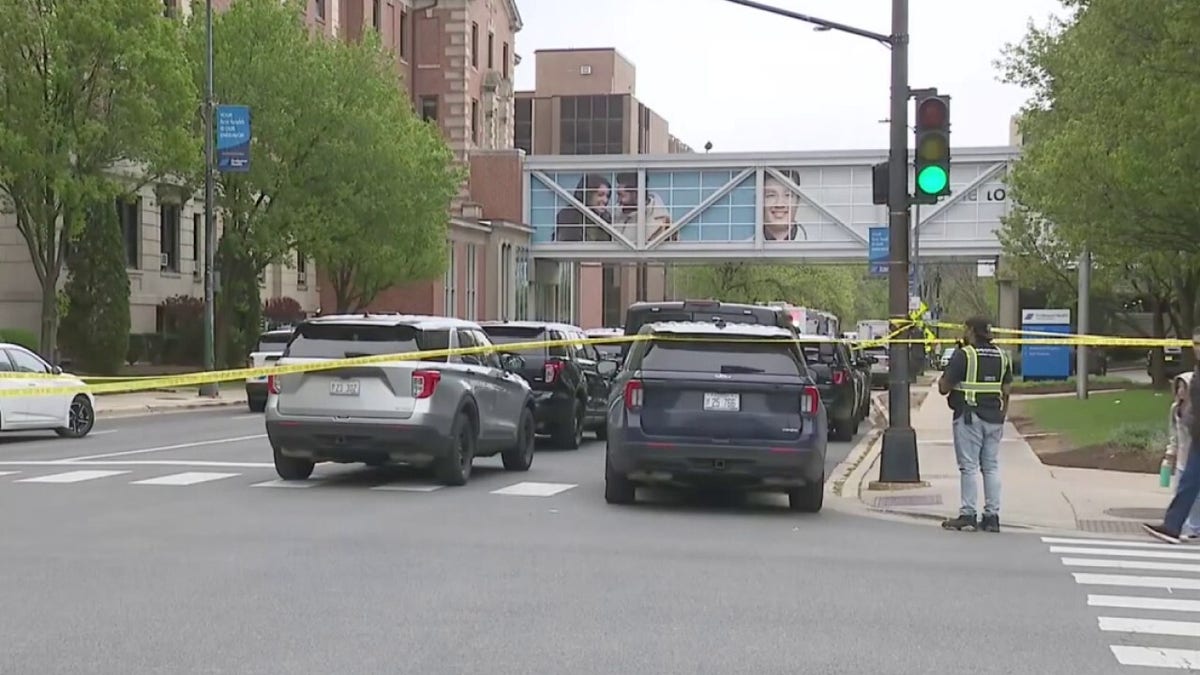
Police responded to a shooting at Endeavor Health Swedish Hospital in Chicago on April 25, 2026. (WFLD)
“We have a mayor of the City of Chicago saying that he doesn’t think this individual should be incarcerated,” Chicago Alderman James Gardiner said. “He’s an embarrassment.”
This is not an isolated incident. Lawrence Reed is a lifetime offender who was put on an ankle monitor. He also disregarded the curfew on his monitor. Court records show he had been out all night twice before Nov. 17, 2025. That night he violated his curfew again, boarded Chicago’s Blue Line train and set Bethany MaGee on fire, police say. Reed faces both state and federal charges.
Alderman Anthony Napolitano says nearly 1,000 people in Chicago are currently enrolled in Cook County’s troubled electronic monitoring program. “Empty jail cells are not a success when we have officers being attacked and shot constantly, and citizens being attacked constantly.”


