
Share this @internewscast.com
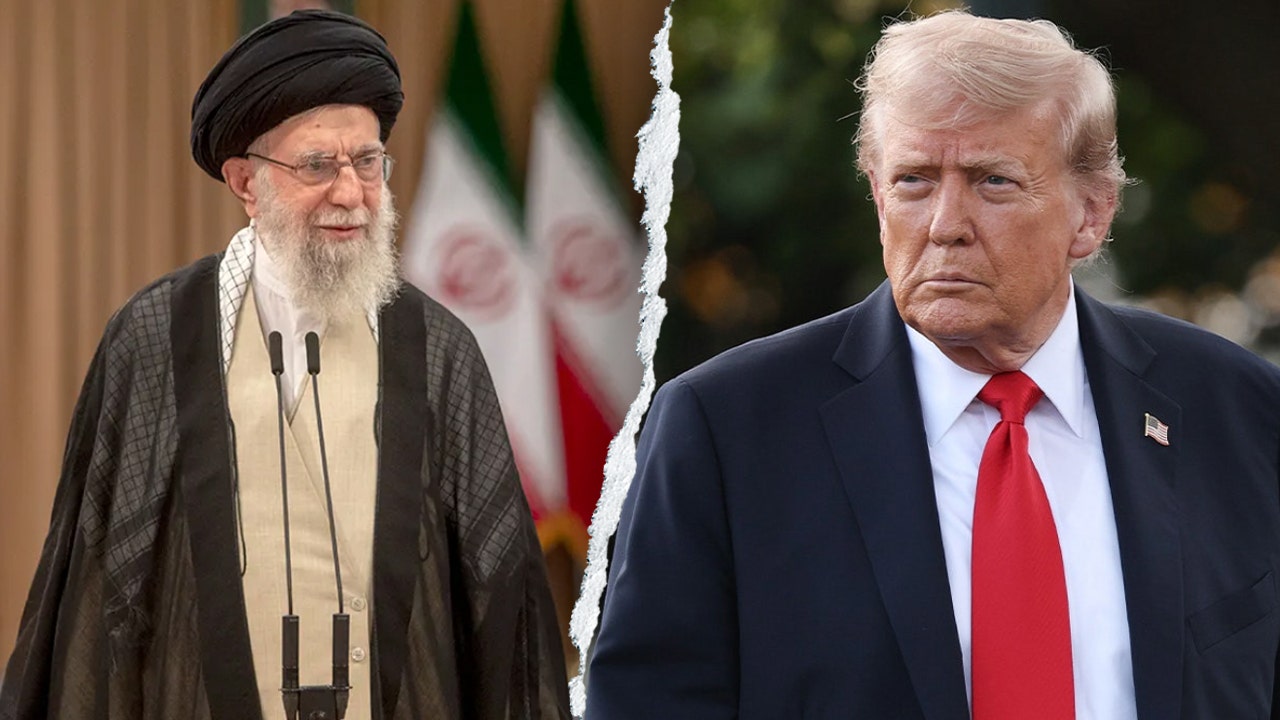
Back in June, President Trump indicated that he would make a decision on whether to launch a strike against Iran, stating that he would reach a conclusion “within the next two weeks.” However, he acted much sooner, reaching a decision just two days later.
Fast forward to Thursday, and President Trump has once again set the clock ticking for Tehran. This time, the Islamic Republic has been given a window of 10 to 15 days to engage in negotiations, or face the repercussions.
This accelerated timeline is now at the forefront of a fresh wave of high-stakes nuclear diplomacy. Yet, with President Trump, deadlines often serve a dual purpose: they act as both a stern warning and a strategic tool.
Jason Brodsky, who serves as the policy director at United Against Nuclear Iran, shared his insights with Fox News Digital, remarking, “The Iranian regime seems to be under the misguided belief that they can transform President Trump into President Obama. President Trump has made it abundantly clear that this is not up for negotiation.”
According to Brodsky, there is a prevailing sense within the administration that diplomacy is unlikely to yield a significant breakthrough. “I think there’s a profound skepticism within the Trump administration regarding the likelihood of these negotiations leading to any satisfactory outcome,” he noted.
Brodsky said there is little expectation inside the administration that diplomacy will produce a breakthrough. “I think there’s deep skepticism in the Trump administration that this negotiation is going to produce any acceptable outcome.”
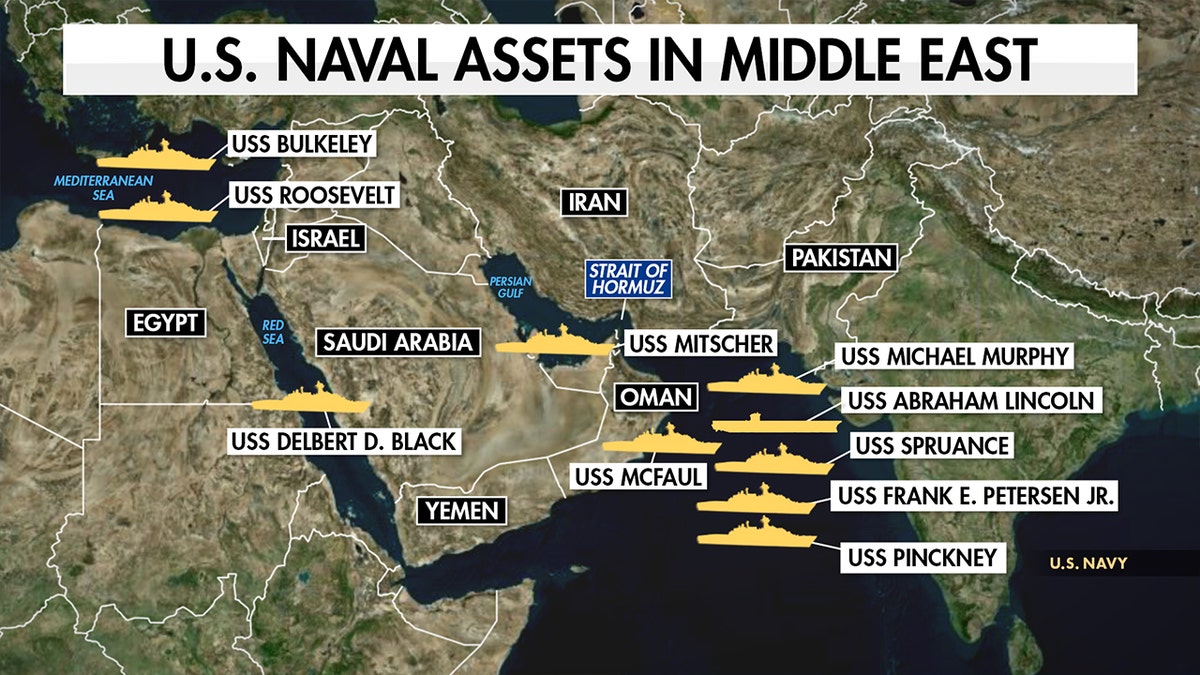
Instead, he said, the talks may be serving a dual purpose. “They’re using the diplomatic process to sharpen the choices of the Iranian leadership and to buy time to make sure that we have the appropriate military assets in the region.”
A Middle Eastern source with knowledge of the negotiations told Fox News Digital that Tehran understands how close the risk of war feels and is unlikely to deliberately provoke Trump at this stage.
However, the source said Iran cannot accept limitations on its short-range missile program, describing the issue as a firm red line set by Supreme Leader Ali Khamenei. Iranian negotiators are not authorized to cross that boundary, and conceding on missiles would be viewed internally as equivalent to losing a war.
The source indicated there may be more flexibility around uranium enrichment parameters if sanctions relief is part of the equation.
According to Brodsky, Iran’s core positions remain unchanged. “They’re trying to engage in a lot of distraction… shiny objects, to distract from the fact that they’re not prepared to make the concessions that President Trump is requiring of them,” he said. “The Iranian positions do not change and have not changed fundamentally. They refuse to accept President Trump’s position on zero enrichment. They refuse to dismantle their nuclear infrastructure. They refuse limitations on Iran’s missile program, and they refuse to end support for terror groups.”
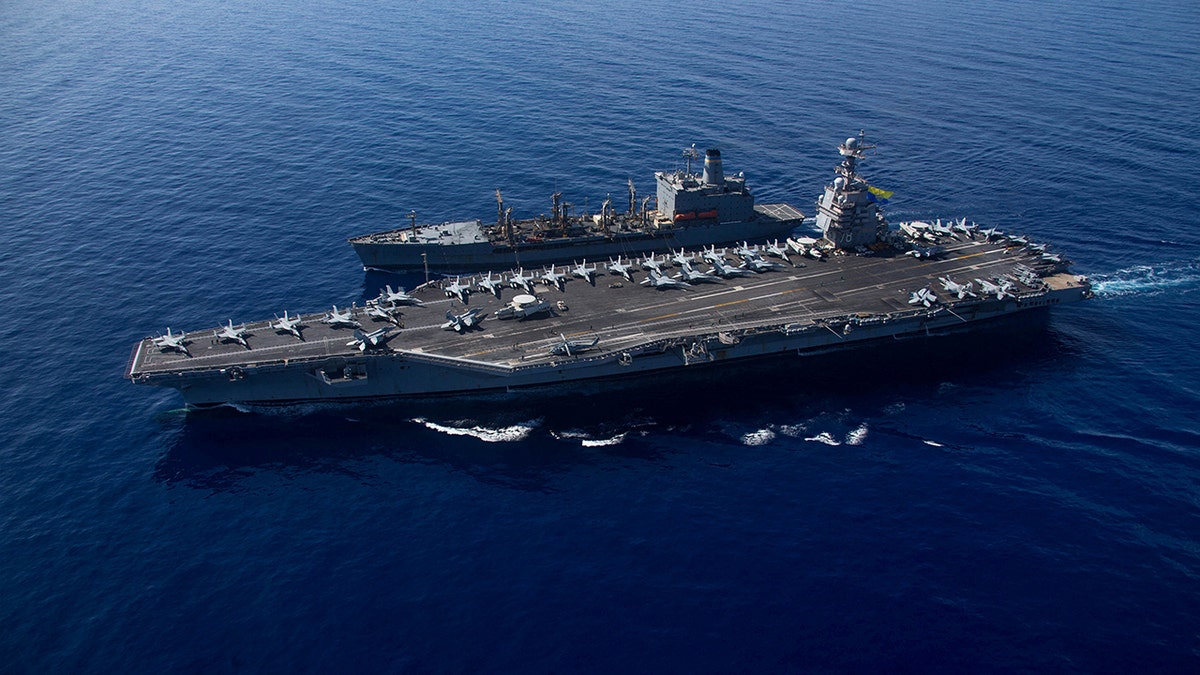
USS Gerald R. Ford pictured in the Mediterranean Sea. (U.S Naval Forces Central Command / U.S. 6th Fleet / Handout via Reuters)
Behnam Taleblu, senior fellow at the Foundation for Defense of Democracies, warned that Tehran may be preparing a different kind of proposal altogether.
“The first kind of deal that we have to be worried about… they may pitch an agreement that is based more on transposing the current reality onto paper… these kinds of agreements are more like understandings,” Taleblu said.
“You take the present reality, and you transpose that onto paper, and then you make the U.S. pay for something it already achieved.”
Taleblu outlined what he sees as Tehran’s strategic objectives. “The Iranians want three things, essentially. The first is they want to deter and prevent a strike.”
“The second is that they are actually using negotiations… to take the wind out of the wings of Iranian dissidents. And then the third is… they actually do want some kind of foreign financial stabilization and sanctions relief.”
“What the Iranians want is to play for time… an agreement like this doesn’t really require the Iranians to offer anything.”
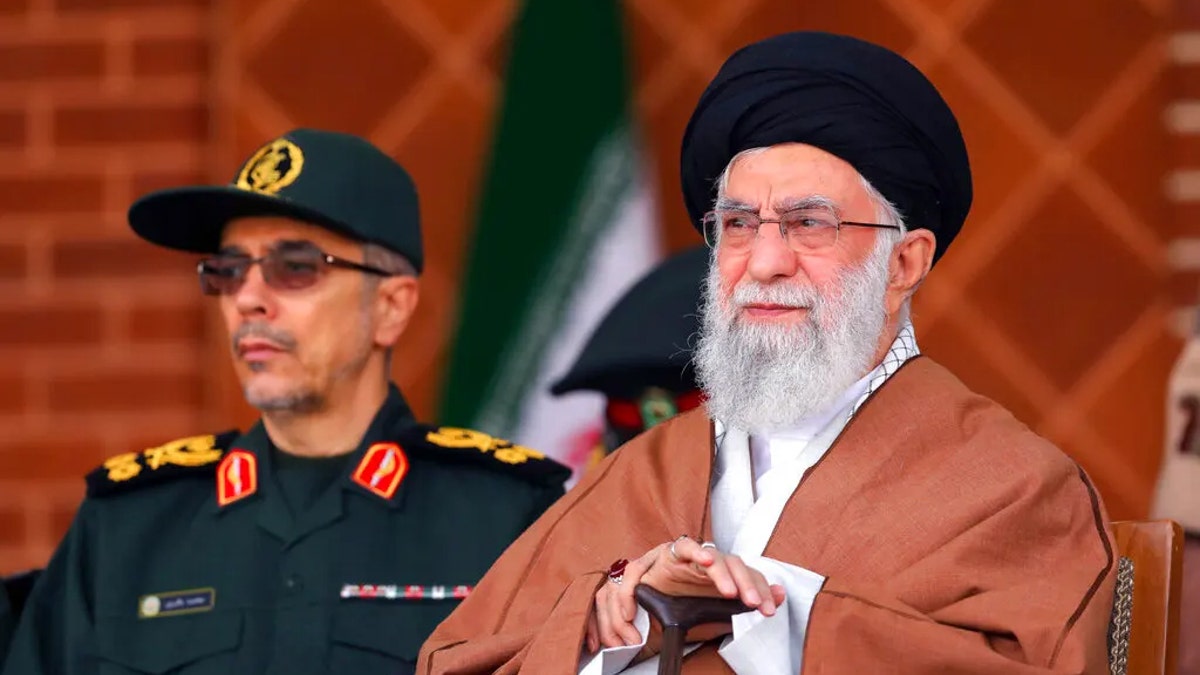
Iran’s Supreme Leader, Ayatollah Ali Khamenei pictured sitting next to senior military official in Iran. (Getty Images)
At the same time, Taleblu said the administration’s intentions remain deliberately opaque. “It’s hard to read the tea leaves of the administration here. Obviously, they don’t want a nuclear Iran, but also obviously they don’t want a long war in the Middle East.”
“The military architecture they’re moving into the region is signaling that they’re prepared to engage in one anyway. The question that the administration has not resolved politically… is: What is the political end state of the strikes? That’s the cultivation of ambiguity that the president excels at.”
Jacob Olidort, Chief Research Officer and Director of American Security at the America First Policy Institute, told Fox News Digital, “The President has been clear that he wants to give diplomacy a chance. However, if, in his estimation, diplomatic efforts prove unsuccessful, he will almost certainly turn to military options. What is rightfully unpredictable is the specific objective and scope of military action the President may take.”
“Specifically, will military action serve as a new layer of diplomatic pressure towards creating a new opportunity to make Iran agree to our demands — military force as coercive diplomacy — or simply achieve the intended objectives that diplomacy could not? Regardless, the President has a record of taking bold action to protect the American people from Iran’s threats.”
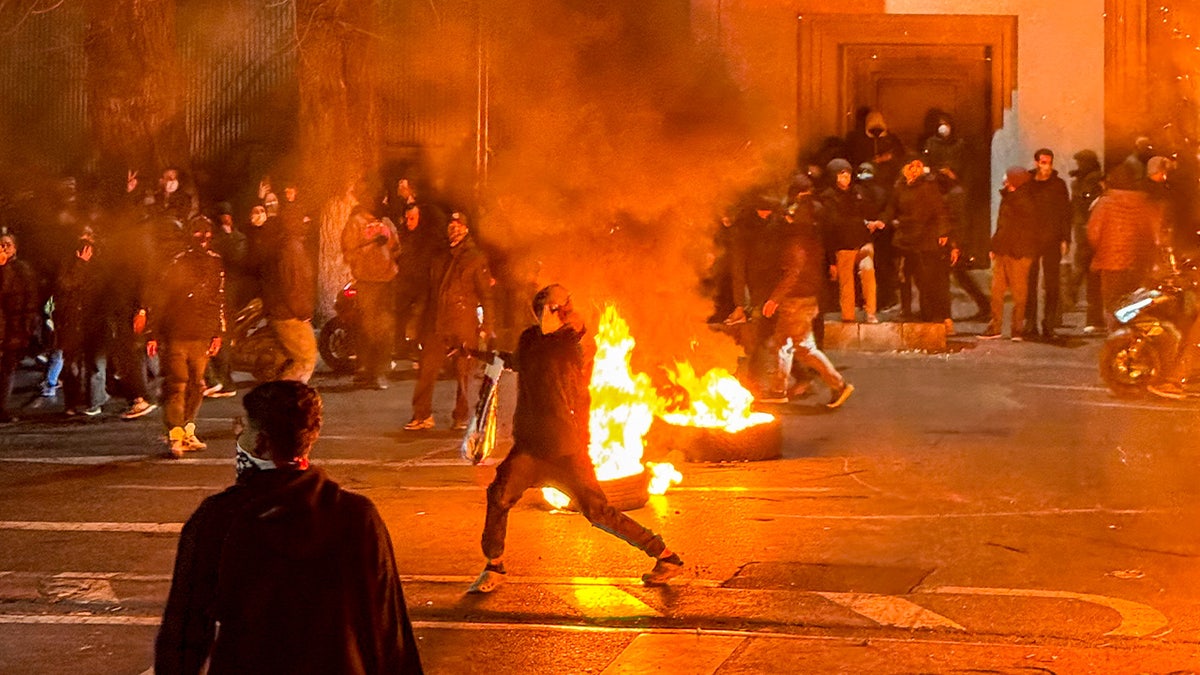
Iranians gather while blocking a street during a protest in Tehran, Iran on Jan. 9, 2026. (MAHSA / Middle East Images / AFP via Getty Images)
Public sentiment inside Iran remains deeply divided, Iranian sources told Fox News Digital. Many view a foreign military invasion as unacceptable, while anger over the killing of young protesters continues to fuel domestic tensions and uncertainty.
With a 10 to 15-day window ticking, Trump’s deadline may function less as a calendar marker and more as leverage.