
Trump plans to deport Iranians to violence-plagued central African nation in new deal

The Trump administration has reportedly set plans in motion to deport a group of Iranian asylum-seekers and other migrants to the Central African Republic (CAR) as part of a newly formed third-country agreement.

Sources indicate that the initial flight under this agreement could take off as soon as Thursday, potentially transporting about 20 individuals.

According to a report by Reuters, the plane’s passenger list is expected to include individuals from Syria, Afghanistan, and a Turkish national.

In recent times, the administration has increasingly utilized these third-country deportation agreements as a legal strategy to relocate migrants who cannot be sent back to their home countries.

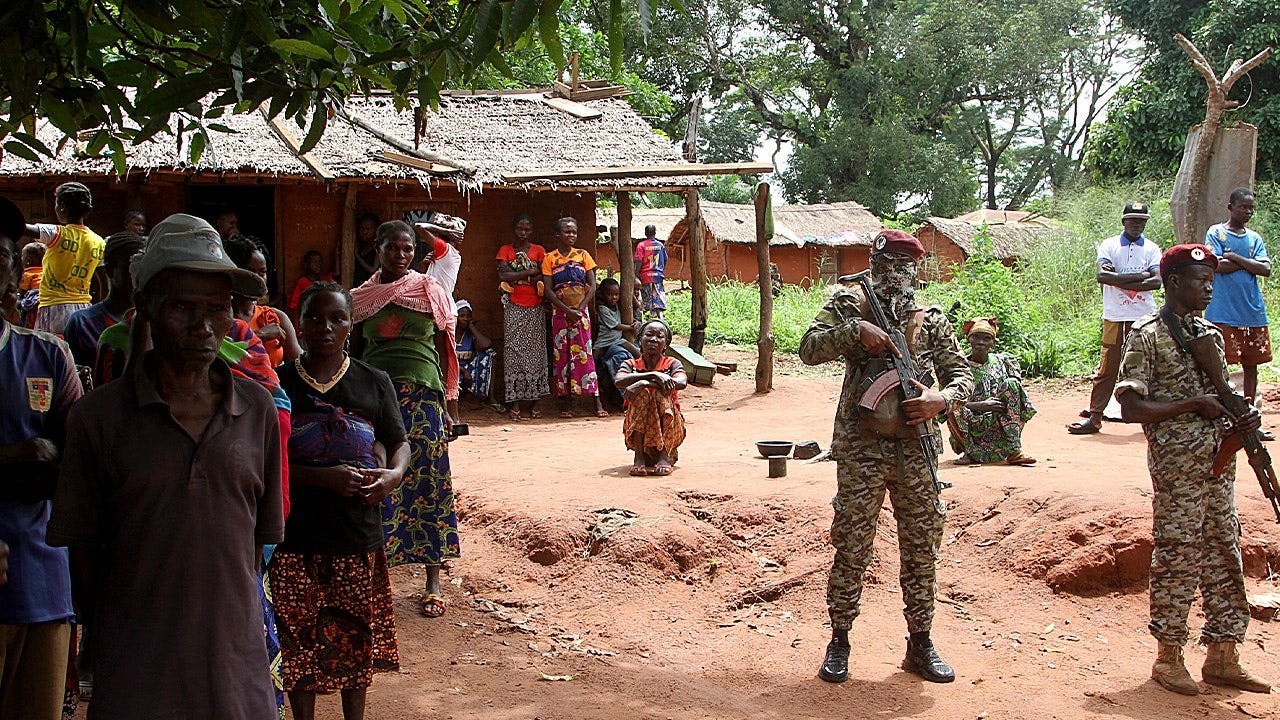
Under this framework, the Trump administration aims to deport Iranian asylum-seekers and other migrants to the Central African Republic, as highlighted by Pacome PABANDJI / AFP via Getty Images.

Previously, federal authorities had entered into a similar deportation arrangement with the Democratic Republic of the Congo (DRC).

The CAR is bordered by Chad to the north, Sudan and South Sudan to the east, the Democratic Republic of the Congo and the Republic of the Congo to the south, and Cameroon to the west.

Since gaining independence from France in 1960, the CAR has seen decades of political instability including six coups and weak state authority with armed insurgencies fuelimh violence and risk of mass atrocities against civilians.

President Faustin-Archange Touadéra, re-elected to a third term in December’s election, has relied on Russia for security assistance while also showing interest in partnering with Western countries to develop the country’s critical minerals sector.

Under the new U.S. deal, hundreds of migrants could ultimately be sent to there which has triggered pushback from immigration defense lawyers.

The Central African Republic is bordered by Chad to the north, Sudan and South Sudan to the east, the Democratic Republic of the Congo and the Republic of the Congo to the south, and Cameroon to the west. (Pacome PABANDJI / AFP via Getty Images)

Among those scheduled for the upcoming flight are two Iranian women who arrived in the U.S. in November 2024 and secured “withholding of removal” from a U.S. immigration judge.

According to their attorney, Emily Trostle, the two women face a risk of torture and persecution if forcibly returned to Iran. One of them is a baptized convert; the other is a democracy activist, Trostle said.

Both women were detained after arriving in the United States in November 2024, and filed asylum applications in the United States where they received protection in the form of a stay of deportation from an immigration judge, Trostle told the outlet.

The latest deal was reportedly finalized during a U.S. delegation visit to the capital city of Bangui in May, Reuters said.

U.S. Department of State headquarters building with illuminated office lights at dusk

The changes, implemented this week in the Foreign Affairs Manual — the department’s central repository for policies — mark the first time the agency has formally codified expectations for how diplomats and staff should dress in official settings. (J. David Ake/Getty Images)

Initial details regarding the total number of migrants, specific nationalities, and the long-term timing of subsequent flights were not made available at that time.

Once in the CAR, the deportees are expected to be housed in apartments in Bangui and will not face immediate repatriation.

The International Organization for Migration (IOM), which received $85 million in U.S. funding this year, confirmed it will provide strictly voluntary, post-arrival humanitarian assistance to the migrants at the explicit request of the Central African government.

The agency noted it remains entirely uninvolved in the actual removals.

At least eight African nations, including Eswatini, the DRC, Ghana, and Sierra Leone, have taken in U.S. deportees, usually in exchange for financial or logistical support.

The State Department and Trostle did not immediately respond to requests for comment.

–>

Leave a Reply

Your email address will not be published. Required fields are marked *