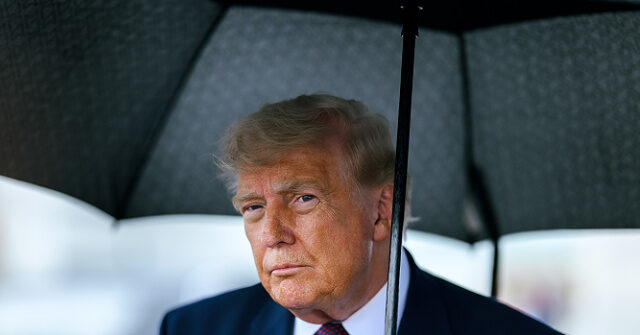

President Donald Trump said Iran had “called a little while ago” and was eager to reach an agreement after the United States carried out a second straight night of strikes on Iranian targets. But he cast doubt on whether Tehran was “worthy” of a deal and warned that any further attacks would be answered with overwhelming force.
Trump made the remarks aboard Air Force One on Wednesday night as he returned to Washington from the NATO summit in Ankara. He said Iranian officials had reached out following the latest U.S. strikes, which reportedly were the first American attacks on Iranian infrastructure since the April 8 ceasefire and came after Iran targeted commercial vessels moving through the Strait of Hormuz.
“They called a little while ago. They want to make a deal so badly,” Trump said. “I just don’t know if they’re worthy of making a deal. I don’t know if they’re going to honor the deal. That’s the problem.”
When asked why Iran would strike commercial shipping if it was seeking an agreement, Trump described the regime as “sort of crazy” and “a little bit out of control,” while insisting that Tehran still wanted negotiations.
“They want to make a deal — badly,” he said.
Trump said the latest military action demonstrated that the United States had already accomplished its main objectives. He also issued a sharp warning that any additional Iranian aggression would be met with a significantly stronger response.
“We just hit them very hard,” Trump said. “We hit them 20 to 1. Every time they hit us, we’re going to hit them twenty[-fold].”
The comments came after U.S. Central Command announced that American forces had completed an additional round of strikes against Iran, saying the operation was intended to further degrade Tehran’s ability to attack commercial shipping and civilian mariners transiting the Strait of Hormuz.
U.S. Central Command said American forces struck about 90 Iranian military targets, including air defense systems, coastal surveillance equipment, missile and drone storage facilities, naval assets and military logistics infrastructure along Iran’s coastline.
The command said the operation followed the previous night’s strikes, during which U.S. forces hit approximately 80 Iranian military targets, including more than 60 Islamic Revolutionary Guard Corps small boats, after Iran attacked three commercial vessels in the Strait of Hormuz in violation of the ceasefire.
“U.S. forces remain vigilant, lethal, and prepared to execute operations directed by the Commander in Chief,” CENTCOM said.
A U.S. official told Axios that Wednesday’s operation included strikes on two railway bridges in northern Iran, marking the first reported U.S. attacks on Iranian infrastructure since the April 8 ceasefire. Other reported targets included coastal radar systems, anti-ship missile positions, air defenses, and other military assets tied to Iran’s operations near the Strait of Hormuz.
Trump also framed the strikes as direct retaliation for Iran’s attacks on commercial shipping.
“This is in retribution for yesterday’s bombing of ships by Iran,” Trump wrote on Truth Social. “If it happens again, it will get much worse!”
Vice President JD Vance earlier described the administration’s posture in similar terms, saying the understanding with Tehran was that Washington would lift its blockade if Iran stopped attacking ships, but would respond with even greater force if the attacks resumed.
“If you shoot at ships, we are going to punch back, and we’re going to punch back harder than ever before,” Vance said.
Iranian officials threatened retaliation, with Iranian Parliament Speaker Mohammad Bagher Ghalibaf warning, “If you strike, you’ll get hit.”
“America still hasn’t learned that bullying and breaking promises are no longer cost-free,” Ghalibaf wrote on X, insisting the Strait of Hormuz would open only under “Iranian arrangements,” not “American threats.”
Iranian Deputy Foreign Minister Kazem Gharibabadi warned the American strikes “will not go unanswered,” while Foreign Minister Abbas Araghchi said Iran would “not answer vulgarity with vulgarity, but with action.”
Kuwait said its air defenses were intercepting hostile missile and drone attacks while air raid sirens sounded in Bahrain. Iranian forces had targeted U.S. military sites in both Gulf states following the previous night’s American strikes.
The latest escalation followed Iran’s attacks on three commercial vessels transiting the Strait of Hormuz, which Washington described as a violation of the memorandum of understanding intended to halt hostilities, restore freedom of navigation through the strategic waterway, and create space for negotiations over Tehran’s nuclear program.
Trump declared earlier Wednesday that he considered the ceasefire “over,” but said aboard Air Force One that Iran had nevertheless reached out seeking renewed negotiations, even as he questioned whether the regime could be trusted to honor any future agreement.