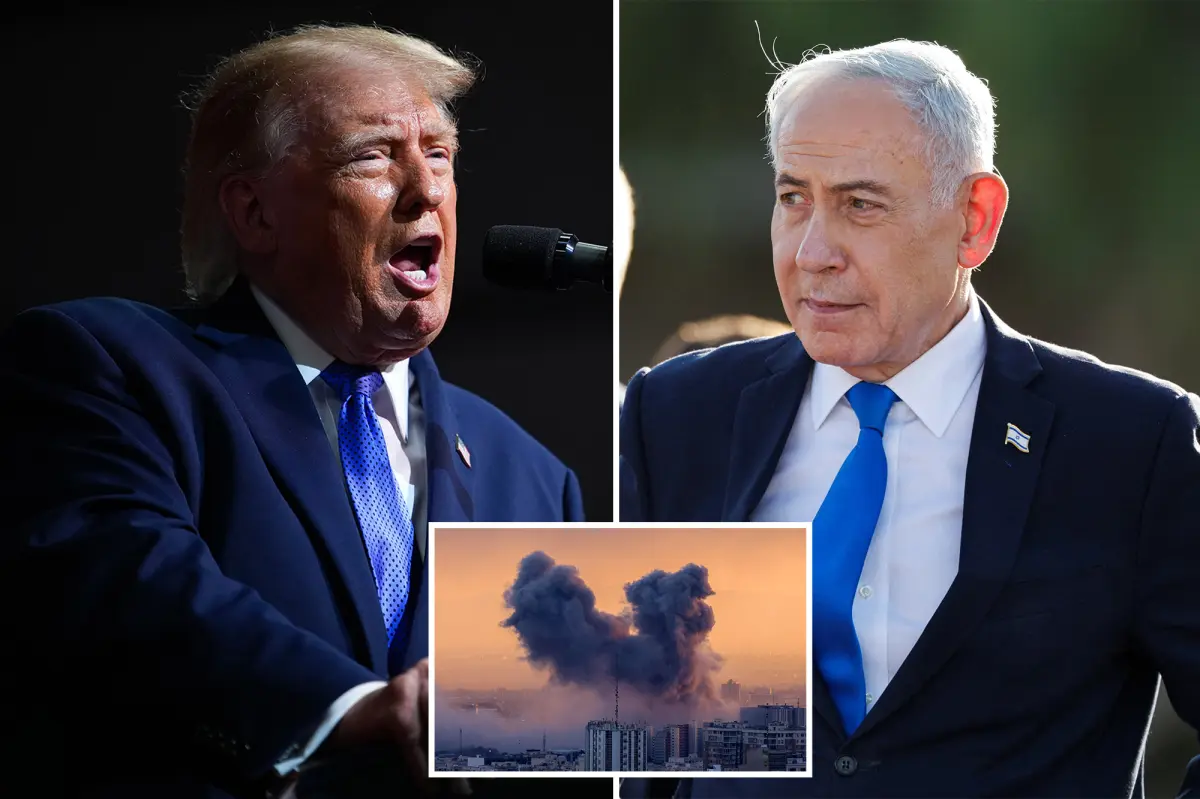

WASHINGTON — The United States has spent months preparing to reduce nearly $4 billion in annual aid to Israel beginning in 2027, as President Trump considers his next steps in the Iran war that contributed to Republican losses in the midterm elections.
Trump announced Tuesday that billions of dollars in direct US assistance would be withdrawn ahead of the 2026 elections. However, a US official told The Post that discussions with Israel over a Memorandum of Understanding set to expire in fiscal year 2028 had already been underway for months.
Signed in 2016, the agreement committed the United States to providing Israel with $38 billion in military support over 10 years. The package included $33 billion in Foreign Military Financing, or FMF, along with $5 billion for missile defense — an average of roughly $3.8 billion annually.
“POTUS accelerated those plans,” the official said. “But for months we’ve been planning on reducing direct aid and reframing the MOU more as a strategic partnership.”
The official said Israel had proposed gradually reducing US assistance, most of which comes through FMF. Under one option, the funding could end entirely when the next fiscal year begins on Oct. 1, 2027, provided the “Israelis are OK with a steeper cliff.”
Any such change would also require congressional approval. Representatives for Republican leaders of the House and Senate committees responsible for foreign affairs did not immediately respond to requests for comment.
“They don’t need it,” Trump said Tuesday morning on “Fox & Friends” when asked about the aid. He added that Israeli Prime Minister Benjamin Netanyahu had previously raised the possibility of ending the assistance.
“We give them more than anybody else, and they no longer need it. We’ve been doing it for years,” Trump said. “He [Netanyahu] said, ‘I think it would be appropriate if we do not receive aid,’ because he understands that this is one of their points of contention.”
Later that day, Republicans suffered major losses in the midterm contests, giving Democrats control of Congress. Netanyahu is also facing political pressure after his Likud party lost its majority in Israel’s Knesset, or parliament, in an election last week.
IN CASE YOU MISSED IT: Dr Saira Bano on Reta for Patients Stuck at a Mounjaro Plateau
Gadi Eisenkot, Netanyahu’s chief rival in that election, criticized the government in a statement to the Associated Press. “The fact that Israel’s defense establishment is learning of a shift in our strategic relationship through the media, at the same time as the Israeli public, shows just how dangerous Benjamin Netanyahu’s conduct is,” he said.
Yair Golan, another Israeli opposition figure, told the AP that the move would deliver a “severe blow to Israel’s security.”
Within 24 hours of Election Day, both Trump and Vice President JD Vance conceded that the US decision to join Israel in launching military action against Iran had alienated some voters who had previously supported the 47th president.
“Iran was a piece of it,” Trump told The Wall Street Journal in a Tuesday night interview, referring to the Democrats’ sweeping midterm victory.
“At the same time, if I had to do it again, I’d have to do it again because long-term, it’s the only answer. You can’t let Iran have a nuclear weapon,” Trump told reporters Wednesday.
One day earlier, Trump said he was not preparing a major attack on Iran following the 2026 midterm elections.
In a Wednesday post on X, Vance argued that voters who backed him and Trump two years ago would need to see the United States “[c]hange our relationship to Israel” before supporting them again.
Representatives for the Israeli Embassy did not respond to a request for comment.