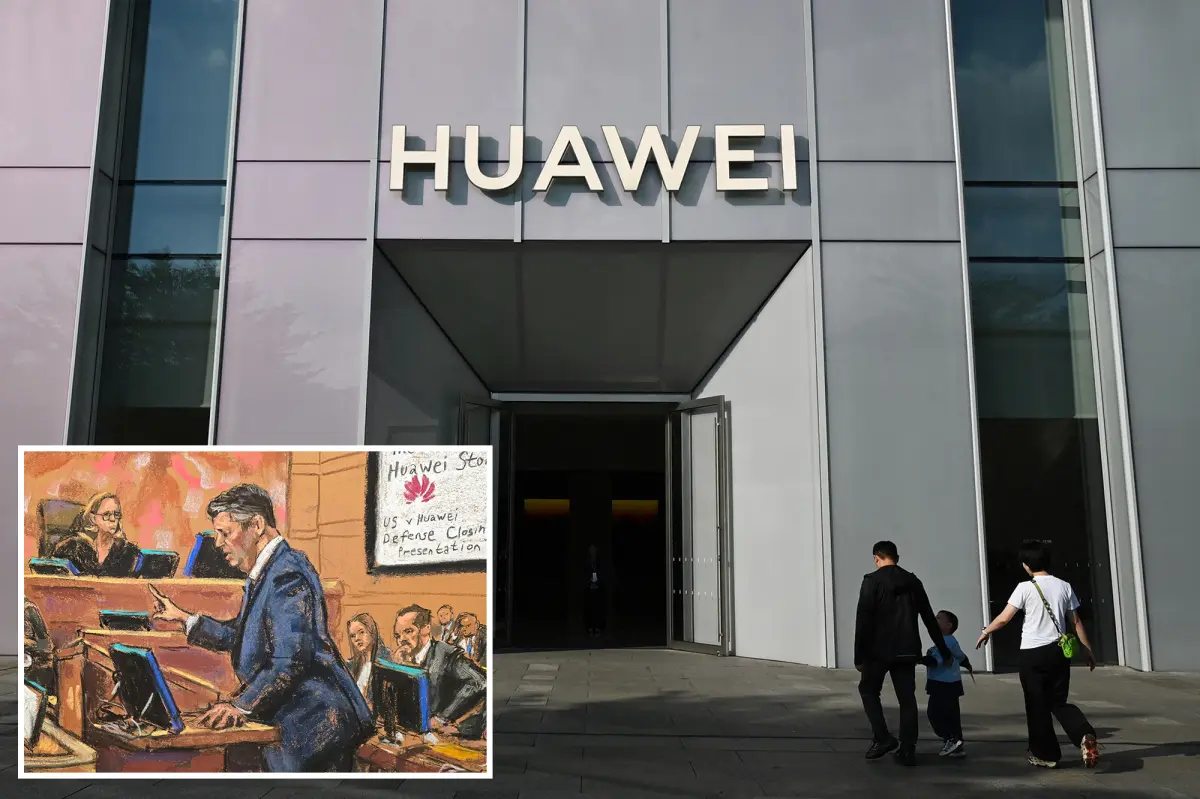
A US jury on Tuesday convicted Chinese technology giant Huawei Technologies of conspiring to steal trade secrets and committing bank fraud as the company expanded into one of the world’s largest suppliers of wireless telecommunications equipment.
Jurors, however, acquitted Huawei of the most serious charge: participating in a criminal racketeering conspiracy to steal intellectual property from US companies.
The verdict came after a lengthy trial in which federal prosecutors argued that Huawei had repeatedly taken technological secrets from competitors and business partners in the United States and other countries.
Prosecutors also accused Huawei of conducting business in countries facing US sanctions, including Iran and North Korea, while making false statements to government officials and financial institutions to conceal its conduct.
Huawei’s lawyers countered that investigators had taken isolated incidents involving a small number of the company’s more than 200,000 employees and presented them as evidence of a sweeping conspiracy that did not exist.
The impact of the verdict on Huawei’s global business remains uncertain. The company has been barred from selling equipment to US carriers for years because of national security concerns, and other Western allies, including Canada and Britain, have also restricted its access to their markets.
Those limits have not prevented Huawei from maintaining a substantial international business. Its smartphones and telecommunications equipment are sold around the world. In recent years, the company has also moved further into chipmaking as the artificial intelligence boom drives demand for microprocessors, making it an important Chinese alternative to manufacturers such as Nvidia.
The US first announced criminal charges against Huawei in early 2019 and later broadened the allegations.
Chinese officials accused Washington of “economic bullying,” arguing that the United States had improperly invoked national security as a justification for targeting Chinese companies.
The indictment described what prosecutors characterized as a longstanding pattern of technology theft. In one instance, Huawei allegedly sold internet routers containing source code copied from a competitor. In another, an individual working for the company reportedly entered a competitor’s booth at a Chicago trade show and secretly photographed the circuits inside a networking device. Prosecutors also said a Huawei employee removed a robotic arm from a competitor’s laboratory so it could be photographed and measured.
Court records identified the alleged victims as Cisco Systems, Motorola Solutions, T-Mobile, Quintel USA and Fujitsu.
“The tone was set at the top by Huawei leaders and executives who themselves engaged in criminal conduct, like lying to Congress, lying to banks, violating US sanctions and trying to interfere with the very criminal investigation that led to this case,” prosecutor Meredith Arfa told jurors.
In his closing argument, Huawei attorney Brian Heberlig said prosecutors had relied on “innuendo and facts ripped out of context,” along with testimony from former employees who had “a bone to pick” with the company. He argued that Huawei’s success was built on “hard work, innovation and competition.”
“Huawei didn’t steal its way to success,” Heberlig said, pointing out that much of the material the US claimed was stolen had already been publicly available.
“You can’t steal a secret that isn’t a secret,” he said.
Heberlig also said Huawei had paid billions of dollars in licensing fees over the years, with 75% of those payments going to US companies, and had disciplined or dismissed employees found to have committed wrongdoing.
Heberlig noted that portions of Cisco source code had appeared in Huawei software more than two decades ago. After the copying was discovered, he said, Huawei recalled routers sold in the United States, offered to replace them with Cisco products and established what he described as a “compliance culture that permeates Huawei today.”
US prosecutors initially charged Huawei’s chief financial officer, Meng Wanzhou, as well, alleging that she misled HSBC about the company’s business in Iran. Meng, the daughter of Huawei’s founder, was arrested in Canada in 2018 but was allowed to return to China in 2021 as part of a prisoner swap that secured the release of two Canadians held by China. The US dropped its case against Meng under the agreement.
The New York trial coincided with a summit involving President Donald Trump, Chinese President Xi Jinping and Russian President Vladimir Putin in Shenzhen, China, a city known for its technology industry.


