
Opening statements have concluded in the murder trial of Duane “Keffe D” Davis, the man charged in connection with the 1996 killing of hip-hop icon Tupac Shakur in Las Vegas.
Davis, 63, is not accused of firing the fatal shots. Prosecutors say he was riding in a white Cadillac with three other people during the drive-by attack that targeted Shakur and former Death Row Records boss Marion “Suge” Knight, who was wounded but survived. Knight is currently imprisoned in California in an unrelated case.
Authorities allege Davis later described the shooting in detail, including during a 2008 interview with detectives and in his 2019 book, “Compton Street Legend: Notorious Keffe D’s Street-Level Accounts of Tupac and Biggie Murders, Death Row Origins, Suge Knight, Puffy Combs, and Crooked Cops.”
Clark County Chief Deputy District Attorney Binu Palal used his opening statement to outline Davis’ alleged gang connections, describing him as the leader of a Compton-based Crips faction. Palal also placed Davis not only at the scene of Shakur’s killing, but at a Los Angeles party attended by Shakur’s musical rival, Biggie Smalls, on the night Biggie was murdered six months later.
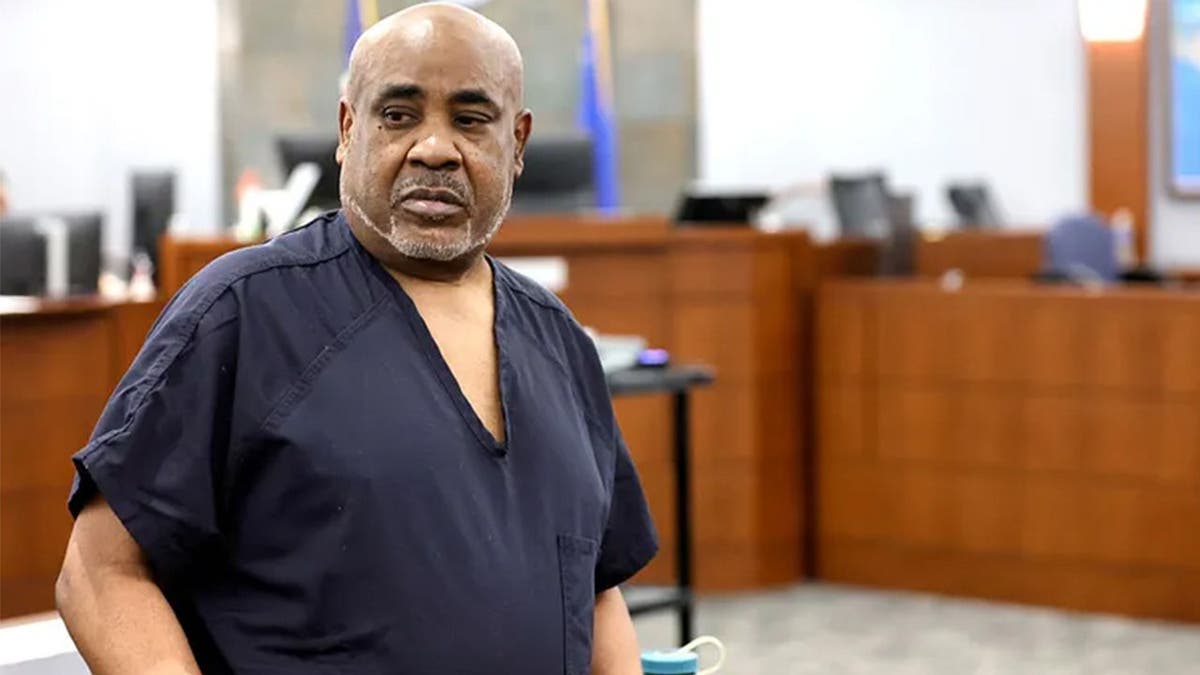
Duane “Keffe D” Davis enters a courtroom in Clark County District Court for a trial readiness status check at the Regional Justice Center on June 17, 2025, in Las Vegas, Nevada. (Steve Marcus-Pool/Getty Images)
“Duane Davis made sure that the shooters were armed and ready to execute their revenge — and remarkably, you will learn that from Duane Davis himself,” Palal told jurors.
During the prosecution’s opening remarks, Palal played multiple clips from Davis’ past interviews.
Palal said Davis was present both when Shakur was shot in Las Vegas and at the Los Angeles gathering connected to the night Christopher Wallace, better known as the Notorious B.I.G., was killed. Davis shook his head in court as the prosecutor made that claim.
While few people ever spoke about the crimes, Palal said Davis had a hard time keeping quiet — dishing details on Shakur’s murder in three separate interviews with federal investigators, then in a televised documentary and again in his 2019 book.
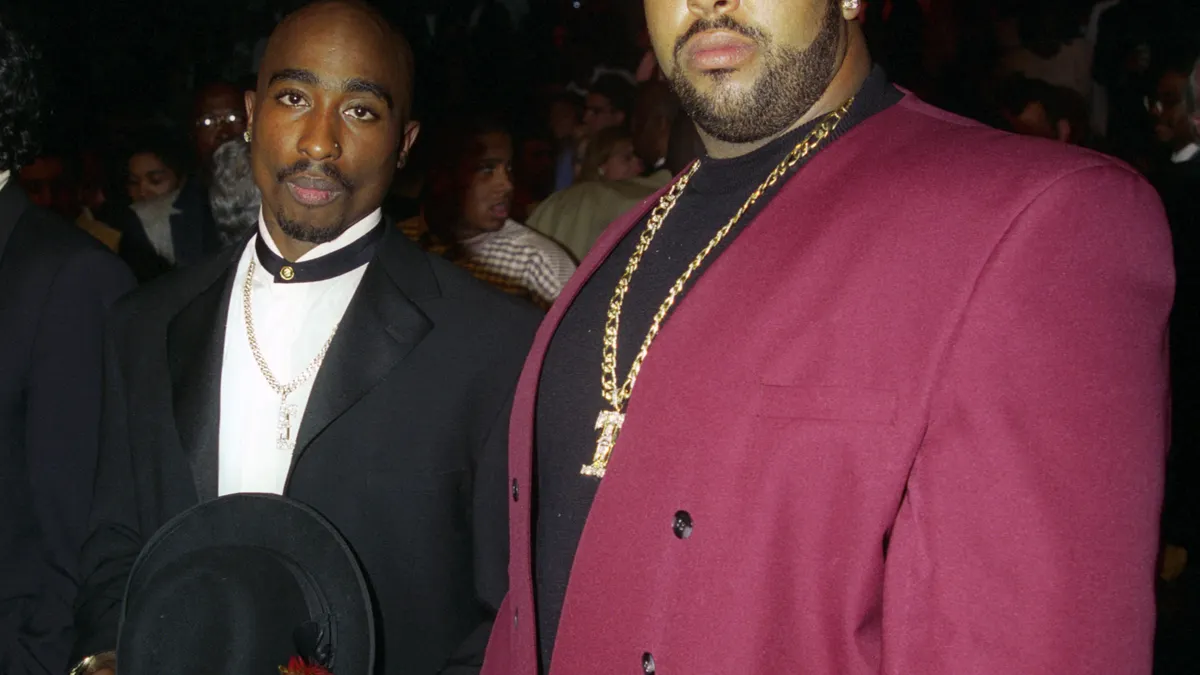
The late Tupac Shakur and Marion “Suge” Knight were pictured in 1996. Knight is currently serving a 28-year prison sentence after pleading no contest to voluntary manslaughter in 2018. (Jeff Kravitz)
In promotional material for the book on Amazon, Davis is described as a “former shot caller for the Southside Compton Crips and Kingpin of a Compton based drug operation,” as well as “one of the only living witnesses to the 1996 slaying of rapper Tupac Shakur.”
Davis was a confidential informant for the Los Angeles Police Department during the 2008 interview. However, the judge agreed with prosecutors that his remarks should be allowed at trial because of the public statements in the book.
The defense has argued that Davis embellished and fictionalized claims in the book and challenged the admissibility of statements from the 2008 interview.
“What they are telling you, they’re representing it to be a fact when it really is fiction. And it’s up to you to determine what the facts are in this case,” defense attorney Michael Sanft said in his own opening.
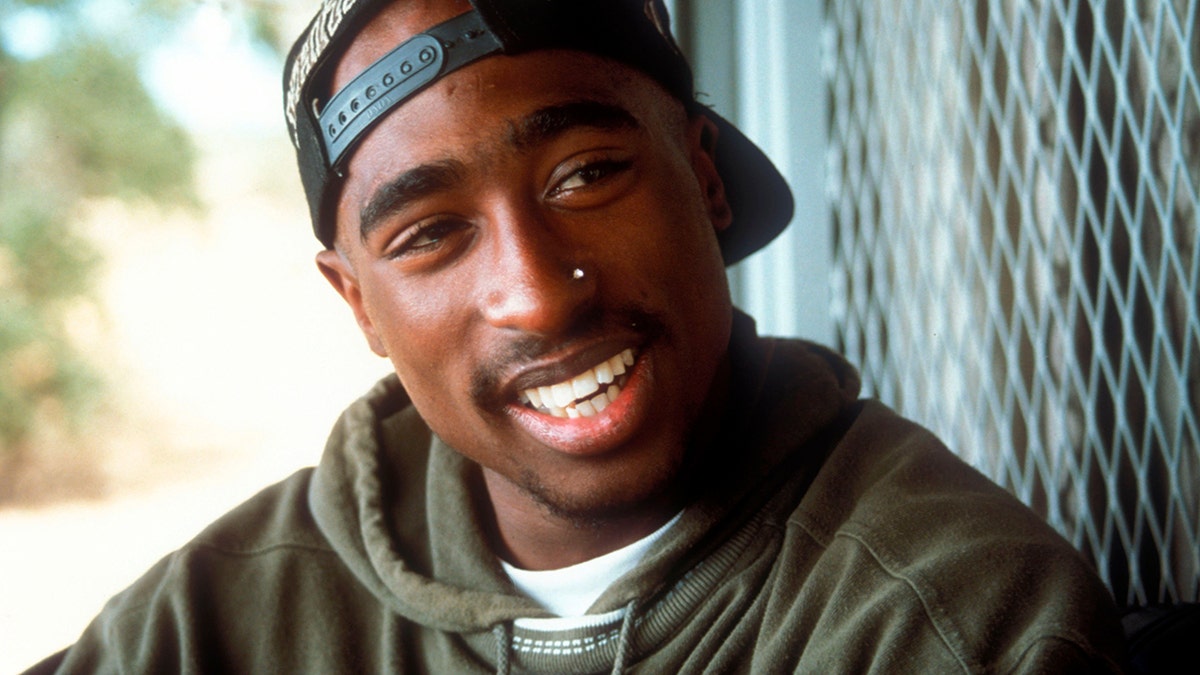
Tupac Shakur in “Poetic Justice.” (Columbia/Kobal / Shutterstock)
Sanft accused investigators of never properly vetting the claims in Davis’ book — undercutting the authenticity of his statements.
He said police did not interview another suspected eyewitness after Davis claimed he was present at the time of Shakur’s death. That witness has since died.
And Sanft accused former LAPD Detective Greg Kading, who is on the witness list, of stealing the LAPD’s case file on the murders of both Shakur and Wallace.
Despite all the interviews with Davis over the years, and the 2019 book, prosecutors didn’t charge him until recently, he added.
Knight, another living witness, has said in recent interviews that he doesn’t intend to cooperate if called to testify. His name appears on the prosecution witness list. He has not responded to messages from News Outlet.
The assailants struck Shakur four times on Sept. 7, 1996, while he was in a BMW alongside Knight on the Las Vegas Strip. He died from his injuries six days later, at 25 years old.
Three other men believed to have been in the Cadillac with Davis that night have since died.
Hours before the shooting, Shakur, Knight and others were involved in a fight at the MGM Grand with Orlando “Baby Lane” Anderson, Davis’ nephew and a member of the South Side Compton Crips. The other two were Deandrae “Freaky” Smith and Terry “Bubble Up” Brown.


