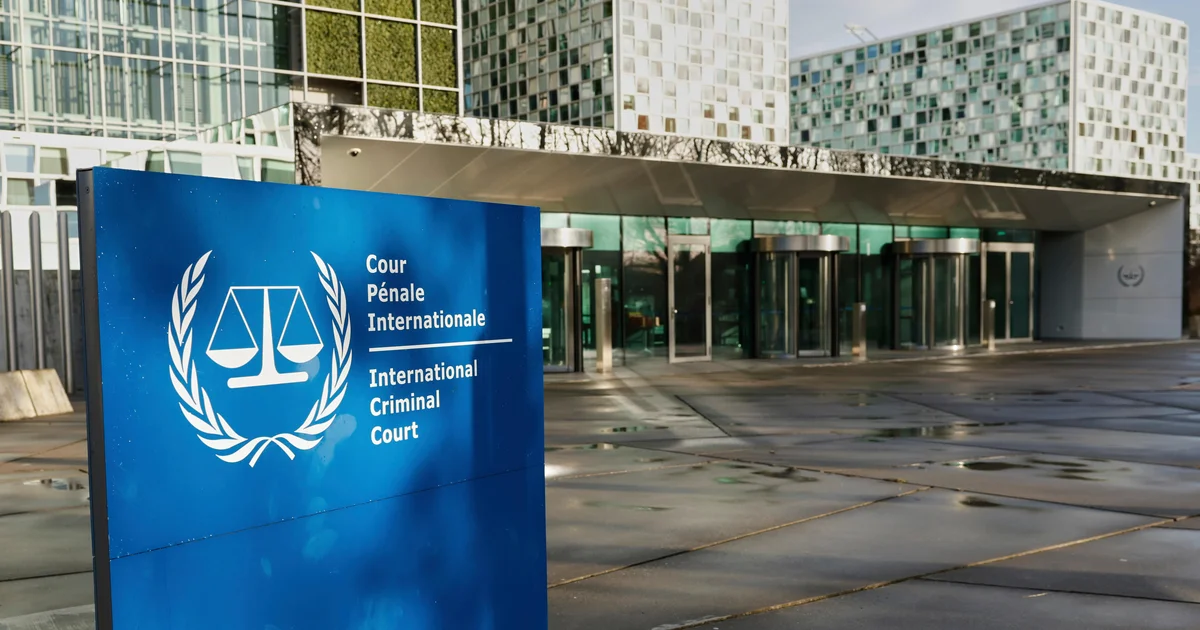

The Trump administration announced new sanctions against the International Criminal Court on Friday, escalating its campaign against the institution after previously penalizing more than a dozen of its judges and prosecutors.
“Either the ICC will end its threats, or we will end the ICC,” Secretary of State Marco Rubio said in a statement detailing the measures.
The announcement came only hours after the Norwegian Nobel Committee said it would award the Nobel Peace Prize to Navanethem “Navi” Pillay, a South African-born human rights official who served as an ICC judge from 2003 to 2008. Pillay also headed a U.N. inquiry that concluded last year that Israel had committed genocide in Gaza, a finding Israel has strongly rejected.
Neither the United States nor Israel is a party to the Rome Statute, the treaty that created the ICC. Washington has long opposed the court’s investigation into alleged war crimes by U.S. personnel in Afghanistan, as well as its arrest warrants for Israeli leaders accused of crimes in Gaza.
The ICC says it has authority to prosecute crimes committed in territory within its jurisdiction, even when the alleged offender is a citizen of a country that has not joined the court.
Rubio has previously called the ICC a “fatally politicized supranational court” that has “maliciously abused its authority.” On Friday, he said the administration would dismantle the institution “brick by brick” if required.
The sanctions block ICC assets under U.S. jurisdiction and generally prohibit U.S. companies and individuals from conducting business with the court. The Treasury Department is allowing some services to continue temporarily, giving the ICC 180 days to sustain certain operations while member states consider Washington’s objections.
“We have structured this action to provide an opportunity for States Parties to negotiate and present a solution to address our concerns,” Rubio said. “If these efforts do not bear fruit, we will continue to adjust accordingly.”
The ICC condemned the sanctions, saying they were intended to disrupt its work and intimidate people who cooperate with the court. It described the move as “an assault on the rule of law.”
“The Court will continue to fully discharge its mandate, with independence and impartiality,” ICC President Tomoko Akane said. The court also urged its 125 member states to provide the resources needed to keep operating, warning that its future now depends partly on the governments that established it.
The ICC’s members include most U.S. allies in Europe, including every NATO member except Turkey. Canada, Japan and Australia are also among the court’s member states.
The foreign ministers of Canada, Denmark, Germany, France, Italy, Japan, the Netherlands and the U.K. said later Friday that they “regret and strongly disagree with the announcement of sanctions to be imposed upon the Court by the United States.”
EXPLORE MORE: Presley Gerber on the Modeling Industry Rumor That Haunted Him as a Teenager
“[I]f put into effect, these sanctions will have a significant impact on the Court’s work, its dedicated staff and their families,” the countries said. “They work every day to bring those accused of the most serious international crimes to justice and to support their victims.”
Pillay left the ICC in 2008 to serve as the United Nations High Commissioner for Human Rights. She currently sits on the International Court of Justice, a separate institution from the ICC.
She also chaired the U.N. Commission of Inquiry on the Occupied Palestinian Territory. In September 2025, the panel determined that there were “reasonable grounds” to conclude that “the Israeli authorities and Israeli security forces have committed and are continuing to commit” acts of genocide. Israel’s foreign minister dismissed the report as “fake,” saying it “relies entirely on Hamas falsehoods, laundered and repeated by others.”
In a video released after news of her Nobel Peace Prize, Pillay referred to the U.S. campaign against the ICC.
“We are living through an era when international law and human rights are under significant political attack,” she said. “This worsening reality is particularly visible with the attacks on the International Criminal Court.”
Israeli Prime Minister Benjamin Netanyahu’s office said the decision to honor Pillay demonstrated that the Nobel Committee “has lost its moral compass.”
“It has awarded its highest honor to a bigot who built her career around inventing and propagating blood libels against the one and only Jewish state,” Netanyahu’s office said in a post on X.
The latest U.S. action followed a speech Rubio gave Wednesday in Athens, delivered against the backdrop of the Acropolis. In the address, he criticized Western governments for transferring national authority to international bureaucracies.
“[W]ith every passing year, we seemed to outsource more of our sovereignty, transferring our decisions to global bureaucracies far beyond the reach of our control,” he said.