
Share this @internewscast.com

Southern Europe is currently experiencing a rare meteorological event known as “blood rain,” as dust from the Sahara Desert in Africa sweeps across the region. This unusual phenomenon began on Saturday, with the dust being carried north over Spain and Portugal, resulting in the striking occurrence of blood rain in Spain, France, and the United Kingdom.
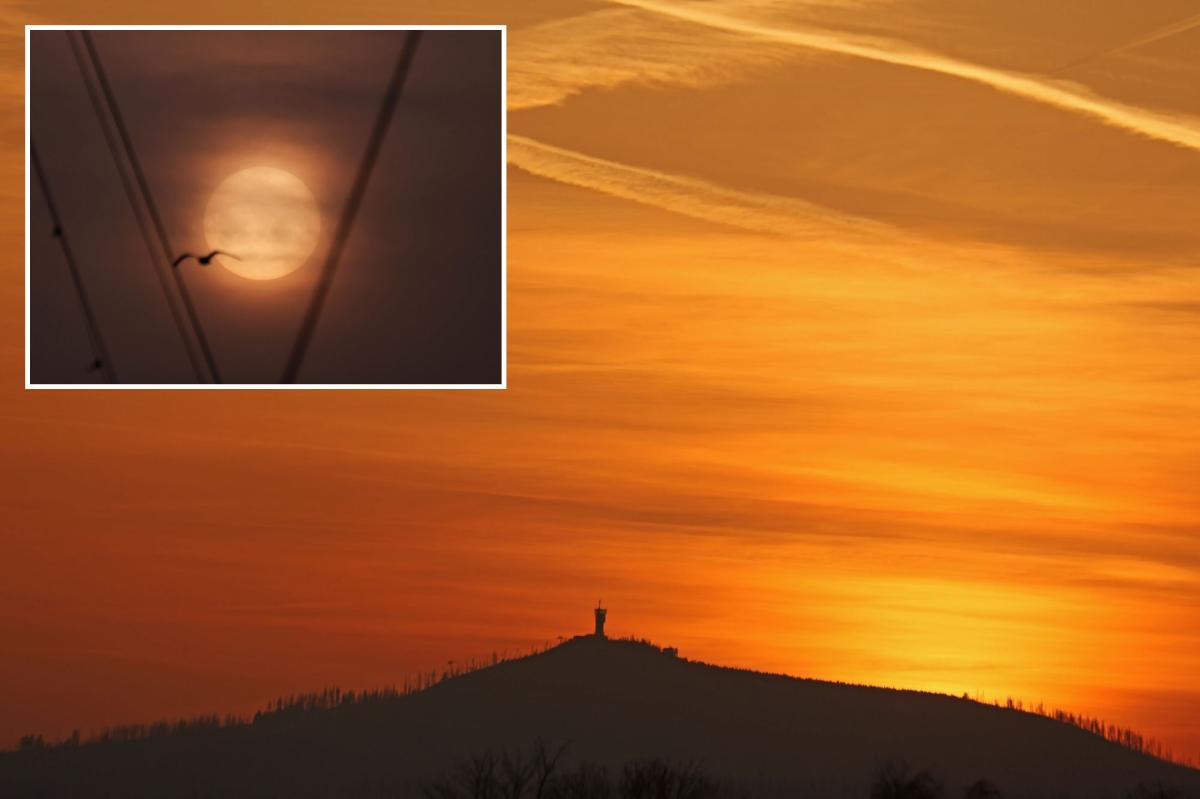
The movement of Saharan dust has already led to hazy red skies and breathtaking sunsets across the affected areas, painting the skies with dramatic hues. Blood rain occurs when fine dust particles from the Sahara are lifted by the wind into the atmosphere. These particles then mix with rain, causing the precipitation to take on a red or reddish-brown appearance, giving the illusion of blood falling from the sky.
Often referred to as mud rain or dirty rain, this event is relatively rare, occurring only a few times each year when all the necessary conditions align perfectly. It serves as a striking reminder of the powerful and far-reaching influence of the Sahara Desert on weather patterns across Europe.
Blood rain occurs when dust particles from the Sahara Desert are lifted by the wind into the atmosphere.
The tiny particles mix with rain, causing the rainwater to appear red or reddish brown, making it look like blood is falling from the sky.
This weather event is known as mud rain or dirty rain and only happens a few times a year if all the ingredients align.
Once the rain settles, it leaves behind layers of dust on outdoor objects such as lawn furniture, sidewalks, homes, and cars.
Saharan dust and associated mud rain can worsen air pollution levels and exacerbate respiratory and cardiovascular issues.
NOAA said the dusty air has about 50% less moisture than the typical atmosphere. This means the presence of the Saharan Air Layer can be detrimental to cloud formation and thunderstorm activity.
Blood rain can happen anywhere in the world, such as Florida and the Gulf Coast, but it most likely occurs in locations closer to the Sahara Desert, including northern Africa and Southern Europe.
Experts say impacts in the U.S. are typically less significant than in Europe due to the greater distance and time the dust particles have to travel, allowing them to disperse.
NOAA estimates more than 180 million tons of dust leave the African continent every year.
The FOX Forecast Center expects the rare weather event to be over by Wednesday morning.
Stay with FOX Weather as the blood rain continues to impact Europe.