
Share this @internewscast.com

Los Angeles is witnessing a brewing political shift as far-left city officials set their sights on gaining influence over the Los Angeles Police Department (LAPD). The California Post has uncovered a plan by local politicians that could significantly reshape how the city is policed, sparking debate over law and order in the nation’s third-largest city.
At the forefront of this movement are activists from the Democratic Socialists of America, who are actively seeking to gain control over the LAPD. Their intentions signal a potential shift in power dynamics, moving authority from the hands of Mayor Karen Bass and the LA Board of Police Commissioners to the City Council.
This ambitious plan includes a series of proposed changes to LAPD operations. Among the measures are ceasing cooperation between officers and ICE agents, prohibiting what are termed “pretextual traffic stops” targeting people of color, and limiting the use of tear gas during protests. These proposals aim to reform policing practices fundamentally within the city.
The initiative, championed by socialist council members, seeks to overhaul various aspects of the LAPD, including officer recruitment, resource allocation, permissible tactics, and the management of the department’s substantial budget. Such changes are poised to redefine the city’s approach to public safety and policing.
However, the proposal has faced staunch opposition from the police union, which argues that these reforms would lead to “de-policing” in Los Angeles, potentially compromising public safety.
The police union has slammed the move saying it would “de-police’’ Los Angeles.
“The last thing Los Angeles needs is for the DSA-LA clown car to crash into the LAPD so the defund and abolish the police passengers can spill out and start enacting their de-policing agenda,” LAPD union spokesman Tom Saggau told The Post.
“What they have proposed is not reform, but the elimination of civilian oversight of the LAPD, which is the scary reality of their true intentions.”
The plan started to take shape after a key vote at the Los Angeles Charter Reform Commission several months ago.
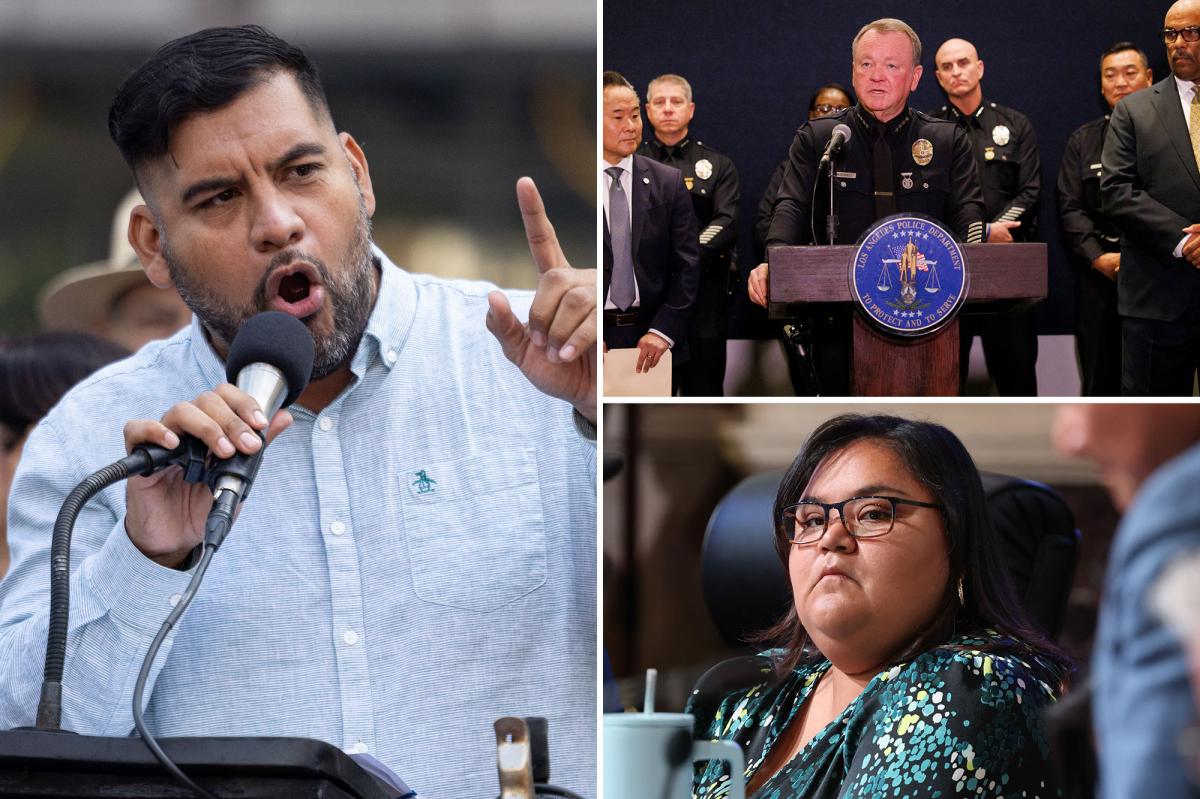
Councilmember Hugo Soto-Martínez asked the 13-member panel to rewrite the city charter, essentially the city’s constitution, so lawmakers could override the Los Angeles Board of Police Commissioners.
The plan is being driven by some of City Hall’s most hardline, extreme councilmembers including Eunisses Hernandez.
Councilmember Eunisses Hernandez has repeatedly voted against police funding increases, pushed to siphon money out of the LAPD, and even backed efforts to disarm officers inside City Hall.
Hugo Soto-Martínez and mayoral hopeful Nithya Raman have opposed boosting the department’s budget and pushed to shrink its role, while Ysabel Jurado was caught on tape just weeks before taking office saying “f— the police.”
But the move could also pave the way for far more consequential changes, such as how many officers there are and what the department’s budget is.
In practical terms, it would shift power from an appointed oversight body to elected politicians, opening the door to faster and more sweeping changes to staffing levels, funding priorities, and policing strategy across Los Angeles.
Pro-police lawmakers and cops are angry and terrified by the “Trojan horse” attempt, saying it could destroy the police force in a city that already has a crime and rioting crisis.
When Soto-Martinez sent a formal letter to the Charter Commission in December, he called for the City Council to have overriding authority of the Police Commission over cops.
He said he wanted to throw his weight behind new requirements for Inspector General Audits, protect protests, ensure First Amendment right protections and to allow the chief of police to remove officers with repeated histories of harm.
The board met on March 24, with one commissioner saying at the meeting: “If council passes an ordinance… that’s it… supersedes the police commission. There is no additional process.”
The motion was passed, marking the first green light the DSA needed to seize control of the city’s officers. But the meeting showed some were worried.
“This is materially and substantially different,” one warned, noting the shift would hand near-total authority to elected officials without the previous backstop of the Police Commission.
Following the changes, the DSA members were open about their plans, with Soto-Martinez writing on social media: “Our proposal is simple: Give City Council the ability to set LAPD policy through laws — just like we can for every other issue in the city.
“Commissions conduct civilian oversight. Elected representatives write laws.” He later added: “City Council doesn’t currently have the power to set LAPD policy, but that could soon change thanks to a the Charter Commission.”
The proposals have scared cops on the ground, with officers telling The Post the DSA will prioritize politics over policing. “They’re trying to please the radical left and the left-leaning media,” an officer said.
The officer warned the DSA members were not educated on police policy or conducting oversight, adding: “It’s going to cause a lot of issues.”
The DSA members’ plans also do not stop at police policy, with them also trying to reshape how the LAPD’s money is tracked.
Hernandez and Soto-Martinez backed a plan to strip key auditing and accounting functions from the LAPD and hand them to the office of activist LA controller Kenneth Mejia.
The measure would create a new “Bureau of Police Oversight” inside the Controller’s Audit Services Division, giving Mejia expanded authority to scrutinize LAPD spending and operations.
The rollout would happen in phases — building staffing, setting priorities, and launching deeper probes into the department under the banner of transparency.
The DSA members’ power grab plans will go before the entire City Council. It will then have to go to the the November ballot, where voters would have the final say.
The Post reached out to Mayor Karen Bass, the council members and the Police Commission for comment.
The DSA-backed power grab is headed to the full City Council. If approved by council, it would then head to the November ballot, where voters will have the final say.
Download The California Post App, follow us on social, and subscribe to our newsletters
California Post News: Facebook, Instagram, TikTok, X, YouTube, WhatsApp, LinkedIn
California Post Sports Facebook, Instagram, TikTok, YouTube, X
California Post Opinion
California Post Newsletters: Sign up here!
California Post App: Download here!
Home delivery: Sign up here!
Page Six Hollywood: Sign up here!