
Share this @internewscast.com

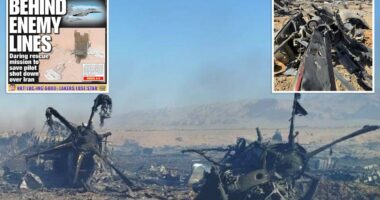
A Navy veteran has shed light on the “violent” ordeal faced by airmen, such as those involved in the recent F-15E crash, during an aircraft ejection. According to him, this emergency procedure often includes minimal parachute training.
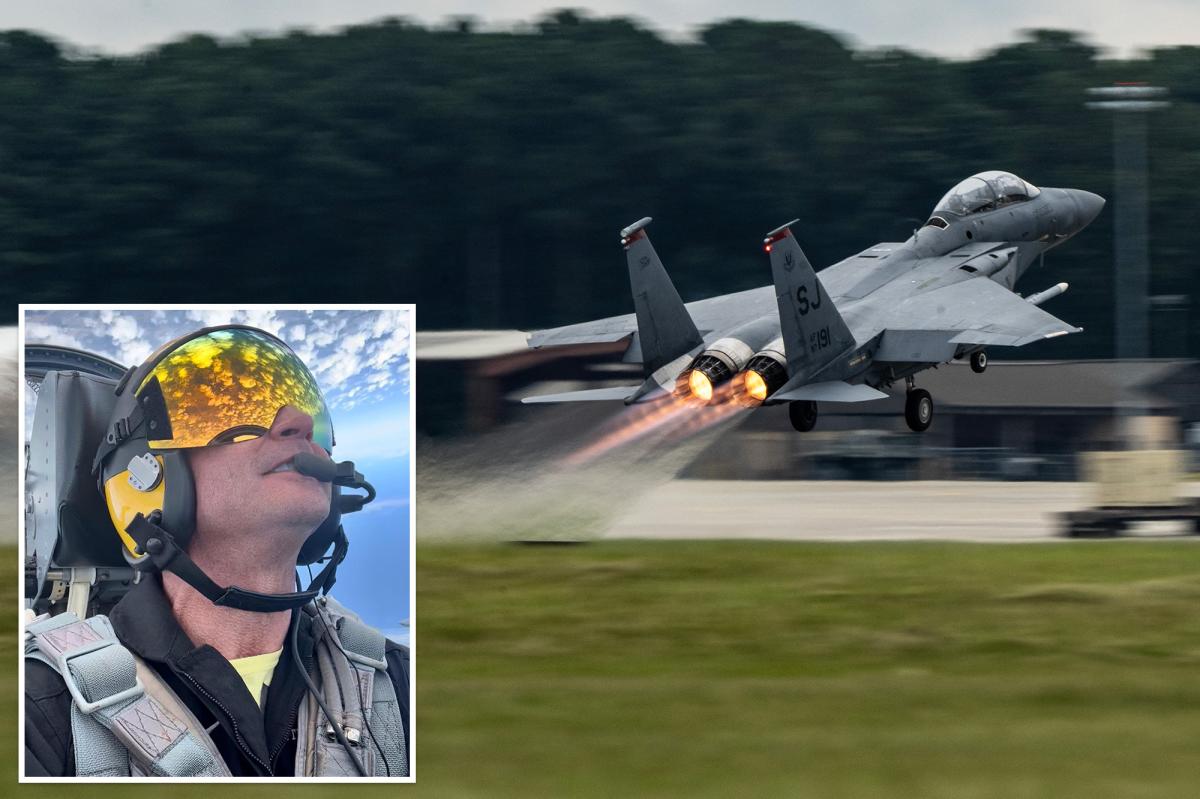
Matthew “Whiz” Buckley, a graduate of the prestigious TOPGUN program and president of the No Fallen Heroes Foundation, spoke to The Post about a critical decision faced by an Air Force colonel and his pilot. The pair had to make the life-and-death choice between ejecting or perishing when their aircraft was downed over Iran last week.
Few are more familiar with such situations than Buckley, who flew F-18 Hornets on 44 combat missions across two tours in Iraq.
“The well-being of aviators and their crew is a major concern during ejection because it is one of the most violently intense experiences a human body can endure,” Buckley explained. He emphasized that the body is not designed to withstand the sudden force of 10 to 20 Gs.
Buckley described the ejection process as a “rocket ride” coupled with a blast of wind at 500 miles per hour, creating a precarious situation if the ejector’s body is not perfectly aligned.
If any part of the occupant’s body is even slightly out of place, they risk flail injuries that could potentially cause severe harm, such as dislocating their arms, Buckley cautioned.
The seconds-long process requires a daunting level of precision, but Buckley said that the airmen “don’t train” for it.
“A lot of people think that, oh yeah, if you’re a fighter pilot, you must do some parachute training. Zero,” Buckley said.
He noted that there is such a thing as a “brutal” ejection seat trainer — but it pales in comparison to “the real thing.”
The Air Force colonel was seriously injured, but still managed to evade enemy forces while hiding in the Zagros Mountains for a day and a half until he was rescued on Easter Sunday.
While it’s not clear what kind of injuries he sustained, Buckley suggested he was likely banged up either during the whirlwind ejection or after landing on “pretty unforgiving-looking territory.”
Typically, he said, the compression from the ejection itself can cause things like spinal cord injuries. He noted that, in the early days of aerial combat, some soldiers would lose their legs or feet “because they got stuck on the canopy or on the rudder pedals” when the ejection was triggered.
So long as the majority of the airman’s body made it out of the plane, such ejections would be hailed as a triumph.
“The military defines a successful ejection as pilot pulls the ejection handle. Canopy fires, rocket fires, parachute opens. What didn’t I name? You live,” Buckley said.
“So the definition of a successful ejection to the military is all that stuff worked. What happened to the pilot is in God’s hands,” he added.
The heroic airman said “God is good” over the radio when he finally reached a hiding place in the Zargros Mountains — which almost tripped up President Trump, who speculated his prayer “sounded like something a Muslim would say.”
The colonel and his pilot, who was rescued just hours after their F-15E jet was shot down on Friday, are both in stable condition, Trump told reporters on Monday.