
Share this @internewscast.com
On Wednesday, NORAD dispatched U.S. and Canadian fighter jets in response to the detection of two Russian military planes navigating through the Alaskan and Canadian Air Defense Identification Zones (ADIZ), according to officials.
The North American Aerospace Defense Command (NORAD) announced that it had tracked two Russian TU-142 aircraft operating within the Alaskan and Canadian ADIZ on March 4, 2026.
To identify, monitor, and intercept the Russian planes in the American and Canadian ADIZ, NORAD deployed a fleet comprising two U.S. Air Force F-35 fighters, two F-22 fighters, four KC-135 tankers, an E-3 AWACS aircraft, two Canadian CF-18 fighters, and a CC-150 tanker.

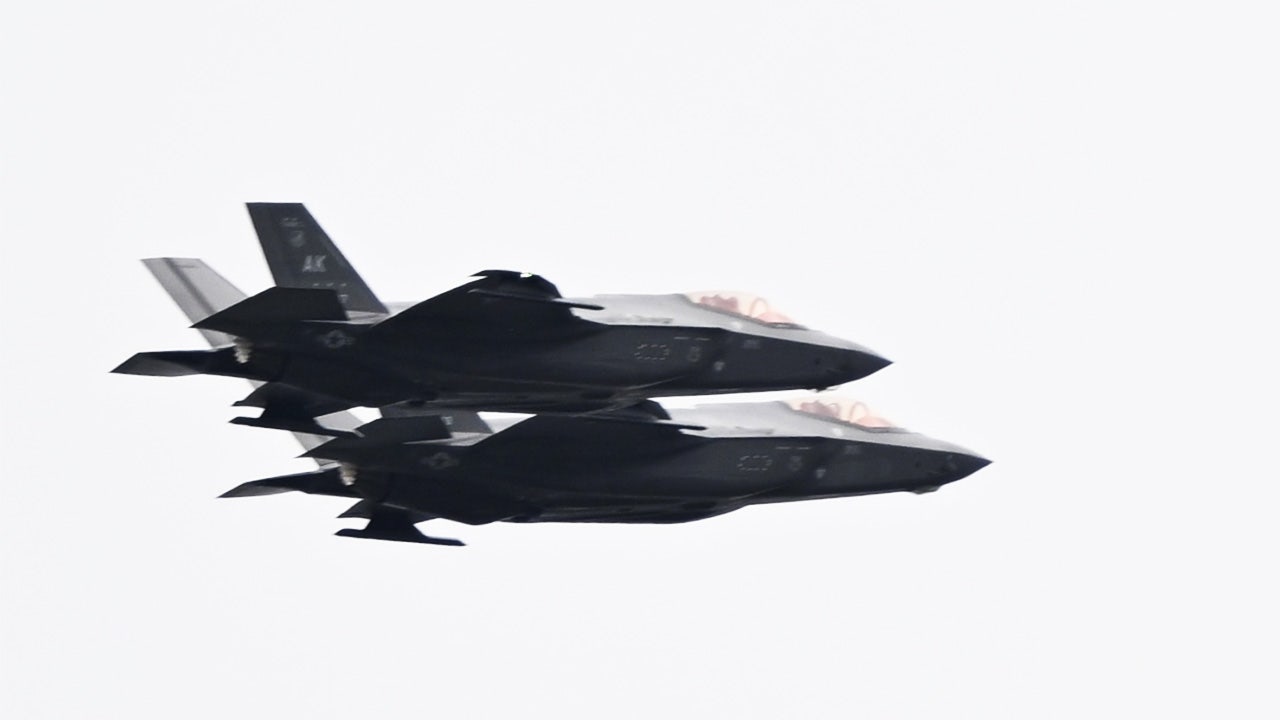
An image shows F-35 jets flying near the Elmendorf-Richardson Joint Base in Alaska, captured on August 15, 2025. (Fatih Aktas/Anadolu via Getty Images)
NORAD confirmed that the Russian planes stayed within international airspace, not breaching U.S. or Canadian sovereign borders. The command further noted that such occurrences are routine in the Alaskan and Canadian ADIZ and pose no threat.
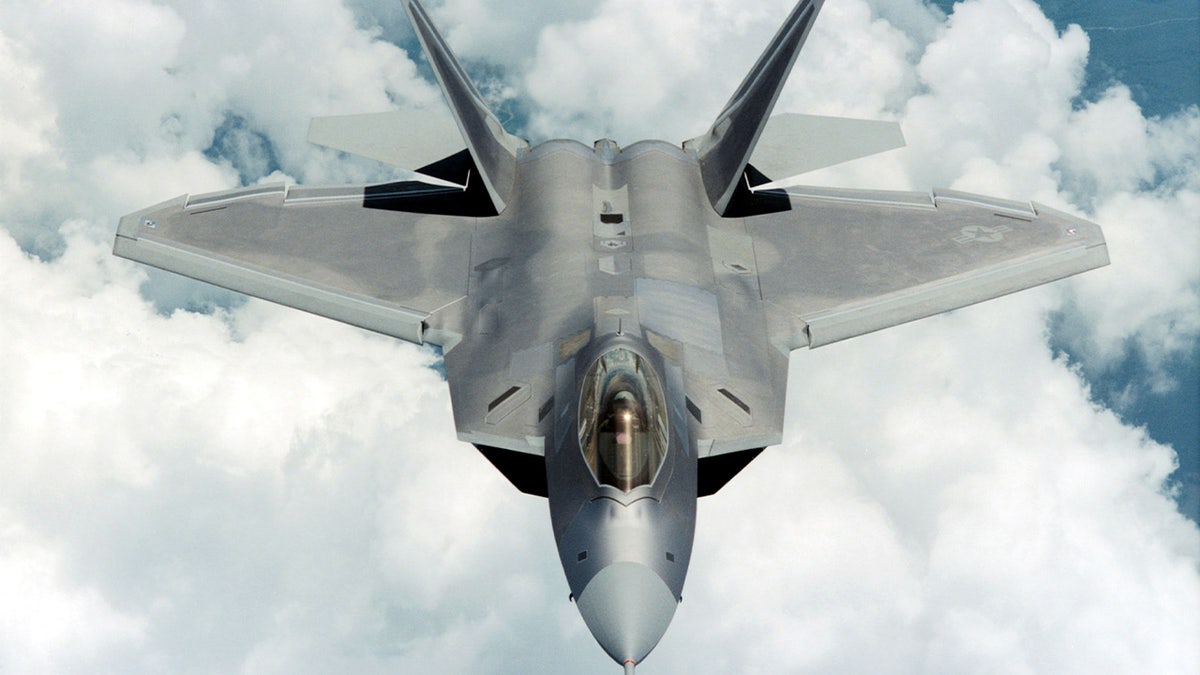
This undated photo features an F-22 Raptor, courtesy of Lockheed Martin. (Lockheed Martin via Getty Images)
The incident follows a similar encounter last month, when NORAD intercepted five Russian military aircraft — including two Tu-95 bombers, two Su-35 fighter jets and an A-50 airborne early warning aircraft — operating near the Bering Strait off Alaska’s western coast. In that case, NORAD launched F-16 and F-35 fighter jets, supported by an E-3 aircraft and refueling tankers, to identify and escort the Russian planes until they departed the area.
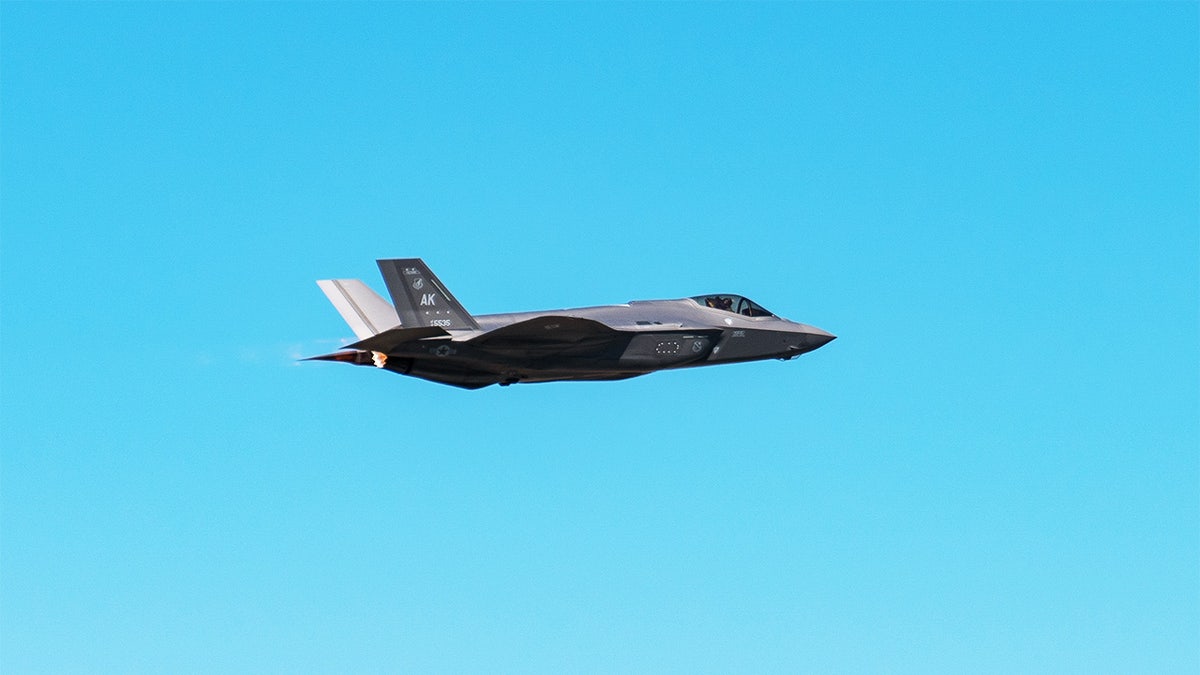
The Arctic Thunder Air Show is performed at Joint Base Elmendorf-Richardson (JBER) military facility as it welcomes more than 300,000 visitors, organized as a public event and featured 7 different international partners in various capacities in Anchorage, Alaska, on July 22, 2024. (Hasan Akbas/Anadolu via Getty Images)
NORAD said the aircraft in that encounter also remained in international airspace, did not enter U.S. or Canadian sovereign territory and were not viewed as provocative.
Air Defense Identification Zones begin where sovereign airspace ends and extend into international airspace. Aircraft entering an ADIZ are expected to identify themselves in the interest of national security, according to NORAD.
NORAD, headquartered at Peterson Space Force Base in Colorado, employs a layered defense network of satellites, ground-based and airborne radars, and fighter aircraft to detect and track aircraft and determine appropriate responses.
Related Article