
Share this @internewscast.com
In the early hours of Tuesday, a devastating missile strike hit Ramat Gan, a suburb located to the east of Tel Aviv, resulting in the deaths of at least two individuals, as reported by Israeli authorities.
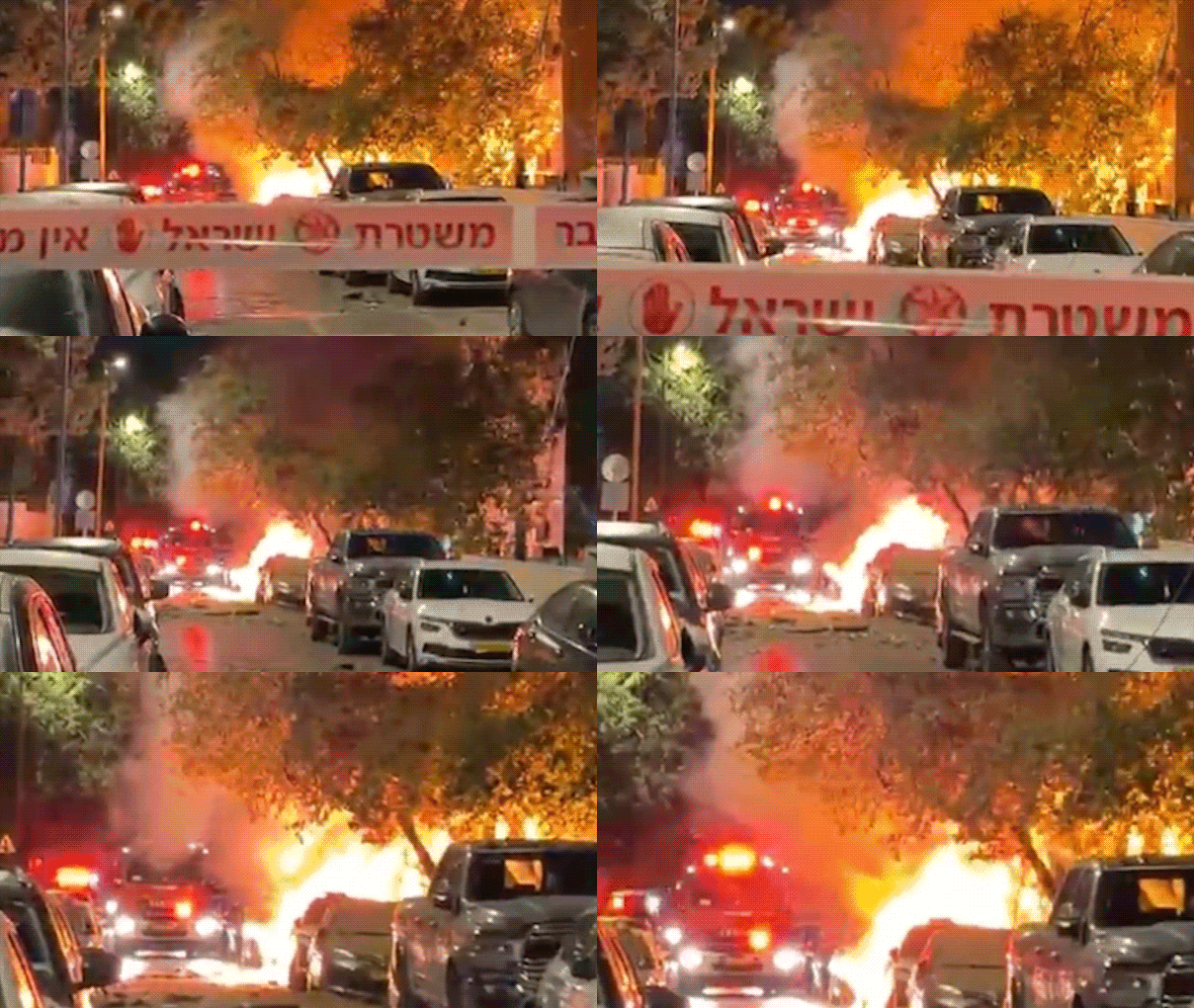
Video footage from the scene depicts a vehicle ablaze, with debris strewn across the thoroughfare, while emergency personnel evaluate the destruction and the wail of ambulance sirens fills the air.
The attack was attributed to Iran’s paramilitary Revolutionary Guard, which claimed responsibility, stating the launch was in retaliation for the assassination of Ali Larijani, a key figure and secretary of Iran’s Supreme National Security Council.
The Revolutionary Guard announced it had fired Khorramshahr-4 and Qadr missiles, asserting these weapons possess enhanced capabilities to bypass missile defense systems and evade radar detection.
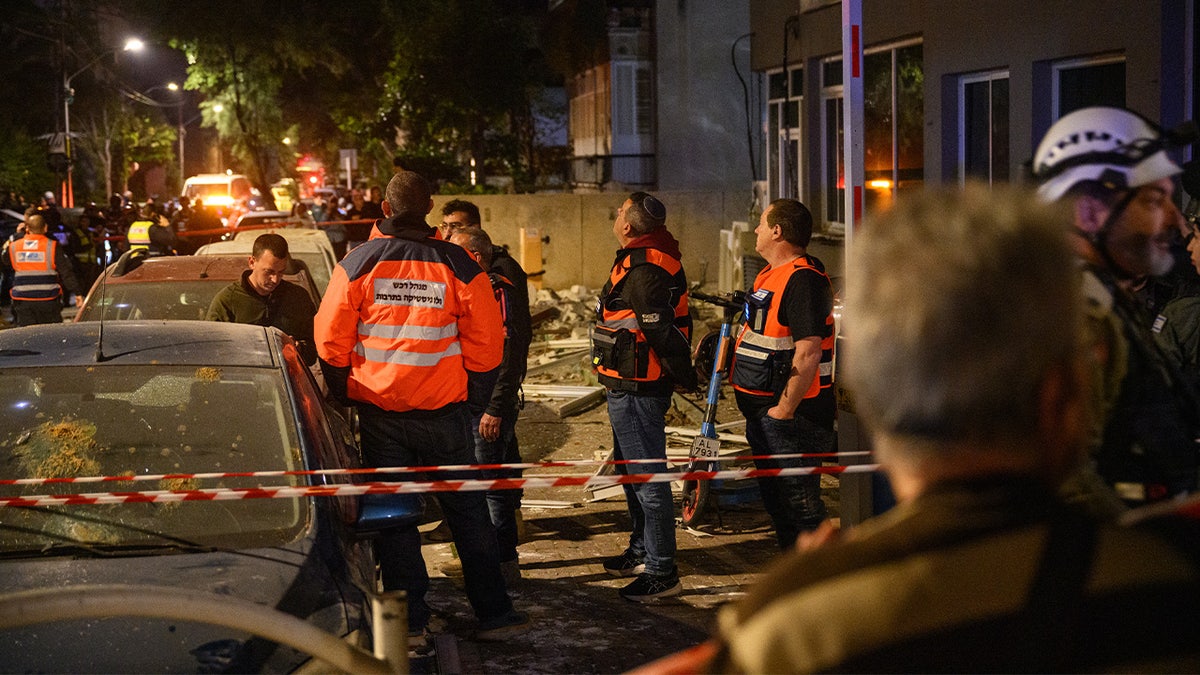
Reports indicate that the victims, a couple in their seventies, perished in the attack on March 18, 2026, in Ramat Gan, a suburb of Tel Aviv, as emergency responders worked diligently to manage the aftermath of the ballistic missile assault. (Alexi J. Rosenfeld/Getty Images)
Israeli officials confirmed the two fatalities from the strike as an elderly couple in their 70s.
The attack is part of a rapidly escalating tit-for-tat conflict that began Feb. 28 following U.S. and Israeli strikes on Iran, which have since killed multiple senior Iranian officials. Those include Larijani and Gen. Gholam Reza Soleimani, head of the Revolutionary Guard’s Basij militia, who was killed Tuesday.

A first responder on scene after a deadly Iranian ballistic missile attack lands near Tel Aviv. (Magen David Adom)
Israeli Defense Minister Israel Katz also said Iran’s Intelligence Minister Esmaeil Khatib was killed in an overnight strike, though Iran has not confirmed his death.

Iran launched a retaliatory missile against Israel overnight Tuesday. (Magen David Adom)
Iran has responded with a widening campaign of missile and drone attacks targeting Israel, U.S.-linked positions and energy infrastructure across the Persian Gulf, including strikes reported in Saudi Arabia, the United Arab Emirates, Qatar and Bahrain.
The broader conflict has raised fears of a regional war and potential disruptions to global energy supplies, as Iran has also threatened shipping through the Strait of Hormuz — a critical transit route for the world’s oil.