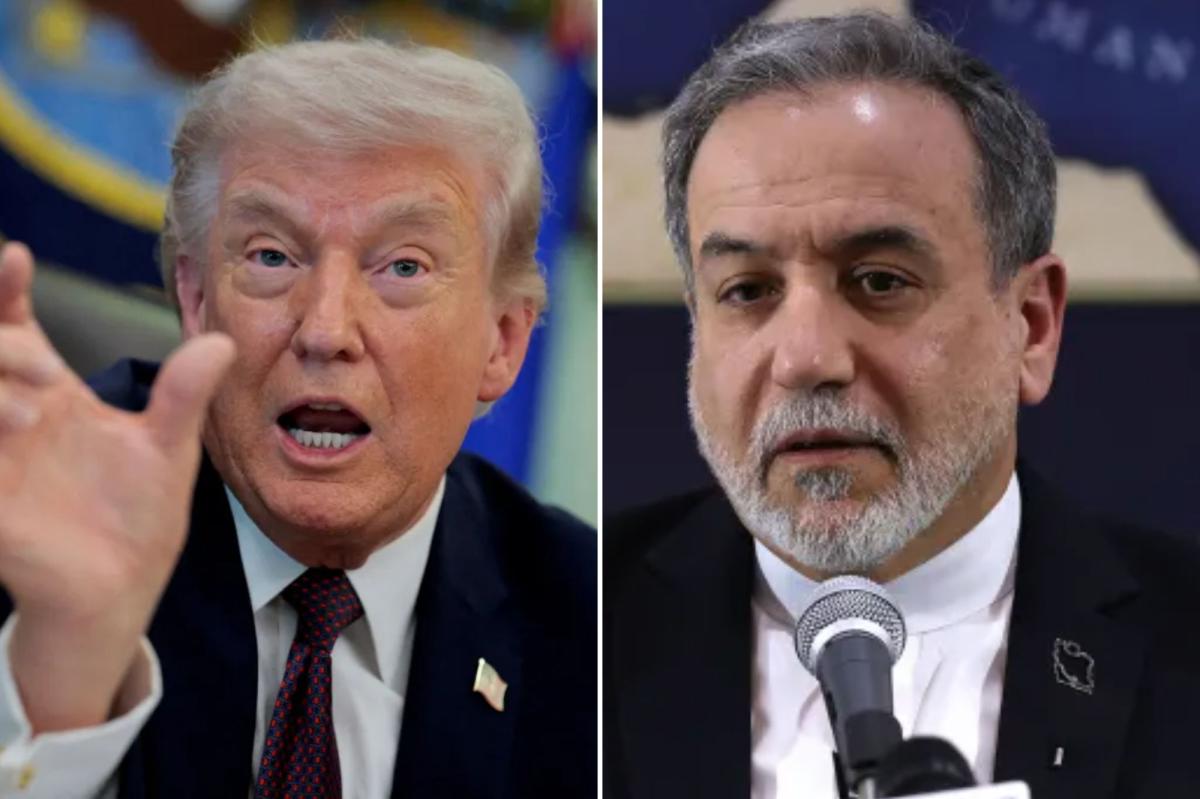


WASHINGTON — A senior administration official said Friday morning there was a 75% chance the United States would soon finalize a peace agreement with Iran, then raised that estimate to as high as 85% later in the day as the White House worked to ease fears that President Trump might approve a flawed deal.
Speaking to reporters during a small-group call around 10 a.m., the official said, “I’m calling 75% confidence that we’re going to be signing this agreement soon.” The comments came a day after Trump announced Thursday afternoon that the proposal had been “approved” by Iranian leaders.
By early afternoon, the administration’s outlook had grown more upbeat.
During a 1 p.m. briefing with a broader group of journalists, the same official said the administration expected the agreement to be signed within days, though no exact timeline was available.
“We do expect to be signing this agreement over the next few days. I can’t give you an exact date,” the senior Trump aide said.
The official added that confidence in the deal had risen since the morning assessment. “If I were to give you a confidence that we were going to be signing this agreement, I maybe would have said 75% this morning. It’s probably more like 80-85% now, but it’s not 100%,” he said.
“Their system is very complicated. Most of the people that we’ve been speaking to, and most of the people who have authority within their system want to sign this deal, but not everybody, and those internal fractures are sort of working themselves out as they continue to try to get to a point where they can say yes to the deal,” the official said.
For months, Trump has claimed that Iranian officials have agreed to his core demands that the country relinquish its highly enriched uranium and agree not to take further steps toward developing a nuclear weapon â and in all prior instances, the deal wasn’t inked, as Trump cited back-tracks.
Friday featured yet another rollercoaster of perceptions about the fate of the burgeoning agreement, which is expected to result in the quick reopening of the Strait of Hormuz.
Follow The Post’s coverage on the latest in the war with Iran:
The semi-official Mehr News Agency on Friday morning released a 14-point alleged deal, claiming that the US would release $24 billion in frozen assets â half before nuclear talks â along with a suspension of oil sanctions and a $300 billion reconstruction fund by the US and allies.
Those claims outraged Trump, who warned in a social media post at 9:40 a.m. that “the terms that Iran leaked out to the Fake News have NOTHING to do with the terms that were agreed to, in writing…. They better get their act together, and FAST!”
The White House said that Iran had in fact agreed to five points, listing them as: “1. Nuclear material will be destroyed and removed 2. Nuclear program will be dismantled 3. None of their money released until they perform 4. Strait of Hormuz will be open 5. No Iran funding of terrorist groups.”
Not long after Trump slammed the Iranian media report, at 10:52 a.m., Iranian foreign minister Abbas Araghchi clarified that the deal’s terms were not as described by the Mehr News Agency and confirmed that the deal was near.
“The Islamabad Memorandum of Understanding has never been closer. Pending its finalization, the media should refrain from entering speculation about its content,” Araghchi tweeted.
“Pending its finalization, the media should refrain from entering speculation about its content. In line with our responsible and transparent approach, all details will be shared with the public in due course.”
Trump re-posted Araghchi’s message in apparent appreciation.
The text of the memorandum of understanding has not been released, and key potential sticking points were reflected in public remarks.
US officials said, for example, that Iranian funds won’t be dispensed unless performance metrics are met â a longstanding White House position. Araghchi reportedly said, however, that those funds would be unfrozen.
Both sides are expected to spin any agreement as a win to bolster their domestic standings.
It’s also unclear if there will be a formal deal-signing. US officials are preparing for a hypothetical ceremony in Europe featuring Vice President JD Vance, but the Iranian side floated a remote signing on Friday afternoon.
“We know that there are some people within their system who don’t love this deal. In fact, they’ve been complaining to others within their system that they don’t think that they’ve gotten enough, meaning in the Iranian system,” the US official said.
“But what we do also see is broad consensus in the IRGC, among the hardliners, among the civilian leadership, that this is a good and acceptable deal. So we actually feel quite confident there is consensus within the system. It doesn’t mean there is some dissent, but we think that dissent is quite minimal, and the way that we make the agreement stick is by ensuring that the incentives for the Iranians don’t get delivered until they meet their obligations.”