Share this @internewscast.com

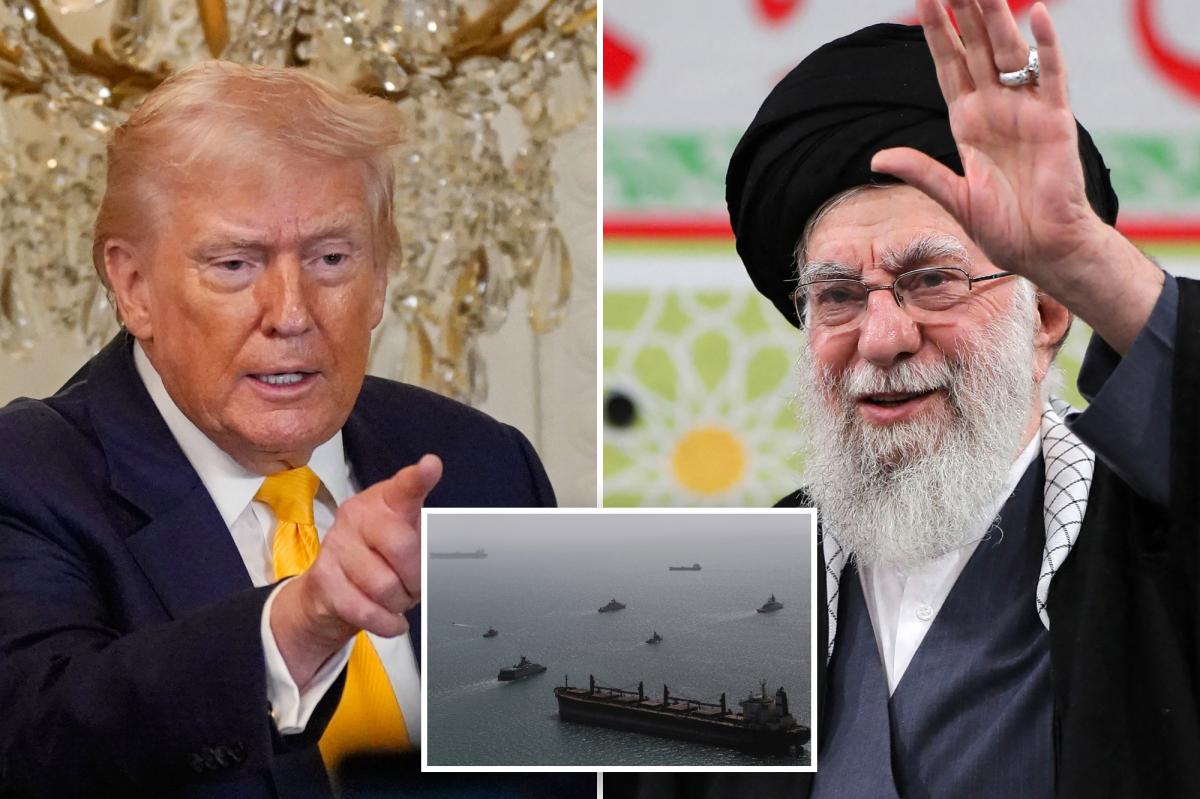
WASHINGTON — In a bold display of defiance, Iran has joined forces with Russia for a series of naval exercises in the strategically significant waters of the Strait of Hormuz and the Gulf of Oman. This move comes despite the Trump administration’s advice urging Tehran to consider negotiations.
Since 2019, Russia and Iran have conducted joint naval maneuvers annually. However, this year’s exercises are particularly notable due to increased American military presence in the area and the looming possibility of conflict.
The exercises are designed to deter any unilateral moves in the region, as emphasized by Iranian Navy Rear Admiral Hassan Maqsudlu in a press briefing, according to RadioFreeEurope.
This demonstration of military strength coincides with a stern warning from the White House, suggesting there are numerous justifications for a potential strike against Iran.
White House press secretary Karoline Leavitt reiterated the administration’s stance, stating, “The president has consistently prioritized diplomacy when dealing with Iran or any global issue.”
She further advised, “Iran would be prudent to negotiate a deal with President Trump and this administration.”
Iran had closed down parts of the Strait of Hormuz — where about a fifth of the world’s seaborne oil flows through annually — earlier this week for military exercises.
Supreme Leader Ayatollah Ali Khamenei has also repeatedly taunted President Trump this week, suggesting that Iran could sink US warships in the region.
“Of course, a warship is a dangerous piece of military hardware. However, more dangerous than that warship is the weapon that can send that warship to the bottom of the sea,” Khamenei posted on X.
The US has dispatched the world’s largest aircraft carrier, the USS Gerald R. Ford, to the Middle East to join the USS Abraham Lincoln and a fleet assembled in the region.
Trump has publicly mused about the possibility of regime change in Iran. When asked if the US could target the regime’s nuclear sites again, Trump replied, “If we do it, that would be the least of the mission.”
The US military has plans ready to strike Iran as early as this weekend, though it’s unclear if Trump will have made a decision by then, with a source close to him saying he “is spending a lot of time thinking about this,” CNN reported.
“The decision hadn’t been made, but all these ships are not coming here because it’s nice this time of year,” Sen. Lindsey Graham (R-SC), a close Trump ally, recently told Sky News Arabia.
American and Iranian negotiators convened a second round of talks on Tuesday, this time in Geneva. Iran’s Foreign Minister Abbas Araghchi had touted “good progress” after the talks concluded, and US officials were similarly upbeat.
But Leavitt caveated that the two sides remain “very far apart on some issues” as they discuss Iran’s nuclear program.
Top Iranian officials have publicly hinted at the possibility of making concessions on the theocratic regime’s nuclear program.
However, the Trump administration has made clear that it also wants concessions on Iran’s ballistic missile system — which Tehran’s deputy foreign minister, Majid Takht-Ravanchi, poured cold water on — and an end to its support for terrorist proxies in the Middle East.
Russia’s involvement in the recent drills with Iran was “small” and “symbolic,” Iranian naval officer Mohammad Parsi claimed, per RadioFreeEurope.
“I cannot imagine Russia offering real support in a direct confrontation between Iran and the United States,” he said, positing that the Kremlin is largely using Tehran as “leverage” with the West.
Over recent years, as Russia has been bogged down in its brutal war in Ukraine, Moscow has been seemingly flatfooted when its allies were under siege, including during the 12-day Iran-Israel War last year, the capture of Venezuelan strongman Nicolas Maduro, and the fall of the Bashar al-Assad regime in Syria.
Additionally, Ukraine, which lacks a navy, claims to have decimated at least a third of Russia’s Black Sea fleet.