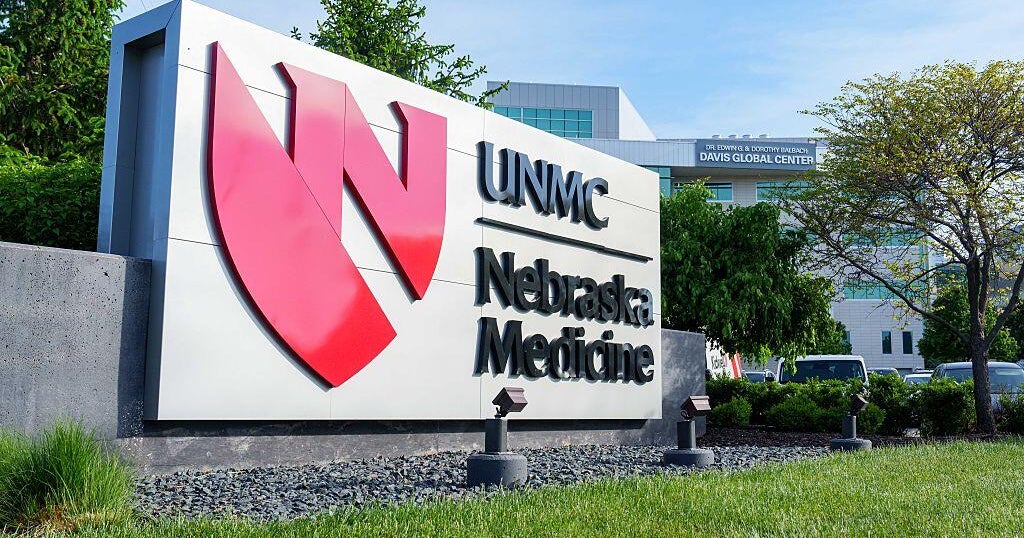

On Monday, American passengers from a cruise ship affected by a hantavirus outbreak returned to the United States, with most being transported to the University of Nebraska Medical Center. This facility is renowned for its specialized units dedicated to monitoring and treating individuals exposed to infectious diseases.
According to officials, fifteen of these passengers are currently housed at the National Quarantine Unit on the university’s campus in Omaha, Nebraska. This unique facility, which is the only one of its kind funded by the federal government, gained prominence during the initial phase of the COVID-19 pandemic.
“There is no other place in the country where they could receive safer and more effective care,” remarked Dr. Jeffrey Gold, president of the University of Nebraska, during a briefing on Monday.
In addition to the quarantine unit, the Nebraska Biocontainment Unit stands ready. Should any quarantined individuals show symptoms and require treatment, they are transferred here. Currently, one passenger from the ship has been admitted to this unit and is reportedly in stable condition.
Meanwhile, two other passengers from the cruise have been taken to a biocontainment facility at Emory University in Atlanta.
Here’s a closer look at the facilities, the National Quarantine Unit, and the Nebraska Biocontainment Unit:
Quarantine unit “more like a hotel”
The quarantine unit is “designed for well individuals who need to be monitored,” Angela Hewlett, the medical director of the Nebraska Biocontainment Unit, said Monday.
There are 20 single-occupancy rooms in the facility. There is no intermingling and no visitors, aside from medical staff, said Michael Wadman, the medical director of National Quarantine Unit.
While in the unit, individuals are monitored for any symptoms and receive temperature checks.
Each room has “individual negative air pressure systems” and filters to prevent the spread of any possible virus, according to the university.
The rooms are also designed to keep people comfortable. Hewlett described the facility as “much more like a hotel than a patient care space,” noting they don’t have hospital equipment. The rooms have their own bathrooms, exercise equipment and Wi-Fi connectivity.
Patient care space in biocontainment unit
If someone in the quarantine unit develops symptoms, they would be assessed and moved to the Nebraska Biocontainment Unit.
“The biocontainment unit is a patient care space,” Hewlett said. “That’s where we provide hospital-based care to people who need it, and those patients could range from being relatively well and stable to critically ill, requiring multiple procedures and multiple interventions.”
Rooms in the biocontainment unit have the same air pressure systems and filters to prevent the spread of viruses.
“It’s a very different facility compared to your routine patient care room in a regular hospital,” Hewlett said.
The capacity of the unit varies depending on the virus and how much waste needs to be processed, Hewlett said.
“We typically can take 10 patients with an airborne disease,” such as bird flu and coronaviruses, she said. With the disease caused by hantavirus, which can cause people to “become ill fairly quickly,” the unit can typically take two to three patients, she said.
That capacity is why two people were taken to the Emory biocontainment unit, officials said. If more people develop symptoms than the number of beds available at the Nebraska Biocontainment Unit, they could be taken to other treatment centers in the U.S.
History of responding to infectious diseases
Both the UNMC quarantine unit and biocontainment unit have been used for infectious diseases in the past.
The quarantine unit was first activated in 2020 when Americans were evacuated from China, where the COVID-19 outbreak began.
The biocontainment unit treated some of the first Americans diagnosed with COVID-19. It was also activated in 2014 to treat Americans with Ebola.
“We are prepared for situations exactly like this,” Dr. Michael Ash, the CEO of Nebraska Medicine, said in a statement about the passengers arriving from the hantavirus-stricken cruise ship. “Our teams have trained for decades alongside federal and state partners to make sure we can safely provide care while protecting our staff and the broader community. We are proud to support this national effort.”