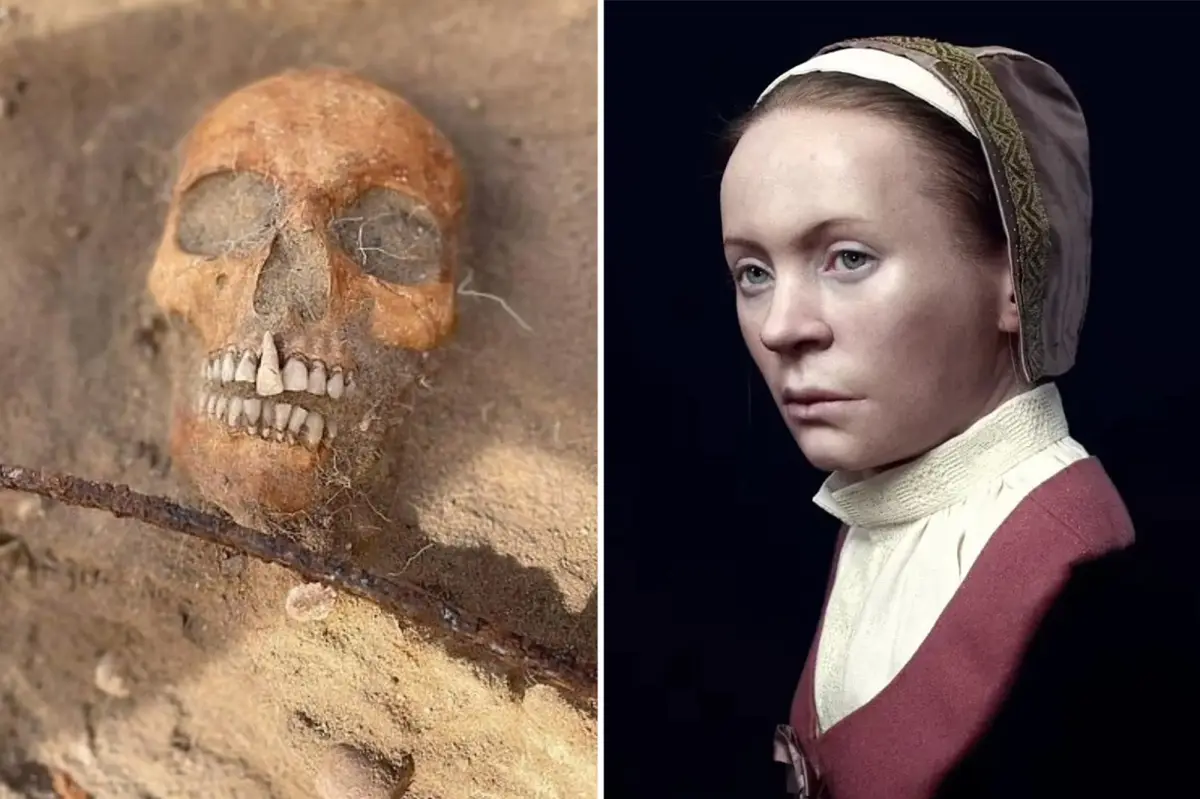

A so-called “real-life vampire,” feared enough to be laid to rest in a padlocked, booby-trapped grave, was in fact a teenage girl whose death remains unexplained, researchers say.
The young woman, given the nickname “Zosia” by experts, was discovered in 2022 at a haunting, 400-year-old unmarked cemetery in Poland. The site contained the remains of dozens of people whom 16th century villagers apparently suspected of being vampires, demons or other supernatural threats.
Zosia’s burial was especially chilling: a sickle had been positioned across her neck in a macabre trap that archaeologists believe was meant to decapitate her if she somehow rose from the dead and tried to escape the grave.
But new analysis suggests Zosia was not a monster at all. According to a study published in the Journal of Archaeological Science, she was likely between 17 and 19 years old and showed no evidence of dying from violence or disease. Researchers now believe she may have been blamed after a local famine or viral outbreak spread fear through the community.
Although experts once considered the possibility that she had been sacrificed because of those fears, the latest findings found no proof explaining how she died before being subjected to her grim, horror-movie-like burial treatment.
Earlier examinations showed that Zosia had first been buried with a padlock attached to her toe. Researchers said the practice reflected a common superstition of the period: that the dead might return from the grave and endanger the living.
The iron sickle appears to have been added later, after villagers likely reopened the grave — possibly in the wake of a disease outbreak or famine that had swept through the area, the researchers said.
Further study of Zosia’s bones and teeth revealed an abnormality in her breast, a deformity that would have caused significant pain. Researchers believe the condition may have set her apart in the eyes of her community, leading villagers to fear she possessed supernatural powers.
But despite the fear she may have instilled into the hearts of her neighbors, the girl was buried in a coffin wearing a silk cap trimmed with real silver and gold threads — a sign researchers said means she likely came from a wealthy or noble family and was not an ordinary villager or peasant.
Her DNA also showed a distant connection to Scandinavia, though evidence suggests she actually grew up in the area, with researchers dating her death to the mid-1600s.
Though the modern concept of vampires came later, Eastern Europeans initially became fearful of the monsters in the 11th century, believing that “some people who died would claw their way out of the grave as blood-sucking monsters that terrorized the living,” according to Smithsonian magazine.
By the 17th century, “unusual burial practices became common across Poland in response to a reported outbreak of vampires,” Science Alert reported.


