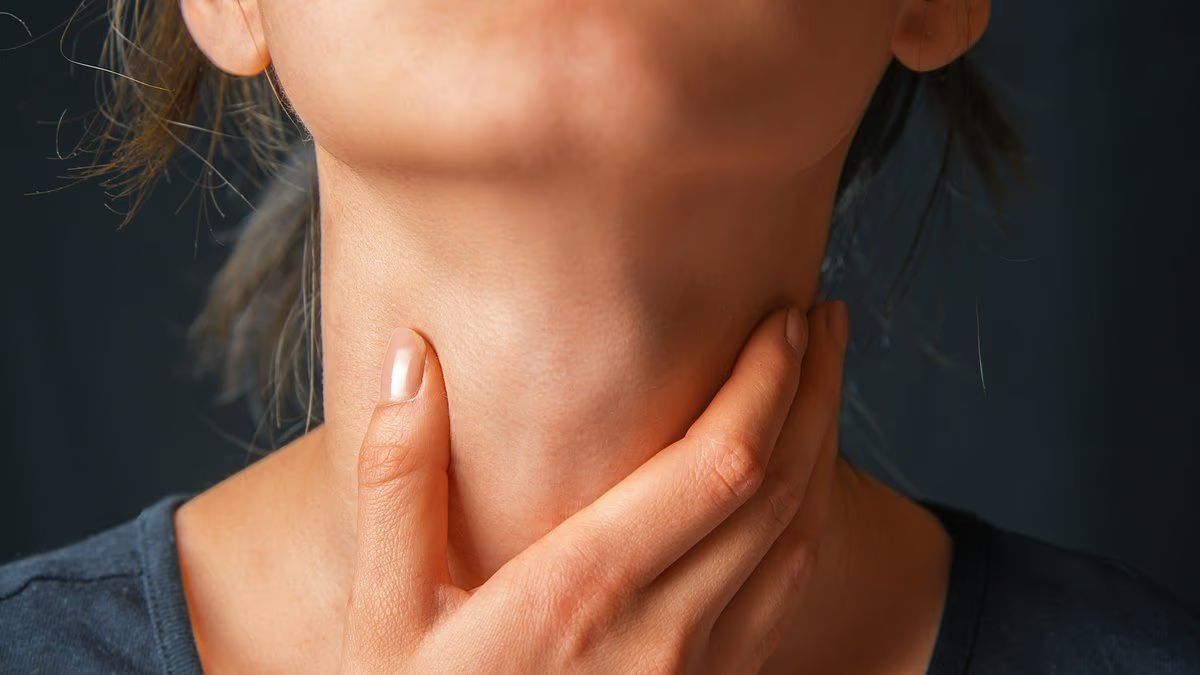

Throat cancer can develop unnoticed for years—sometimes even decades—before producing a clear warning.
When symptoms do appear, they may seem routine: a sore throat that will not go away, trouble swallowing, a shift in the voice or a painless lump in the neck.
For much of the past, throat cancer was linked mainly to older adults with long histories of smoking or heavy alcohol use.
Yet as smoking and alcohol consumption have declined, doctors have begun to see a different pattern.
More patients now have never smoked, drink little or no alcohol and lack the traditional risk factors associated with the disease.
The change has been especially evident in cancers of the tonsils and the base of the tongue, known collectively as oropharyngeal cancer.
A common sexually transmitted infection—human papillomavirus, or HPV—is behind much of that increase. Most people encounter the virus at some point in their lives.
HPV is estimated to cause between 60 and 70 percent of oropharyngeal cancers in the US.

Once viewed largely as a disease of older smokers and heavy drinkers, throat cancer is increasingly being diagnosed in younger, otherwise healthy adults
Although most patients are diagnosed in middle or older age, the infection may have been acquired decades before the cancer appears.
Researchers are also examining whether modern exposures—including vaping, ultra-processed foods, air pollution and microplastics—could influence the risk of head and neck cancers, a wider category that includes tumors of the throat, mouth, nose and voice box.
So what is driving America’s changing throat cancer landscape? Who faces the greatest risk, and what steps can people take to lower it?
What is throat cancer—and how deadly can it be?
Throat cancer is not one single condition. It falls within the broader group of head and neck cancers, which can begin in the mouth, throat, nose, sinuses or voice box.
The likely causes, treatment options and survival rates vary considerably according to the cancer’s location.
In 2026, an estimated 72,770 people in the US will be diagnosed with cancers of the mouth, throat or voice box, while approximately 17,110 are expected to die from the disease.
The prognosis depends heavily on when the cancer is found. About 86 percent of people with early-stage oropharyngeal cancer—before it has spread beyond its original site—survive at least five years. That figure falls to about 40 percent when the disease is diagnosed at an advanced stage.
Dr Selda Samakoglu, an oncologist at Aveta Biomics who specializes in head and neck cancer, said: ‘Over many years, high-risk types can disrupt normal cell growth and eventually cause cancer in the tonsils or at the base of the tongue.’
Studies have also associated having more oral sex partners with a greater risk of HPV-related throat cancer. Still, most people exposed to HPV will never develop the disease.
There is one important form of protection: vaccination.
The HPV vaccine was first introduced for girls in the US in 2006, followed by routine vaccination recommendations for boys in 2011.
Its effects have already been substantial.
HPV causes nearly all cervical cancers as well. Since vaccination began, rates of precancerous changes in cervical cells among young American women have dropped by almost 80 percent.
The outlook for throat cancer is also encouraging.
A recent US study of 1.4 million people found significantly fewer head and neck cancers among those who had received the HPV vaccine.

Actor Michael Douglas, pictured in 2019, was diagnosed with stage-four throat cancer in 2010 and later said it was linked to HPV. He was 45 at the time and is now cancer free
Experts expect the vaccine’s protective effect to become clearer over the next several decades, as vaccinated generations reach the ages when these cancers are most likely to develop.
‘The vaccine’s full benefit should become more apparent as vaccinated generations grow older,’ Samakoglu said.
Genes are only part of the picture
Throat cancer can occur in families, but inherited genetic factors are believed to explain only a small share of cases.
Having a parent, sibling or child with head and neck cancer is linked to an approximately 70 percent higher risk of developing the disease.
Researchers think genetic differences may leave some people more vulnerable to environmental exposures by affecting how their bodies process harmful substances or repair damaged DNA.
‘Genes can also influence how the body responds to different exposures,’ said Dr Selda Samakoglu, an oncologist specializing in head and neck cancer, in an interview with Our News Outlet.
Rare inherited disorders, including Fanconi anemia, can sharply raise the risk of certain head and neck cancers because they impair the body’s ability to repair DNA damage.
Smoking is falling—but vaping raises new questions
Smoking has traditionally been one of the leading causes of throat cancer.
Tobacco smoke contains dozens of carcinogenic chemicals that can damage DNA in cells lining the throat, allowing tumors to form over time.
However, cigarette use has fallen sharply in the US, particularly among younger adults.
At the same time, vaping has grown more popular, prompting concerns about whether e-cigarettes could create a comparable cancer risk.
Unlike smoking, the long-term health consequences of vaping are still unclear. E-cigarettes have been widely used for only about two decades, so researchers have not yet determined whether they increase the risk of throat cancer.
Early findings, however, have raised concerns.
A 2026 review from researchers at the University of New South Wales found evidence that vaping may cause DNA damage, inflammation and other cellular changes in the mouth and airways—processes that can contribute to cancer.
Some animal studies have also reported tumors after exposure to e-cigarette aerosols, although those findings do not prove that vaping causes cancer in humans.
‘What concerns me is that researchers have detected DNA damage in the mouth cells of people who vape, including people who have never smoked,’ Samakoglu said.
‘We still do not know what that means for their long-term risk of throat cancer.
‘Vapes heat liquid rather than burn tobacco. That process can produce harmful chemicals, including formaldehyde, while metals from the device may also enter the aerosol people inhale.’
FIND OUT MORE: Florida Plane Crash Investigators Focus on Weather as Plane May Have Broken Up Midair
Vaping generally exposes users to fewer toxic chemicals than cigarette smoking, but experts stress that it is not harmless.

A chart from the American Lung Association tracks the long-term decline in smoking rates among adults and children in the US
Could ultra-processed foods add to the risk?
Scientists are also studying whether ultra-processed foods, which account for a significant share of the American diet, may be associated with head and neck cancers.
A 2023 study of more than 450,000 people across Europe found that each 10 percent increase in the share of ultra-processed foods in a person’s diet was associated with a 23 percent higher risk of head and neck cancer.
The study also reported a 24 percent increase in the risk of esophageal adenocarcinoma, a cancer of the food pipe.
Excess body fat accounted for only a small part of the association, indicating that other factors may be involved.
One theory is that additives and chemicals in processed foods—including emulsifiers and compounds created during meat processing—could promote inflammation or damage cells.
Even so, researchers have not established that ultra-processed foods directly cause head and neck cancer.
‘We are still working to understand what may explain that relationship,’ Samakoglu told Our News Outlet.
‘The findings justify closer study, but they do not prove these foods caused the cancers. Smoking, alcohol use and other lifestyle factors may account for part of the association.
‘It is also important not to assume that every ultra-processed food carries the same level of risk.’
What scientists know about microplastics
Microplastics—tiny plastic fragments found in food, drinking water and the air—have emerged as another potential concern.
Researchers have detected these particles in tissues throughout the body, prompting questions about whether long-term exposure could contribute to cancer.
A recent University of Hawaii study found that coastal regions with higher levels of microplastic pollution also recorded higher rates of certain cancers, including cancers of the mouth and throat.
In a separate study published in Scientific Reports, researchers estimated dietary microplastic exposure in 106 countries and found higher mouth cancer rates in populations believed to have greater exposure.
Scientists suspect the particles could trigger inflammation and DNA damage. Chemicals linked to plastics, including bisphenols and phthalates, may also play a part.

Early research has raised questions about whether widespread exposure to microplastics could be associated with a higher risk of throat cancer
The evidence remains preliminary. Neither study showed that microplastics cause cancer, and population-level comparisons cannot determine whether people who developed the disease had higher individual exposure.
‘Laboratory research is concerning because some particles can cause inflammation, oxidative stress and DNA damage,’ Samakoglu said.
‘What remains unclear is whether the levels people encounter in everyday life produce the same effects in the mouth or throat.’
Could polluted air affect the throat?
Air pollution is an established cause of lung cancer, but scientists are increasingly examining whether it may also contribute to cancers of the mouth and throat.
Much of the concern involves fine particulate matter, or PM2.5—particles roughly 30 times narrower than the width of a human hair.
Vehicle exhaust, industrial activity, wildfires and wood-burning stoves all produce PM2.5. The particles can travel deep into the lungs and may even enter the bloodstream.
Research suggests they may also injure cells lining the upper airways.
A 2024 US study found that people exposed to higher PM2.5 levels were more likely to develop head and neck cancers, particularly cancers of the mouth and throat.
Researchers believe prolonged exposure could drive inflammation and DNA damage, potentially creating conditions in which cancerous cells emerge.
‘The concern is that certain air pollutants cause inflammation and DNA damage—changes that could help cancer develop,’ Samakoglu said.
Still, while pollution’s role in lung cancer is well established, its connection to throat cancer is less certain. Researchers have yet to determine whether it directly causes the disease or how much it contributes to overall risk.
Can throat cancer be prevented?
No strategy can eliminate the risk of throat cancer, but experts say several steps can significantly reduce it.
HPV vaccination is among the most important. The vaccine protects against the strains responsible for most HPV-related throat cancers.
A 2026 US study involving more than 1.4 million people found that vaccinated individuals were significantly less likely to develop head and neck cancers, including tumors of the tonsils and tongue base.

Actor Val Kilmer, pictured above, lived with throat cancer for 11 years before his death in 2025. He previously said he had overlooked early symptoms, including a lump in his throat

The chart, published in the journal Vaccine, shows rising HPV vaccination rates among US girls and boys by birth cohort
The results are promising, but researchers caution that longer-term studies are needed to determine precisely how much protection vaccination provides against throat cancer.
Avoiding tobacco and limiting alcohol are also among the most effective ways to lower risk. Using both together is substantially more dangerous than using either one alone.
A diet rich in fruit, vegetables and whole grains may offer additional benefits, although evidence that any specific eating pattern prevents throat cancer remains limited.
Experts also urge people to recognize possible warning signs.
‘Dentists perform head and neck cancer screenings whenever they see patients,’ Dr Jessica Pharar told Our News Outlet. ‘Routine examinations can help identify the disease at an earlier stage.’
However, HPV-related tumors can form deep inside the tonsils or at the base of the tongue, where they may not be visible during a standard dental examination.
Anyone with a persistent sore throat, difficulty swallowing, unexplained hoarseness or a lump in the neck should contact a doctor—especially when symptoms continue for more than two or three weeks.
Most of these symptoms have noncancerous causes, but finding throat cancer early can make a major difference in the chances of successful treatment.


