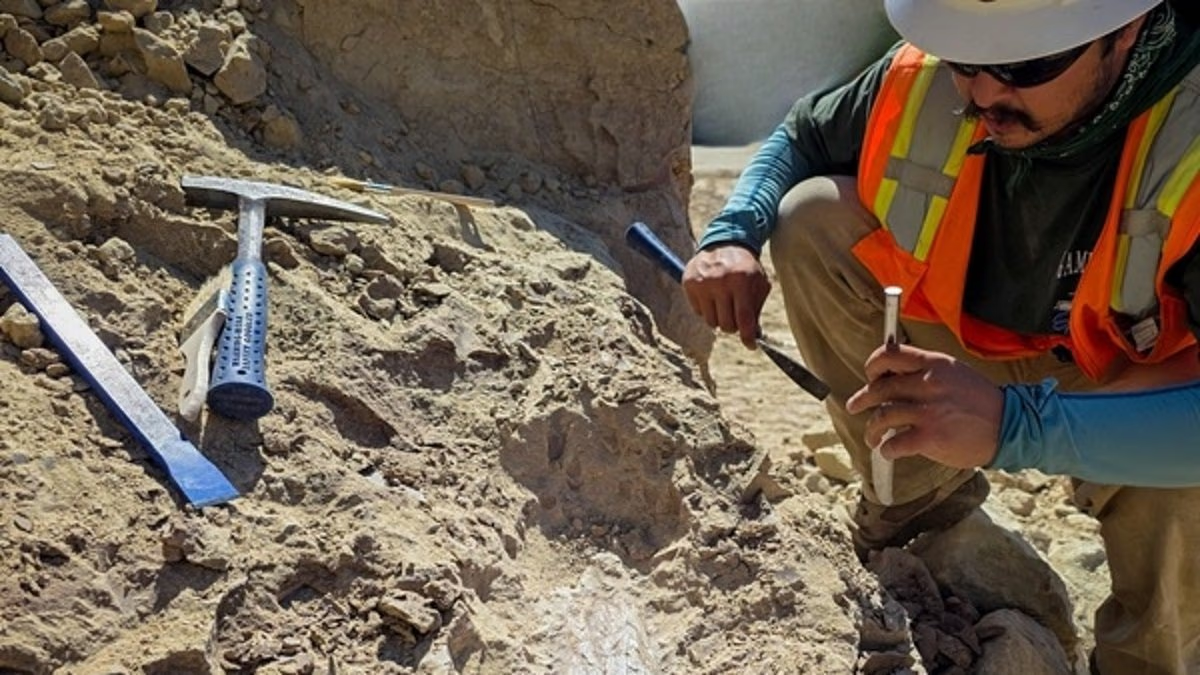

Fossil bones dating back as far as 45 million years have been discovered at a construction site in Southern California.
Workers made the unexpected find on August 31 while carrying out a routine excavation, uncovering several fossils about 12 feet below the surface.
The excavation was taking place in the Santiago Formation, a fossil-rich layer of sedimentary rock.
Paleontologist Joseph El Adli said the remains likely came from a member of the Perissodactyla family, a group of odd-toed hoofed mammals. The animal may have been a Brontotheriidae, commonly called a “thunder beast,” or an amynodon, an extinct relative known as a “swamp rhino.”
Both groups lived in North America during the Uintan North American Land Mammal Age.
The City of Oceanside said the discovery included several bones, among them limbs, ribs and other fragments.
El Adli’s team quickly secured the area and began removing the fossils from the surrounding sediment. The recovery process took 10 days, he told The Los Angeles Times.
The work took longer than usual because the bones were encased in six feet of hardened mudstone.

Construction workers in Southern California discovered fossil bones up to 45 million years old on August 31.

The fossils were found as workers excavated the Santiago Formation, a sedimentary rock layer known for its rich fossil record. The recovered material included limbs, ribs and other bone fragments.
Once freed from the excavation area, the bones were placed in a plaster field jacket to protect them during transport to a facility in Carlsbad.
At the facility, specialists will remove the fossils from their jackets and carefully separate them from the rock in which they remain embedded. Museum-grade glues and resins will then be used to harden and stabilize the bones for long-term preservation.
Further examination will follow once the bones have been fully removed, allowing researchers to determine the animal’s exact species.
The City of Oceanside said the fossils will likely eventually become part of a museum collection.
FIND OUT MORE: Supreme Court to Consider Energy Companies’ Bid to Dismiss Boulder Climate Lawsuit
The Santiago Formation has previously yielded fossils from saber-toothed carnivores and primates, El Adli told The Times.
He also believes the construction site could produce more discoveries. In particular, he hopes researchers will find a tooth or jaw that can help identify the animal.
“It’s just sort of a hope and a prayer at this point, but that would be fantastic,” he said.
California environmental laws require paleontological and cultural resource monitors to be present during construction, helping ensure that discoveries such as these are identified and protected.

The bones have been transported to a Carlsbad facility, where they will be removed from the surrounding rock and studied to determine which animal they belonged to.

Researchers believe the remains may belong to a Brontotheriidae, or “thunder beast,” such as the Parvicornus pictured here.

It could also belong to an amynodon, a ‘swamp rhino.’ Picture is a Metamynodon, a type of amynodont rhino
The City of Oceanside did not release the exact construction site as a means to avoid enthusiasts from engaging in unauthorized digging, which could be hazardous.
The Golden State has a rich history of fossil finding in the state.
Over the summer, a giant tooth was found in a San Mateo County creek bed. It was an intact, adult Pacific mastodon molar, scientists said.
The enormous, hairy relatives of today’s elephants once dominated parts of the West, roaming across California, Oregon, the northern Rocky Mountains and parts of Mexico for millions of years.
Hundreds of fossils were also found under San Pedro High School in Los Angeles County while it was under construction. The bones are believed to be nearly nine million years old.
Workers paused construction at the site while researchers recovered 80 percent of the massive collection, which included parts of whales and birds and teeth from saber-toothed salmon, megalodon sharks, and other fish.
The finding suggests that Southern California was once underwater and could reveal the possibility that there was a now-extinct island to the west of the site.


