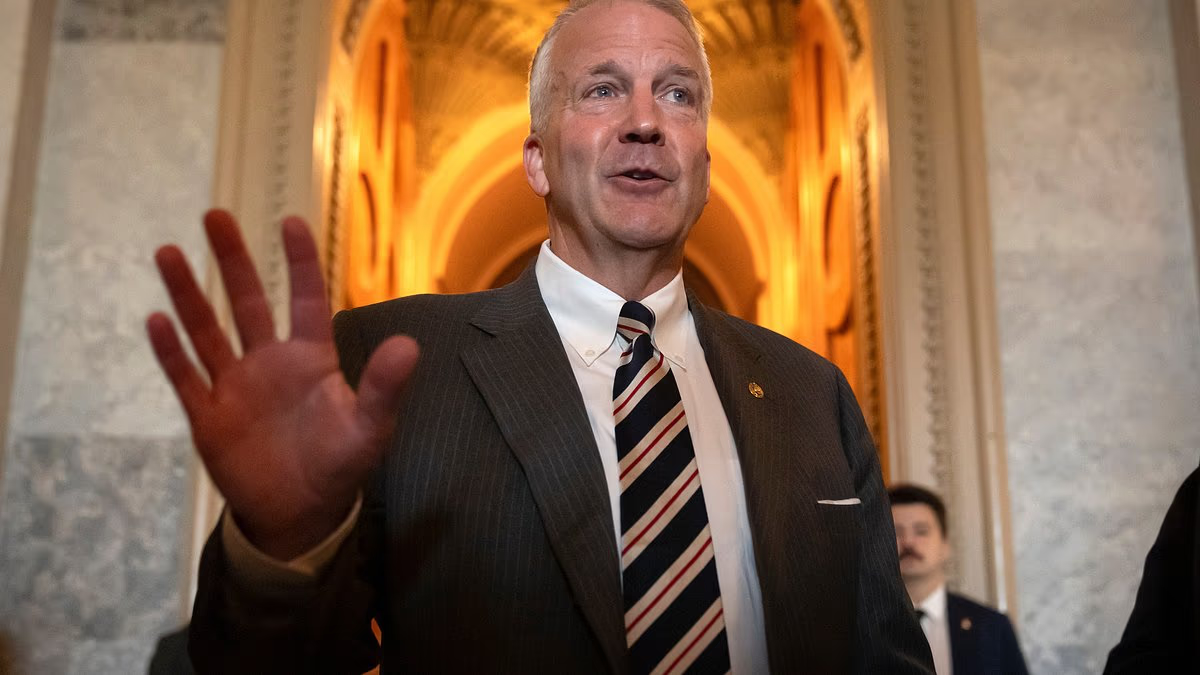

The battle for Alaska’s Senate seat is among the most closely watched contests of the midterm elections—and its outcome could hinge on an issue deeply rooted in the state’s identity: fish.
Democrat Mary Peltola is holding a narrow lead over two-term Republican Senator Dan Sullivan and has built part of her campaign message around “fish, family and freedom.”
Peltola is calling for a ban on large trawlers from outside Alaska and stronger financial protections for local fishermen. Sullivan, meanwhile, wants to keep foreign seafood fleets out of Alaska’s waters and the US market.
At the heart of the dispute is a question of who should be allowed to fish in Alaska’s waters. Peltola wants to prohibit factory trawlers from the Lower 48 states, while Sullivan does not support that step. Instead, he is pushing to bar unregulated foreign operators.
Sullivan recently sponsored legislation requiring trawlers to use nets that remain above the seafloor and include equipment allowing accidentally caught fish to escape. Peltola has also called for more rigorous monitoring of bycatch.
For Alaska’s fishermen, the candidates’ competing positions have become something of an inside joke. Both emphasize many of the same concerns, yet each argues that the other is not the right person to address them.


Dan S. Sullivan (R) and Mary Peltola (D)

Fish has emerged as a defining issue in Alaska’s Senate race

Both candidates oppose large trawlers, which they say threaten Alaska’s independent fishermen
Fisheries are a pillar of Alaska’s economy, but the industry is confronting challenges unlike any it has faced before.
Commercial fisheries in the state produce nearly 60 percent of the wild seafood harvested in the United States and support one in seven Alaskans, according to the National Oceanic and Atmospheric Administration.
In Western Alaska, however, chinook and chum salmon runs have declined so sharply that some villages are prohibited from catching even a single king salmon per household.
Over the past decade, pollock trawlers operating in the Bering Sea have caught about 20,000 king salmon annually as bycatch.
The question of responsibility has become the defining issue in the Senate contest, with Peltola directing much of her criticism at her opponent’s campaign donors.
Over the course of his career, Sullivan has received about $300,000 from trawling executives and political action committees. Peltola has accepted approximately $10,000 from the industry.
Sullivan argues that his legislative record is more important than the donations. “The difference is, I’ve actually done things to help protect them,” he said during a Kodiak debate focused entirely on fishing.
His Bycatch Reduction Act, introduced in June, would require pollock trawlers to keep their nets above the seafloor and install devices designed to allow salmon to escape. The measure cleared a Senate committee last month but still needs approval from the full Senate and the House. The pollock industry has opposed the proposed seafloor restrictions.
Peltola’s campaign has characterized the legislation as election-year theatre. Her own bycatch measures, introduced in the House in 2024, faced strong resistance from the trawling industry and did not pass.
A Yup’ik Alaska Native who learned to fish for salmon alongside her father, Peltola won Alaska’s sole House seat in 2022. Her victory ended nearly five decades of Republican control and made her the first Alaska Native elected to Congress. She lost the seat in 2024.

Peltola and her opponent, Sullivan (left), are preparing for a contest that could rank among the nation’s most closely watched Senate races

Sullivan was recently exposed for blowing out campaign funds he spent at ritzy restaurants and a California luxury resort

Peltolta is currently the slight favorite over Sullivan. But also she was recently accused of hateful outbursts
Fish is one of five priorities on her campaign website. Beyond the trawler ban, she wants funding for fish stock assessments and disaster aid for fishermen, tighter national bycatch standards, expanded electronic monitoring, and Tribal seats on the North Pacific Fishery Management Council, which oversees fishing in federal waters.
Her website even features a game in which users steer salmon past nets and predators.
Sullivan, who is backed by President Donald Trump, has also pushed bills to strengthen coastal enforcement and ban Russian seafood imports.
Both candidates agree the federal government failed fishermen when runs collapsed in the past.
A 2025 survey by the Democratic-aligned Data for Progress found that 74 percent of Alaskans support a federal ban on trawling. But owners of smaller trawl boats fear a crackdown could sink them too.
‘The impact of trawling is getting blown way out of proportion and being used as political ammunition,’ Jason Chandler, a second-generation trawler from Kodiak, told The New York Times. ‘It stings a bit to have your livelihood treated that way.’
Chandler fishes pollock and rockfish in the Gulf of Alaska from a 77-foot boat, a fraction of the size of the factory ships that process and freeze their catch on board.
Peltola’s press secretary, Caroline Etgen, told Our News Outlet that Peltola does not support a blanket ban on small and mid-sized Alaskan trawl boats. ‘It’s against the out-of-state corporate greed that leads to wanton waste and damage to our seafloor,’ she said.
Lauren Wolford, 38, a third-generation commercial fisherman and member of a Fish and Game advisory committee, told Our News Outlet that the challenge for both candidates is ‘to convince people that they genuinely care about fishing’ rather than ‘just using it as a political pillar to stand on.’
She believes Peltola ‘has a deeper understanding of the actual fisheries,’ and said Sullivan ‘has historically been more interested in energy development rather than ocean protection.’
Fishermen who ‘don’t talk about politics,’ she said, will be won over by candidates who show they will work with the local committees that shape their livelihoods.
Our News Outlet has contacted Sullivan’s campaign for comment.


