
Share this @internewscast.com

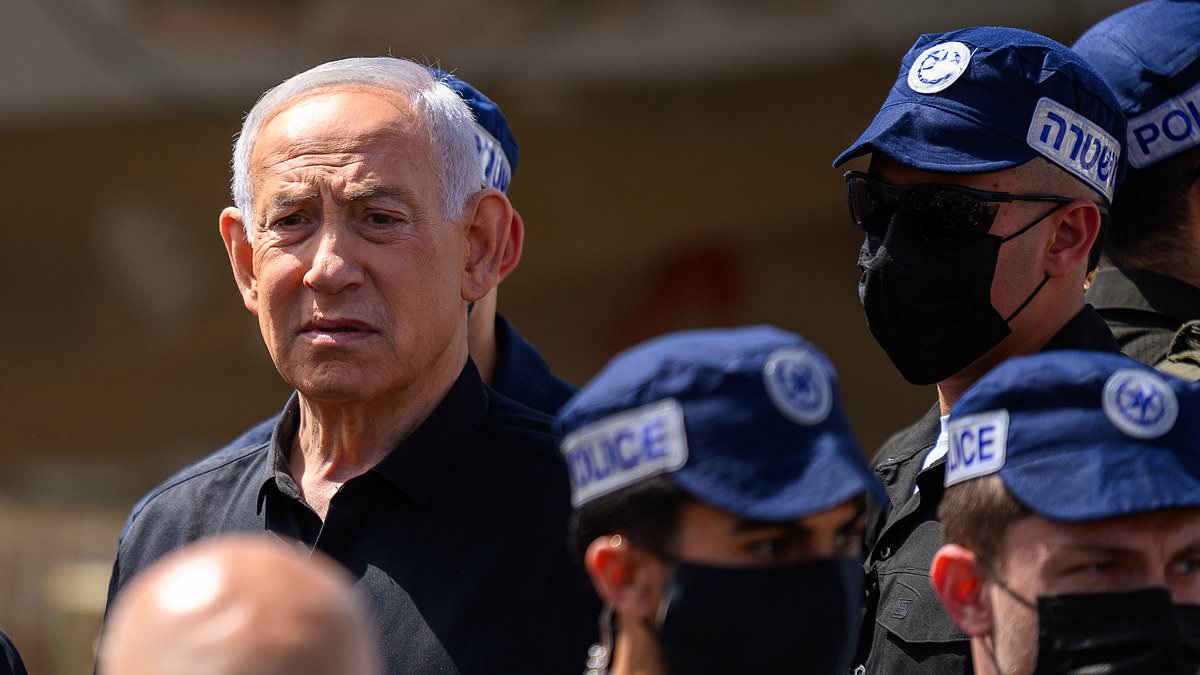
Benjamin Netanyahu, the Prime Minister of Israel, has instructed his top officials to initiate peace discussions with Lebanon following a directive from Donald Trump. This decision came after a phone conversation on Wednesday involving Trump, Netanyahu, and White House envoy Steve Witkoff, as reported by Axios. During the call, Witkoff advised Netanyahu to “calm down” the military strikes in Lebanon and to commence peace negotiations. Trump’s appeal is part of a broader U.S. strategy, as the nation gears up for meetings with Iranian leaders in Pakistan to seek an end to ongoing conflicts. Despite a two-week ceasefire between the U.S. and Iran, Israel has persisted in its military actions against urban areas in Lebanon, including Beirut, resulting in civilian casualties.
Dispute Over Whether Lebanon Is Included in Ceasefire

Iran has asserted that Lebanon was included in the ceasefire agreement with the U.S. and has issued a warning to abandon peace efforts unless Israel halts its assaults on Hezbollah, a group backed by Iran. Meanwhile, U.S. and Israeli officials have rejected claims that the ceasefire extends to Netanyahu’s military campaign against Hezbollah in Lebanon. Sources close to Netanyahu reveal that Israel is unwilling to observe a ceasefire with Lebanon until a formal peace agreement is negotiated. “I spoke with Bibi, and he’s going to low-key it. I just think we have to be sort of a little more low-key,” Trump mentioned in an interview with NBC News on Thursday.
Iran’s Position on War and Regional Resistance

The newly appointed Supreme Leader of Iran, Mojtaba Khamenei, announced on Thursday that Iran intends to shift its management of the Strait of Hormuz into a new phase. He emphasized that while Iran is not in pursuit of war, it will not forfeit its rights and views all resistance fronts as a unified force. Khamenei further stated, “We are still awaiting an appropriate reaction from our southern neighbors so that we can show you our brotherhood.” Despite these developments, U.S. and Israeli diplomats maintain that the ceasefire agreement with Iran does not apply to Israel’s ongoing military operations against Hezbollah in Lebanon.

Officials close to Netanyahu said Israel would not observe a ceasefire with Lebanon until a formal agreement is reached during upcoming peace talks. ‘I spoke with Bibi and he’s going to low-key it. I just think we have to be sort of a little more low-key,’ Trump told NBC News on Thursday. Israel has rapidly escalated their attacks against Lebanon since the announcement of the US-Iran ceasefire, killing an estimated 254 people with air strikes, according to the Lebanese Civil Defense. ‘In light of Lebanon’s repeated requests to open direct negotiations with Israel, I instructed yesterday to begin direct negotiations with Lebanon as soon as possible,’ Netanyahu said.

The Israeli prime minister noted that negotiations ‘will focus on disarming Hezbollah and establishing peaceful relations between Israel and Lebanon.’ Iran for decades has used proxy Islamic militant groups, such as Hezbollah, to attack US and Israel assets in the Middle East. A senior Israel official said that negotiations between Netanyahu’s cabinet and Lebanon are set to begin next week. The summit will be hosted by the US in Washington DC at the State Department headquarters. US Ambassador to Lebanon Michel Issa will moderate the talks while Israeli Ambassador Yechiel Leiter will represent Netanyahu. The Lebanese group will be represented by Ambassador Nada Hamadeh-Moawad.

The Iranians put forward a ten-point ceasefire plan on Tuesday that Trump called ‘a workable basis on which to negotiate.’ The plan allows Iran to continue controlling the strait, although Tehran said countries that did not threaten them militarily would be allowed to pass. Vice President JD Vance will help lead peace negotiations for the US in Pakistan on Friday. The ceasefire comes after Trump vowed to destroy the entire civilization of Iran.