Royal life may come with palaces, privileges and global attention, but it also demands adherence to a surprisingly detailed set of rules.
During last week’s visit to India, the Princess of Wales found herself explaining one of those rules to a young admirer after being asked for her autograph.
Some members of the Royal Family, including King Charles, Prince William and Prince George, have grown up surrounded by royal protocol. Others, such as Princess Kate and Queen Camilla, have had to master its customs after marrying into the institution.
The guidelines cover almost every aspect of public life, from clothing and affectionate gestures to the gifts royals can accept and the way they behave at the dinner table.
One traditional convention, followed by the late Queen, even advised female members of the family to avoid vivid shades of nail polish.
But what are the unusual rules and expectations that continue to shape life within the Royal Family?
Autographs are off limits

Princess Kate courteously declined to sign her name for a young school pupil during her visit to India earlier this week
Although royals often meet major celebrities, including Tom Cruise, with whom the Prince and Princess of Wales are friendly, they are generally not allowed to provide personal autographs. The restriction is intended to reduce the risk of signatures being copied or forged.
Kate was reminded of the rule during last week’s India tour, when crowds gathered to watch Prince William play street cricket alongside Indian cricket great Sachin Tendulkar.
‘Sorry, I can’t sign,’ she reportedly told one young fan.
It was not the first occasion on which the Princess had been asked. During a 2022 visit to the Chelsea Flower Show, she explained to a group of schoolchildren: ‘My name is Catherine and I am not allowed to write my signature, it’s just one of those rules.’
Royals can sign official documents and guestbooks during engagements, but personal autographs for members of the public are usually prohibited.
Public displays of affection are rare

The Prince and Princess of Wales have become more openly affectionate in recent years, although they generally follow the example set by the late Queen and Prince Philip
During royal walkabouts, couples seldom show obvious affection in public, and a kiss is an especially uncommon sight.
The Prince and Princess of Wales have appeared increasingly relaxed and tactile with each other, but they still largely reflect the restrained public style associated with the late Queen and Prince Philip.
Kate may rest a supportive hand on William’s back or exchange an air kiss with members of the public, yet more demonstrative affection between senior royals remains unusual.
Appearance and dress matter

The Duchess of Sussex embraced her own fashion choices with striking dark nails at the 2018 British Fashion Awards
Royal dress codes have softened over time, and William and Kate are occasionally seen in jeans during informal engagements. Even so, members of the family are expected to look polished whenever they appear in public.
The late Queen was known for her colourful outfits, but she preferred understated nail polish. Princess Kate has also typically chosen neutral, nude or clear shades instead of bright colours.
Prince William and Prince Harry have taken a less formal approach to clothing than their father, King Charles, but official engagements are still unlikely to involve tracksuit bottoms or similarly casual attire.
At formal events, female royals are traditionally expected to wear hats. Male family members often attend occasions such as Royal Ascot in morning suits, adding top hats when protocol calls for them.
Cash is rarely carried personally

Prince William bought five Cornish pasties for Kate, George, Charlotte and Louis during his visit to the Isles of Scilly, although it was not clear whether he paid by card or in cash
Senior royals are not usually expected to carry money with them. When a payment is needed, members of their staff or protection teams generally handle the transaction.
According to one reported anecdote, an airline attendant who worked on a 2017 flight with Prince Harry and Meghan Markle said the couple did not ask to see a bill during the journey. Their bodyguard was reportedly responsible for settling the cost.
The arrangement can help with security and privacy, while also reflecting the practical support routinely provided to senior members of the Royal Family.
Not every gift can be accepted

King Charles can accept flowers, but strict rules govern the gifts royals receive and valuable presents may be refused
At public engagements, members of the Royal Family are frequently handed flowers, cards, toys and soft animals by enthusiastic well-wishers.
Such gestures are usually welcomed warmly, but royal protocol sets clear boundaries around the gifts that can be accepted.
The official gifting policy places restrictions on presents from members of the public. Flowers, food and other consumable items can generally be received, while expensive, highly personal or otherwise unsuitable gifts may be declined or dealt with through alternative arrangements.
These guidelines help avoid any appearance of favouritism or impropriety and ensure that gifts are safe and appropriate.
Black clothing must be packed

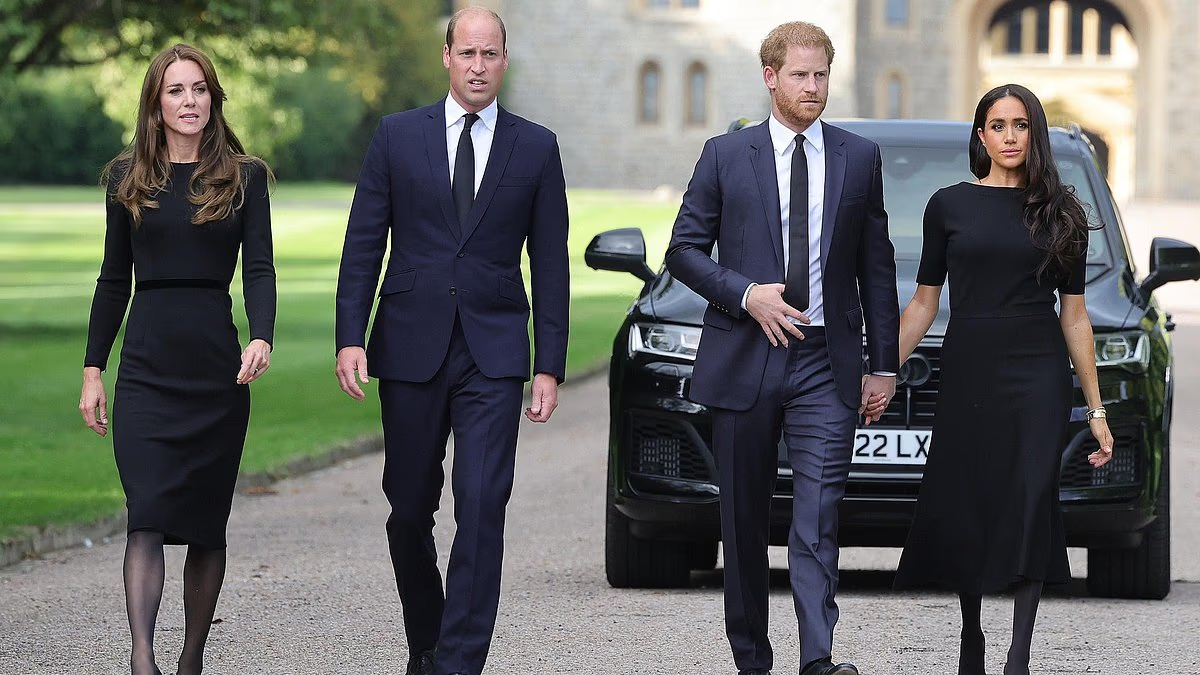
The Duke and Duchess of Sussex were abroad when the Queen died, but had taken black clothing with them as a precaution
Members of the Royal Family are traditionally expected to travel with at least one black mourning outfit.
The practice is linked to February 1952, when Princess Elizabeth was visiting Kenya with Prince Philip after the death of her father, King George VI.
Because she was overseas without suitable mourning clothes, the newly proclaimed Queen had to wait for a black outfit to arrive before appearing in public after returning to Britain.
The experience established a lasting precaution: royals travelling abroad should carry appropriate black attire in case a death in the family requires them to return home or appear publicly in mourning.
The monarch decides when dinner ends

Once the King places his cutlery down, everyone else at the table is expected to stop eating, even if their meal is unfinished
One of the best-known rules at royal meals is that nobody should continue eating after the monarch has finished.
When the King puts down his cutlery, everyone else at the table is expected to do the same, whether or not they have completed their meal.
Royal children learn table manners and dining protocol from a young age so they understand how to behave when sharing a meal with the monarch.
Seating at formal royal dinners is also governed by rank and precedence. The King and Queen sit first, followed by the Prince and Princess of Wales and, when appropriate, their children, Prince George, Princess Charlotte and Prince Louis.


