
The Oklahoma City Thunder secured a crucial victory over the San Antonio Spurs on Wednesday night, winning Game 2 with a score of 122-113. This result ties the Western Conference finals at one game each as the series heads to San Antonio for Game 3 on Friday.
In such an intense series, pinpointing the decisive factors can be challenging. It’s akin to a heavyweight boxing match, where both teams exchange blow after blow, testing each other’s resilience. Ultimately, it’s about who can withstand the pressure the longest.
Now, let’s delve into the pivotal elements that contributed to the Thunder’s success in Game 2.
1. SGA’s MVP response
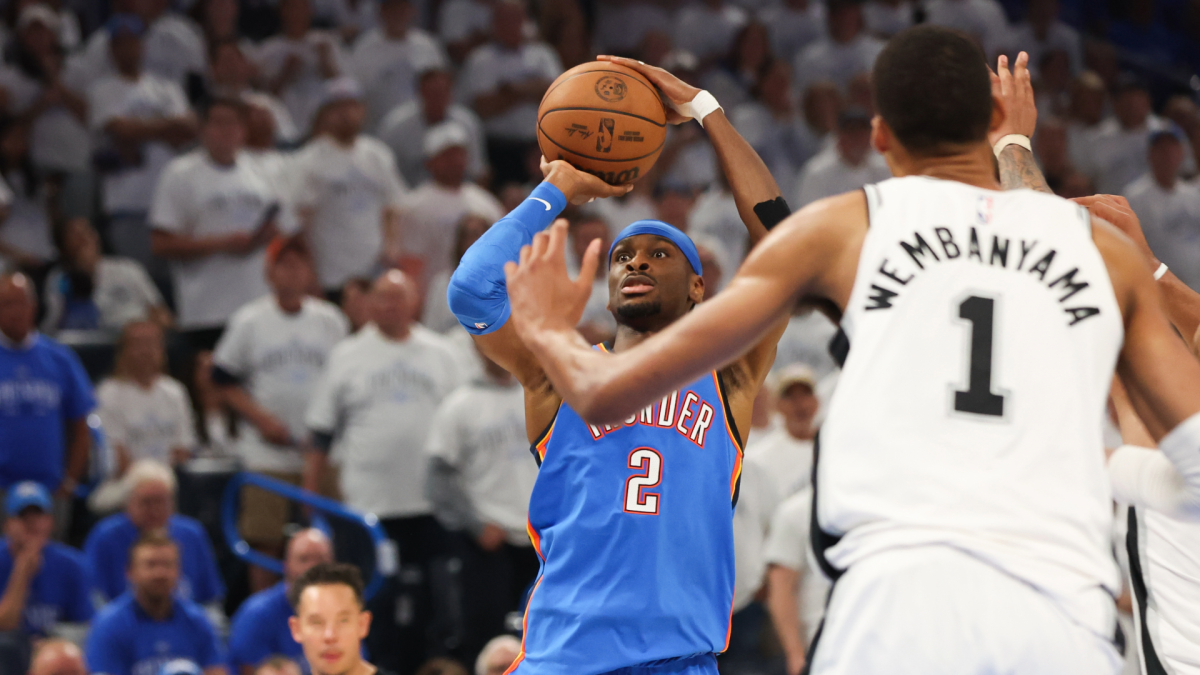
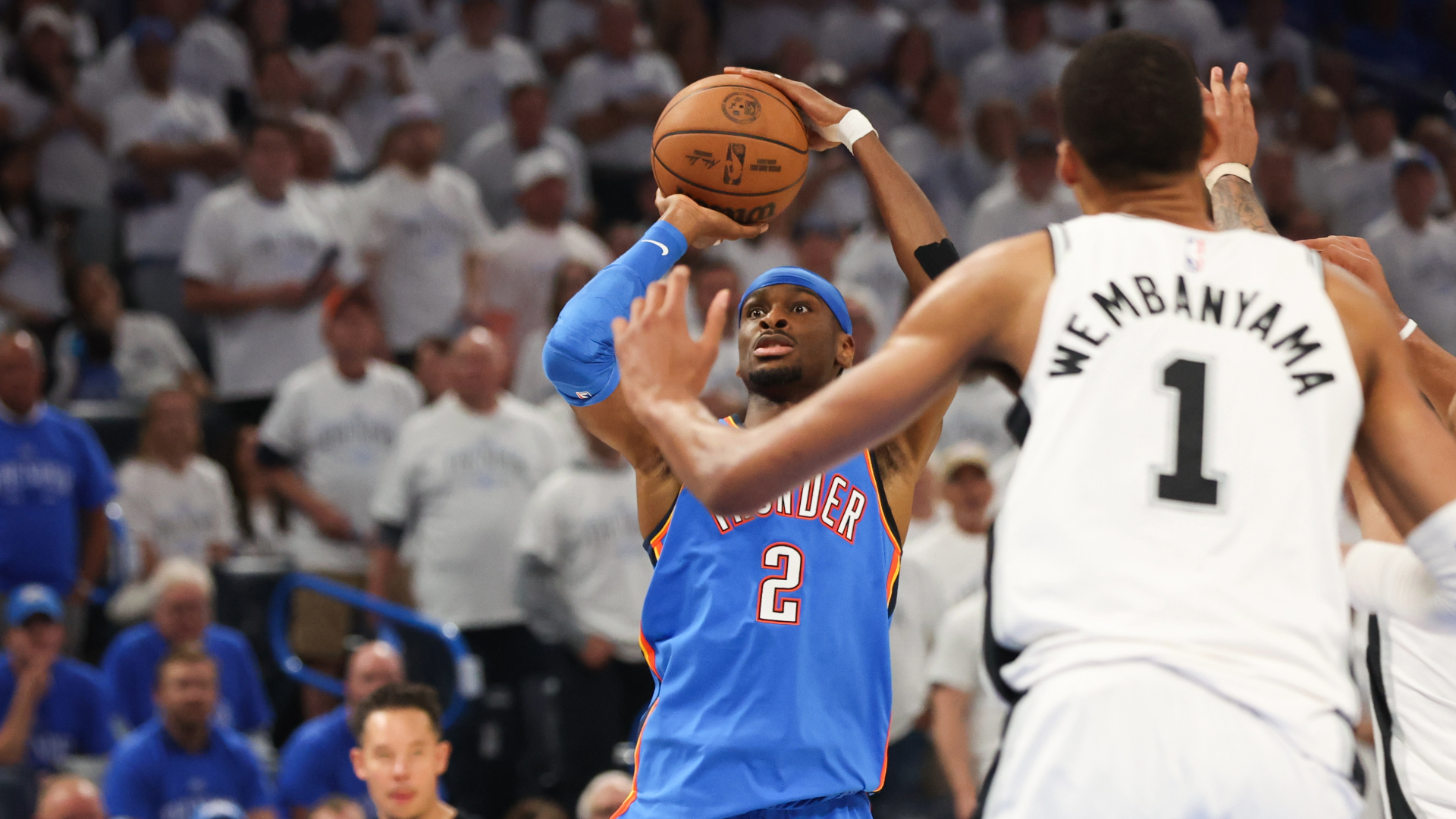
Shai Gilgeous-Alexander, fresh off receiving his second consecutive MVP trophy before Game 1, initially struggled as the Spurs’ defense, led by Victor Wembanyama, effectively stifled him. However, Game 2 saw a reversal of fortunes. Wembanyama, though still impressive, had a quieter night by his lofty standards, while Gilgeous-Alexander took control from the outset.
Gilgeous-Alexander ended the game with 30 points, shooting 12-for-24 from the field. His approach was noticeably more aggressive than in the first game. Rather than allowing the Spurs to establish their defensive setup, he attacked promptly, often relying on difficult, contested jump shots that had eluded him previously.
His aggressive mindset was evident from the first possession. With Stephon Castle guarding him closely along the baseline, and Wembanyama looming, Gilgeous-Alexander was faced with two choices: pass the ball and let a teammate handle the offense, or take a pull-up jumper over Castle. He confidently chose the latter, setting the tone for his performance.
Same thing on his second bucket. Castle fights over the screen and stays attached to SGA as he drives left, cutting off his angle to the basket. Devin Vassell leaves his man behind the 3-point line to dig down on SGA, whose only option, again, is to pull up for a contested jump shot (shout out to Isaiah Hartenstein for blocking Wemby out to keep him from flying over to disrupt this shot even further, if not outright block it).
Rinse and repeat: SGA drives left, Castle stays in front, Hartenstein seals off Wemby, and another tough jumper falls.
Before we take a look at another Game 2 clip, let’s go back to Game 1. Here’s what SGA was looking at as he surveyed the scene from the top of a possession. Castle in front of him, with a defender waiting for him at the elbow on one side and Wemby waiting for him on the other.
Now look at his view in Game 2. Same thing. A defender in front of him, another waiting for him if he goes one way, and Wemby waiting if he goes the other.
In Game 1, when SGA opted to drive to Wemby’s side and actually try to pull up over him, he either got the shot blocked or he missed.
In Game 2, nearly the same exact shot went in.
When people say the NBA is a “make or miss” league, as simplistic and oftentimes lazy as that analysis is, this is what they’re talking about. SGA faced the same coverage in Game 2 that he did in Game 1. Of his 12 makes, only two came at the rim. The Spurs once again forced him into a heavy diet of contested jumpers by cutting off his driving lanes with multiple bodies and Wembanyama backing it all up. The only difference is that this time, they went in.
2. Spurs turnovers
Some turnovers are going to be baked into the recipe of playing against the ultra-physical and aggressive Thunder defense, but at a certain point, you cannot keep coughing the ball up and expect to keep getting away with it.
The Spurs did get away with it in Game 1, when they turned the ball over 23 times for 28 OKC points but still found a way to win in double overtime thanks to Wembanyama’s heroics. They weren’t so fortunate in Game 2, when they committed 21 turnovers that directly led to 27 OKC points.
Do the math, and the Spurs have fumbled the ball away 44 times in this series. That’s the highest number of turnovers through two games of a conference finals since the 1998 Pacers, and the highest number through Games 1 and 2 of any series since the 2014 Warriors (one of the all-timer turnover machines).
Castle, in particular, needs to put some pine tar on his hands or something. Dude is awesome in every other facet of the game, but he cannot hold onto the ball to save his life right now. Buddy has 20 turnovers by himself through two games in this series. Twenty! That’s not the right side of history.
Castle has 56 turnovers so far in these playoffs, and this becomes an even bigger problem with De’Aaron Fox missing the first two games of the series with a bum ankle and no word on whether he’ll be ready for Game 3, plus Dylan Harper leaving Game 2 with a leg injury of his own. If those two guys are out, Castle becomes the primary ball handler. Suffice it to say, he’d better start handling it a lot better than he has.
3. The I-Hart factor
Isaiah Hartenstein only played 12 minutes in Game 1. He had two points and two rebounds. He was not a factor. In Game 2, Mark Daigneault committed to Hartenstein for 27 minutes, and it worked out.
“The thing that doesn’t feel good is playing Hart 12 minutes (in Game 1),” Daigneault said after Game 2. “It just didn’t feel good to me. In order to get him extended past that, that’s the matchup (guarding Wembanyama), and so we decided to start with it.”
Hartenstein beat Wemby up all game. Much of it wasn’t legal. It seemed like he spent half of his 27 minutes just pulling at Wemby’s arms to keep him halfway grounded.
At one point, he started pulling hair.
You know what, though? This is the conference finals, and this series is a bloodbath both ways. Go watch the way Castle is defending SGA. I promise you it ain’t all legal. So fair play. Wemby is 10 feet tall. Hartenstein is a battler, and he won a lot more fights than he lost in Game 2.
Did you notice that Wembanyama, who made it a point to dominate from the elbows down in the opener, was operating way farther out on the floor in Game 2? That’s a lot due to Hartenstein, who was fighting to not let Wemby set up in deep position.
Hartenstein finished with 10 points and, more importantly, 13 rebounds. Seven of those were offensive. If you look at the stats, both teams were equally effective on the offensive glass (17 to 16 in favor of OKC), but down the stretch, it seemed like OKC was getting all the big ones. They had seven offensive boards in the fourth quarter as Wemby looked exhausted from having to deal with Hartenstein’s physicality all night.


