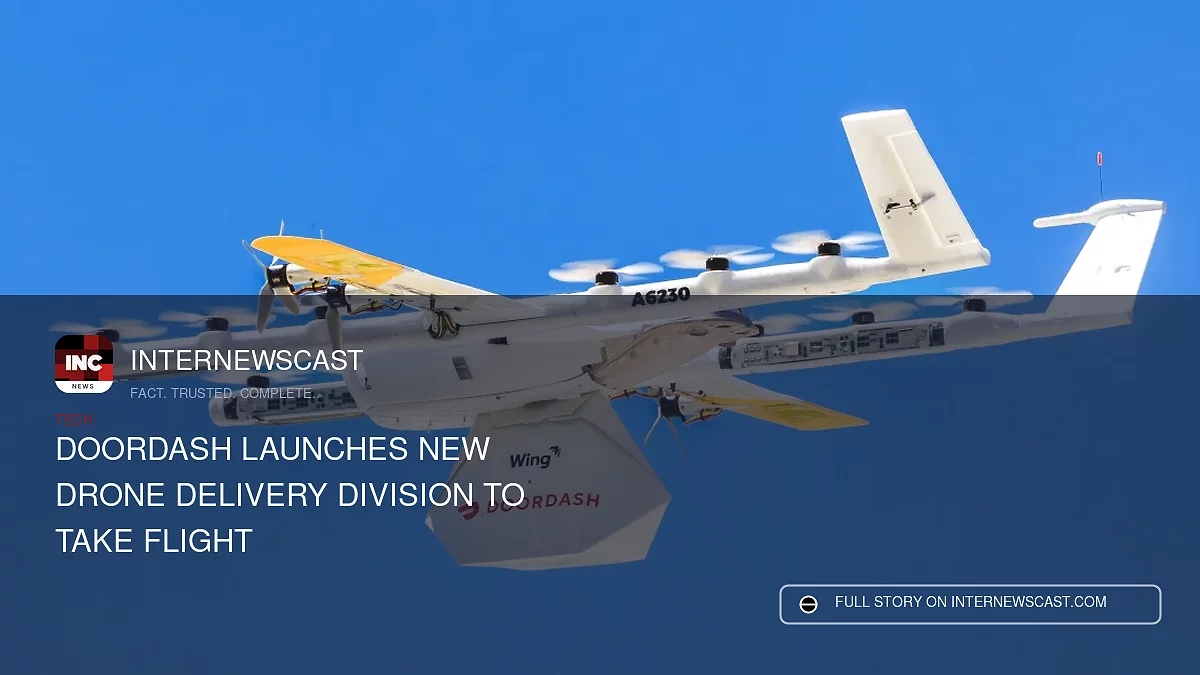

DoorDash is preparing to take food delivery to the skies with DoorDash Air, a new drone delivery initiative from the biggest food delivery platform in the US. The company says it has secured clearance from the Federal Aviation Administration, moving it closer to offering drone-powered deliveries to customers in the near future.
According to DoorDash, the FAA has granted it a Part 135 air carrier certificate, a key regulatory approval that allows the company to transport small packages by drone. The certification places DoorDash alongside other major drone delivery players that have received similar authorization, including Alphabet’s Wing, Zipline, and Amazon.
DoorDash has already spent time testing the concept through partnerships, including multiple pilot programs with Wing in markets such as Dallas-Fort Worth, Virginia, and Australia. This time, however, the company says it plans to operate its own aircraft. The drones are being developed specifically for restaurant and local commerce deliveries through DoorDash Labs, the company’s in-house robotics and AI division that also created its Dot sidewalk delivery robots.
“We’re designing an aircraft purpose-built for the gaps we see in local commerce, and it complements the short- and long-range designs our partners are scaling,” DoorDash said in its announcement. “Our drone is also proudly American-designed and built, with the majority of components made right here in the U.S.” That distinction is notable in an industry where most drones are manufactured in China.
The company is also emphasizing that drone delivery is not just about the aircraft. DoorDash says it intends to create the ground infrastructure restaurants and merchants will need to transfer orders to drones efficiently. As previous drone delivery tests have shown, that system can be complicated, involving pickup stations, loading equipment, flight routing, airspace coordination, and carefully managed drop-off procedures. DoorDash says it plans to build and control that full delivery network itself.
“The aircraft is what everyone sees,” the company said. “The harder problem is the infrastructure and integration on the ground, and that’s our advantage. Solving hard physical-world problems for local businesses is our focus, from real-time inventory reconciliation to universal handoff systems for drive-throughs, rooftops, or merchant back doors. We are building that complete end-to-end system.”
DoorDash argues that drone delivery could help address one of the trickier parts of on-demand food delivery: midrange orders. The company says more than 20 percent of its orders travel between three and five miles, yet those deliveries take nearly 25 percent longer on average than shorter trips. One major reason, DoorDash says, is that it can take more time to match those orders with available couriers.
“Routing mid-range deliveries to drones lets Dashers focus on the orders they often favor: shorter deliveries that can be done quickly, staying near a high concentration of merchants for optimal routing, and maximizing their earning potential by getting them to their next order faster,” DoorDash said.
DoorDash didn’t reveal which markets it was targeting for its initial launch, noting that it would announce more details in the months to come.


