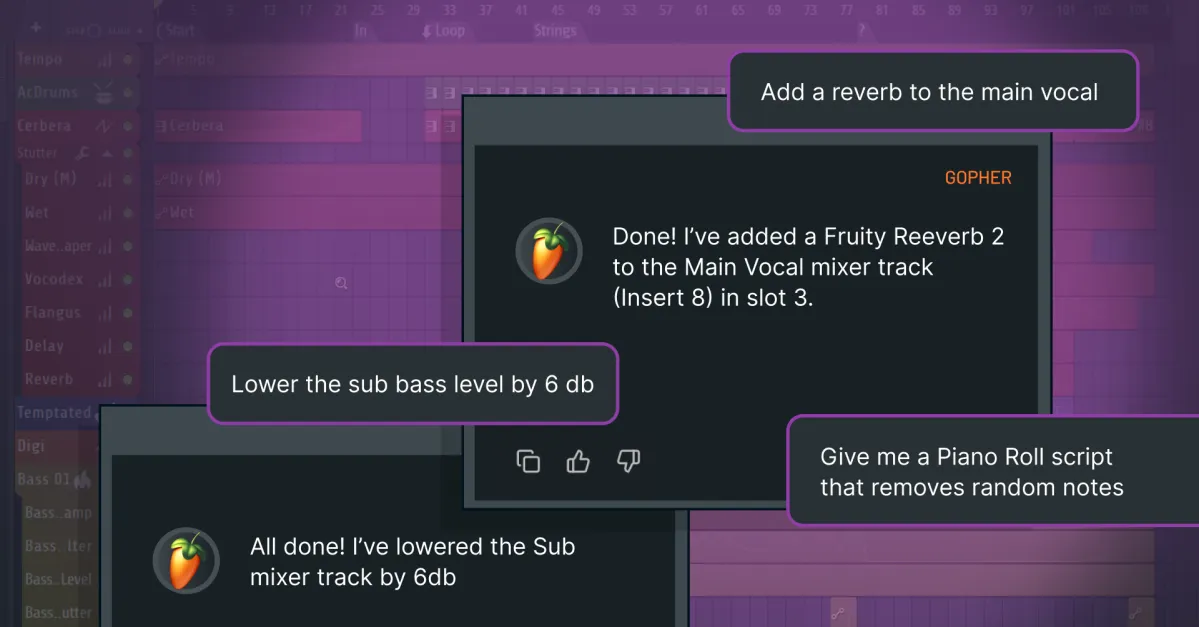

Image Line rolled out Gopher for FL Studio last year as an AI assistant that functioned mostly like an interactive help guide: ask a question, get the right set of instructions. That remains one of the more practical uses for AI in music software. With the latest update, though, Gopher has moved beyond explaining features and can now carry out certain tasks inside a project. In testing, it successfully created a four-on-the-floor kick pattern, placed snares on the backbeat, and added gated reverb to the snare for a big ’80s-style effect.
The assistant is not yet capable of handling everything. Gopher cannot write or draw automation, add notes or chords to melodic parts, or choose exact presets within plug-ins. For example, asking for a Rhodes electric piano will prompt it to create a channel with the updated Flex instrument loaded, but users will still need to pick the appropriate Rhodes sound themselves. Image Line also emphasizes that it is not using customer project data to train its AI, meaning recording sessions remain private.
Another major addition in FL Studio 2026 is a fully rebuilt version of Flex. Image Line’s broad-purpose virtual instrument works in a similar lane to Native Instruments Kontakt, offering a wide range of sound packs that span vintage synthesizers, convincing guitar tones, experimental textures, and more unusual effects. Its redesigned preset browser now includes stronger filtering tools and genre-based categories, while the underlying engine has been optimized to use fewer system resources.
Image Line is also introducing automatic project backups to the cloud for FL Cloud subscribers, along with a new “audio logger” feature that continuously monitors the master output. The tool keeps the previous 60 seconds of audio available, making it possible to recover a spontaneous idea even if recording was never enabled.
FL Studio 2026 continues Image Line’s long-running policy of offering the update free to existing users.