
Live-service games are facing a difficult moment. Studios are being downsized, projects are being canceled, and many of the industry’s biggest promises are being met with growing skepticism. Yet amid that uncertainty, EverQuest — one of the earliest and most influential live-service games — is making a notable return more than 25 years after its debut.
EverQuest Legends is now available in preorder beta, with a full launch scheduled for July 28. The original EverQuest helped shape the modern MMORPG at a time when the genre itself was still being defined. Legends revisits that formative version of the game as it existed in 1999, before years of expansions dramatically changed its world.
Legends is built with nostalgia at its core. Its development was influenced by longtime fans who have spent years preserving the early EverQuest experience. Now, one of those fans is helping guide an official EverQuest release.
The team behind EverQuest Legends is not the first example of devoted fans becoming professional developers on the games they love. Bethesda has hired modders who previously created unofficial content for its titles, while Stardew Valley creator Eric Barone brought on one of the farming sim’s most prominent modders to assist with the major 1.6 update released in 2024. Rockstar Games also acquired Cfx.re, the modding group known for its work around Grand Theft Auto V and Red Dead Redemption 2. With the right mix of talent, timing and persistence, community-driven projects can become a pathway into official game development.
Even so, EverQuest Legends stands apart. While the game includes quality-of-life improvements and fresh content, its primary aim is to recapture the atmosphere and memories of playing EverQuest in the late 1990s and early 2000s. That mission is well matched to a team that includes members of an emulation community that has already spent years keeping classic EverQuest alive.
EverQuest Legends stands apart
Project 1999 is one such emulated server, created by old-school EverQuest fans in the late 2000s to preserve the game as it existed between 1999 and 2001. The effort represents a significant act of game preservation. Although it is not formally affiliated with publisher Daybreak Game Company, it has received Daybreak’s approval. That passion project ultimately helped lead Sean “Rogean” Norton — a project manager, server administrator and programmer on Project 1999 — to a role as senior engineer on Legends.
Working on an emulator, however, is not identical to developing an official revival. “Coming from an emulator, we got so used to handling every little thing ourselves, from community management to website updates to customer service,” Norton told The Verge in an email. “Being able to focus the majority of our time on the actual game development has been a breath of fresh air.” Norton added that while he was able to adapt, the “official EverQuest tools are quite different in their own ways” from the tools used in emulator development.
But Legends has the same nostalgic spirit as Project 1999, and that’s where Norton’s experience seems especially valuable. When I saw a demo of Legends during Summer Game Fest last month and chatted with the team there — Norton, alongside executive producer David Youssefi and lead content designer Eric Wellman — it was incredibly clear they were all fans of classic EverQuest, and that that fandom informed many of the design decisions on Legends. Preserving the original game was a major part of it.
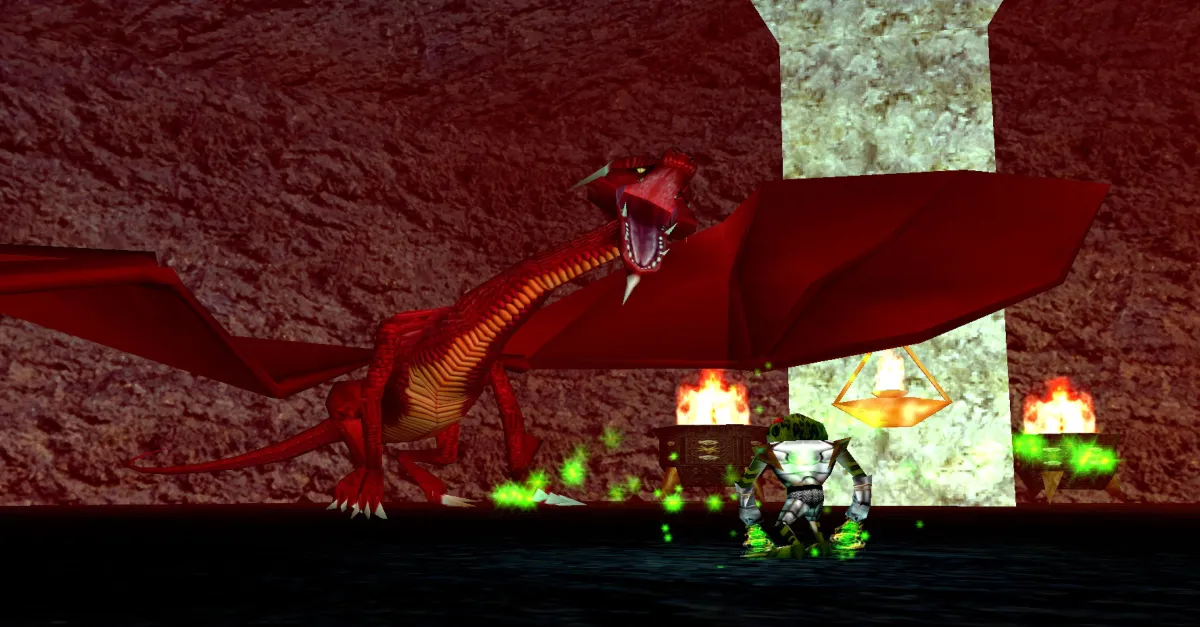
“The version of Norrath players will see in EQ Legends hasn’t existed in over twenty years, and we are staying as true as possible to the original look and feel of the game,” Youssefi told The Verge in a follow-up email. “Much of the original content was on the verge of being lost forever and was rediscovered by searching through old server directories, CD ROMs, Mac clients, etc. Examples of elements we reintroduced to the game include the original MIDI music, spells effects, character models, and the city of Freeport.”
These sorts of discoveries are a huge win for game preservation, a difficult task getting even more difficult as more and more games become digital-only. Andrew Borman, director of digital preservation at The Strong National Museum of Play, told The Verge earlier in July that required online connectivity and frequent patches contribute to the challenge of digital preservation. EverQuest, like other MMOs, is especially vulnerable to these challenges; the genre as a whole requires an online connection and is known for frequent, game-shifting updates and expansions.
Of course, Legends isn’t purely a preservation project. The devs did make quality-of-life tweaks and add new features. But many of those changes are largely imperceptible to anyone not intimately familiar with the original. As the team adds new content, Youssefi told me, they “work hard to ensure” it’s all cohesive with the art style and feel of classic EverQuest. Over email, I asked how the team decides what quality-of-life tweaks to make and what should be preserved from the original game — and if there was anything they originally set out to change for quality-of-life reasons but realized they’d rather keep the same.
“We didn’t remove any planned QOL features per se, but we did temper some of the changes to ensure that we preserved key aspects of the original game,” Youssefi replied. “For example, we added the Gather Party ability to make it easier to join your friends in battle. But we ended up increasing the reuse timer to ensure that foot travel, ports, and even boats remained meaningful and necessary modes of getting around in the massive world of Norrath.” Youssefi cited the “unnecessary pain points” of corpse retrieval and “the tedious process of rebuffing” as things the team did address in Legends.
Travel is a pain point especially for people who lived through the pain. You could spend hours just walking through zones and waiting for boats to help you travel across the world. But Legends is so much easier than the original that you’d only take a boat to experience the nostalgia. Even the tutorial zone gives you boots that bestow you with something like the Spirit of Wolf spell, known lovingly as “SoW” — something you used to have to beg a druid for. There were even T-shirts for EQ fans back in the day that said “Got SoW?” on them. Now you basically get the spell for free.
The memories of difficulty are now an opportunity for bonding
Other pains have also been removed. There was once a flaw in the code in the original EverQuest that created something called “hell levels.” A hell level meant your rate of experience gain was so punished that you could spend up to a month getting through just a single level in the game, depending on your skill and rate of play. The people who now play Legends remember that and have been chatting about it in-game. Invoking the memories of difficulty is now an opportunity to bond with others.
Then there’s maybe the most annoying feature of all time: having to retrieve your corpse. Back in the day, if you died in the game and didn’t retrieve your corpse in time, you could lose all of your gear, which could have taken weeks of playtime to earn. In Legends, you don’t have to retrieve your corpse at all.
Ultimately, it seems like the goal of Legends’ quality-of-life updates is to remove the biggest barriers to enjoying EverQuest for what it is: time and tedium.
Time is an especially big barrier. The SGF demo took place in the Plane of Fear, an endgame raid zone that originally could require as many as 70-plus people working together to complete. Now you can do it entirely by yourself.
The Plane of Fear was difficult enough, according to the Legends team, that most players never even experienced it themselves. (Understandable, given that after 12 hours of raiding, many attempts would still end in total wipes, and then you’d have to spend a bunch of time afterward retrieving your corpse.) The hope is that the updates in Legends allow more players to see what EverQuest is all about, including something as intense as the Plane of Fear.
“The main thing we’ve tried to avoid is the feeling that there’s some kind of velvet rope that separates the casual players from the more hardcore players or that prevents them from enjoying all of the game’s content or obtaining the best gear,” Youssefi said in the email to The Verge. “It’s very important to us that casual players should always feel that they can play the game [any way] they want and still, over time, enjoy everything the game has to offer.”
On the one hand, Legends adheres so faithfully to classic EverQuest, 1999 art style and all, that it’s hard to imagine a casual player getting into it in 2026. But unlike the other live-service games out now, it doesn’t seem like Legends is even trying to hook a ton of new players or capture the widest possible audience. It instead feels like the biggest EverQuest fans changed just enough of the game they loved so that other people could love it too — especially those who wanted or tried to play it in the past but didn’t have 12 hours at a time to dedicate to it.
In that way, EverQuest Legends is preserving the feel of classic EverQuest even when it’s not directly preserving the game itself. It’s a fascinating project. It just remains to be seen how big its audience ends up being, and whether that audience can sustain it for what it is.
EverQuest Legends launches on July 28th, and preorders are currently open. The base game includes a one-month subscription and costs $19.99 — an homage, of course, to the year the original game was released.


