
Donald Trump’s Department of Homeland Security has faced scrutiny over two major controversies in recent weeks. In one case, federal agents fatally shot a man and swiftly defended the use of deadly force on grounds critics say were thin. In another, officials reportedly visited people at home after they posted harsh criticism of the agency online.
Since returning to office last year, the Trump administration has worked to portray its hard-line immigration agenda as patriotic and heroic. Under former Secretary Kristi Noem, DHS spent $220 million on messaging that cast her in frontier-style imagery while encouraging ICE recruitment in language more suited to wartime mobilization than domestic law enforcement. The result has often appeared more theatrical than serious.
The public-relations campaign may be awkward, but the immigration crackdown behind it has had grave consequences. In Texas on Tuesday, an ICE officer shot and killed Lorenzo Salgado Araujo, a father of three who had lived in the United States for 35 years, worked in construction and supported his family. The agency quickly issued a statement saying lethal force was used after Salgado Araujo allegedly tried to “weaponize his vehicle.” Video clips showing portions of the encounter have raised questions about that account, echoing disputed explanations in other recent cases in Minnesota. Federal officials later acknowledged they had been seeking someone else. Salgado Araujo was still killed.
ICE’s handling of public confrontations has drawn serious concern. But the agency also appears unable to tolerate criticism through emails, social media posts or other everyday forms of public dissent. Increasingly, it seems to be demanding not just legal immunity, but social immunity as well.
Over the past year, DHS has embraced an expansive interpretation of “doxxing,” a term once mostly associated with online harassment campaigns. In this version, members of the public are accused of wrongdoing simply for identifying federal agents linked to highly controversial incidents, including the killing of Renee Good in Minneapolis. The government has shown little interest in public discussion of the agent accused in that shooting, identified as Jonathan Ross. Before she was killed, Good reportedly told agents, “I’m not mad at you.” Afterward, agents were heard referring to her with a misogynistic slur.
DHS has reacted sharply to public outrage over the deaths of civilians at the hands of federal agents. In one instance, the department tracked down and confronted a man who had protested state violence, issuing him a “WARNING NOTICE” that critics compared to the administrative “warrants” the agency has used during home raids. The spectacle was almost absurd in its pettiness, but the presence of armed federal officers made it anything but harmless. The broader message was clear: the agency does not welcome accountability in any form.
In Minnesota, state officials were forced to sue the federal government to obtain evidence needed for investigations into ICE shootings, citing a lack of cooperation from federal authorities. That posture might seem unusual for an administration aligned with a party that presents itself as strongly supportive of law enforcement. But the contradiction is less surprising in light of the party’s handling of the January 6 attack on the Capitol. The White House’s current January 6 webpage describes the date as one “which will live in infamy,” while also portraying people convicted in connection with violence against police as victims and accusing Democrats of being responsible for the real insurrection. It is a familiar inversion of reality — and a notably fragile one.
All of this ultimately reflects Trump’s long-running political project: consolidating power while eroding expectations of shame, restraint and accountability. Trump has never been known for absorbing criticism calmly, and many of those around him have adopted the same posture. The pattern is consistent: deny wrongdoing, blame opponents, intimidate critics and, in the most serious cases, obstruct efforts to uncover the truth. The performance may be meant to project strength, but it often looks like the opposite.
These people feign outrage and aggrievement at any opportunity. Almost immediately after the killings of Renee Good and Alex Pretti, Noem maligned the victims by invoking the language of “domestic terrorism” — a truly malicious thing to do while bodies are still warm and evidence is being gathered. When they were shot to death, Good had just finished dropping off her 6-year-old child at school; Pretti, an ICU nurse, was helping someone prone on the street, like any good nurse would.
Federal incitement reinforces things Americans already reasonably fear about policing. As I wrote for the country’s recent birthday, state and local police are also demonstrably bad at upholding our rights (especially the First, Fourth, and Fifth Amendments) and routinely conduct themselves like weaklings who can’t handle the slightest criticism. Police are often witnessed struggling to maintain calm at the slightest challenge to their authority. So what happens when they get superpowered by federal intervention? Things like reporters getting allegedly intentionally assaulted by cops.
Policing in America has always been complicated, but the Trump administration has made it a runaway train of abuse fueled by billions of dollars and unapologetic racial animus. Immigration and Customs Enforcement has gotten so much money and permission from Trump that it operates its dear leader’s fundamentally racist mission of mass deportation with impunity. ICE agents have kidnapped people, knocked down doors without warrants, assaulted reporters, terrorized the general public (including children and infants), and even shot dead innocent people in broad daylight. And that’s just the brief summary of events.
ICE is a menace to democracy and its murderous conduct should be soberly considered. But we should also recognize that these people are weak and sad and ought to be made fun of. Even their stupid outfits, which look ripped from a “how to be tacticool” buying guide. And Americans are ridiculing these people. What better way to protest an army of clowns than by showing up as Portland did with a human frog at the front? Cops arrested that frog. Trillions of dollars later, we’ve learned nothing about counter-insurgency, because now there’s a frog legion.
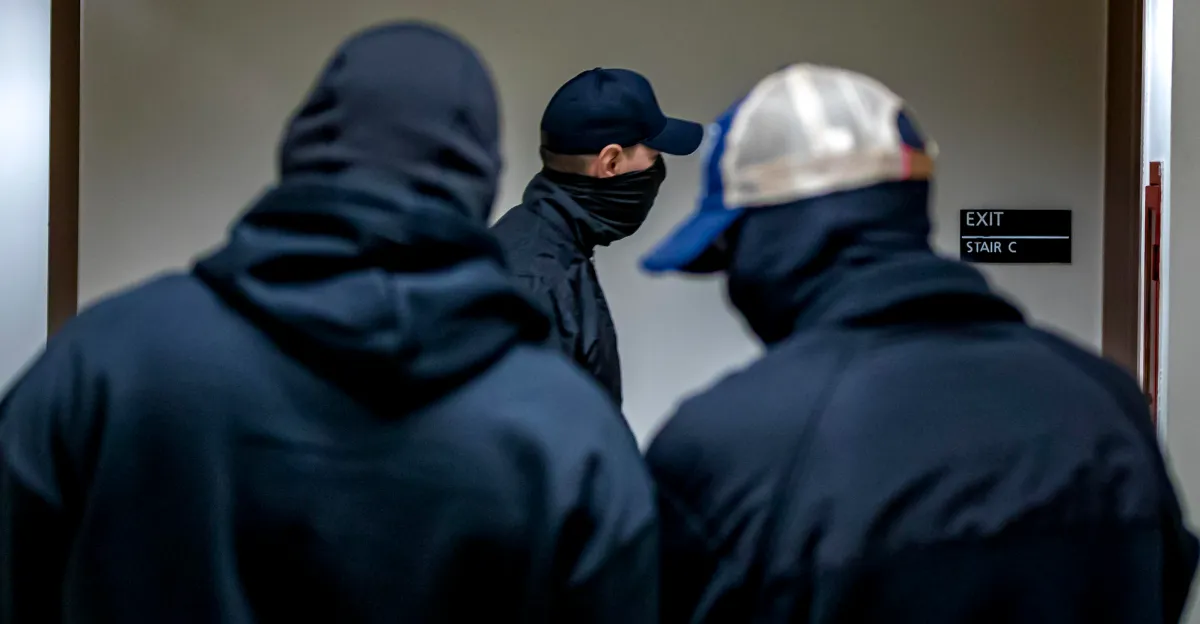
These ICE agents are so small that they wear masks in public like a bunch of cowardly Patriot Front wannabes, who probably got a similar amount of training. You’d think the average DMV worker would have been masked up for years based on the abuse they get, but then again, the average government employee is far braver than these fools.
ICE is now the highest-funded law enforcement agency in the federal government. If you know anything about the actual waste, fraud, and abuse of federal funding for defense, you’ll know this is not something that guarantees quality or competence. This is just Donald Trump’s new private domestic army. I’d call them Stormtroopers except for the fact I’m pretty sure some of them are getting their uniforms and body armor from Temu.


