
In 2026, both Marvel and Mattel are betting on audiences’ affection for beloved animated heroes from decades past. Masters of the Universe has returned with a live-action He-Man feature, while season two of X-Men ’97 is preparing to send Charles Xavier’s mutant team into a bleak, world-ending future. Each project bears the fingerprints of creators with clear reverence for the original material, and both are packed with deep-cut references aimed at longtime fans. But while X-Men ’97 and Masters of the Universe are similarly driven by nostalgia, the key distinction between them — and perhaps the reason one has struggled more than the other — comes down to how well their franchises have remained present in popular culture.
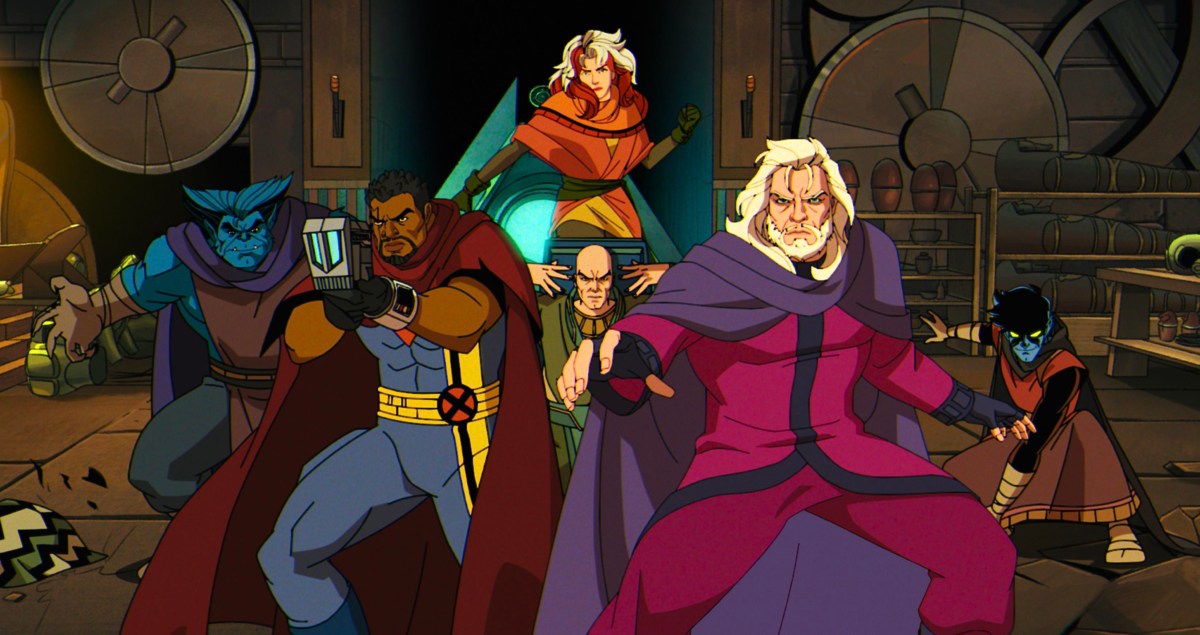
In its second season, X-Men ’97 divides its mutant heroes into separate groups scattered across vastly different eras. One team lands in ancient Egypt, while another is hurled thousands of years ahead. Although both factions are determined to return to the 1990s, they are equally focused on finding a way to stop the nearly immortal Apocalypse, voiced by Ross Marquand, from wiping out the planet. Since Apocalypse exists in both timelines, the X-Men decide their best chance may be to fight him in the periods where they are stranded.
Instead of drawing from just one comic arc, the new season of X-Men ’97 pulls together ideas from several Marvel limited series, especially 1994’s The Adventures of Cyclops and Phoenix and 1996’s Rise of Apocalypse. Leaning on those stories fits neatly with the show’s ’90s identity. More unexpected, however, is how much newer X-Men mythology the series also folds in to broaden the universe surrounding its main cast.
Although X-Men ’97 continues the story of X-Men: The Animated Series, Marvel has kept it from feeling stale by making meaningful adjustments to established continuity. That strategy helped turn the show into a ratings success when it debuted in 2024, but it also benefited from the enduring popularity and familiarity the X-Men have built with audiences over time.
A major reason fans have remained so eager for new X-Men content — including ’97 and the planned MCU movie — is that Marvel has consistently kept the franchise in circulation. Even when 20th Century Studios’ X-Men films often disappointed, the brand never disappeared thanks to a steady stream of comics and television projects that kept interest alive. Had Marvel not invested so heavily in maintaining the X-Men’s visibility, the property could easily have drifted into the same kind of uncertainty now facing Mattel’s Masters of the Universe.
There have been a few more recent shows inspired by the original Masters of the Universe cartoon. Still, He-Man has largely lost the cultural prominence he once enjoyed when Prince Adam and company were delivering adventure — and moral lessons — to weekday TV viewers between 1983 and 1985. That decline may help explain why Mattel’s new Masters of the Universe film has stumbled at the box office since opening last week. To date, it has earned just $54.4 million worldwide against a reported $200 million budget, positioning it as a major commercial disappointment.
Masters of the Universe has become a case study in Hollywood’s tendency to learn the wrong lessons from its previous successes. People flocked to theaters to see Barbie because it was a funny, feminist deconstruction of an ever-present icon, but Mattel interpreted that a sign that viewers are hungry for stories about toys in general. Masters of the Universe attempts to do some mildly critical exploration of toxic masculinity, but that clearly hasn’t been enough to convince audiences to care about He-Man. Aside from hardcore fans, many people simply aren’t that invested in or emotionally connected to He-Man’s world, and Mattel hasn’t done enough to convince audiences that there’s anything interesting about this latest film.
If He-Man was a fixture in more people’s imaginations the way the X-Men are, the conversation around Masters of the Universe would likely be very different. Mattel would do well to internalize this as a valuable lesson, but there have yet to be signs of that being the case. Between X-Men ’97’s second season and Avengers: Doomsday, Marvel is rolling into a year of massive stories that put mutants front and center. And it’s a moment that the studio has been building toward for years.
The second season of X-Men ’97 hits Disney Plus on July 1st, and Masters of the Universe is in theaters now.


