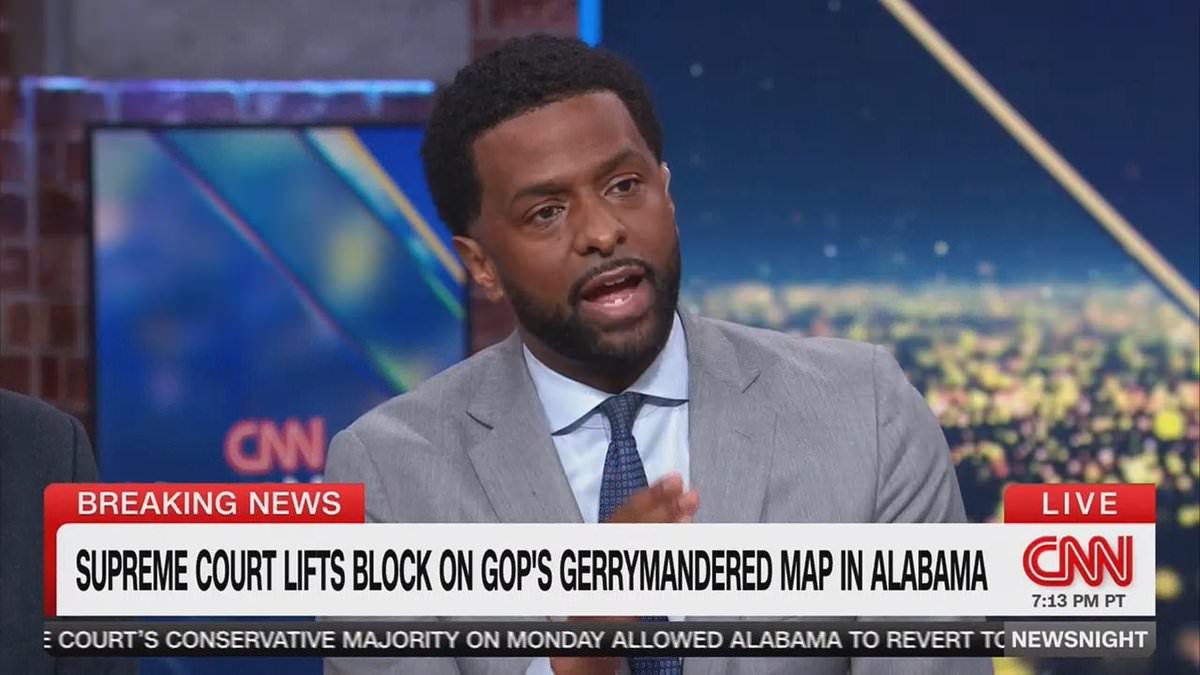

During a lively CNN segment, tensions flared as a progressive commentator clashed with Kevin O’Leary from Shark Tank over his remarks about a pivotal Supreme Court decision. This ruling allowed Alabama to reinstate a congressional map featuring a single majority-Black district. O’Leary, known for his straightforward views, suggested people should accept the decision, emphasizing that it empowers states as per constitutional guidelines. “It’s in the Constitution. Get over it,” he remarked on NewsNight. However, political analyst Bakari Sellers countered, asserting that challenging the norm is a quintessentially American trait.
1954 vs. Today
Sellers, 41, criticized O’Leary’s stance by referencing a historic 1954 Supreme Court decision. He noted that O’Leary, born in that year, might not fully grasp the implications of Brown v. Board of Education. O’Leary dismissed the historical reference, prompting Sellers to highlight how Brown v. Board overturned the 1896 Plessy v. Ferguson ruling. Their heated debate was momentarily paused by host Abby Phillip due to the intense language being used. Sellers shared personal anecdotes to underscore his point, mentioning his parents’ roles in the Civil Rights Movement. O’Leary’s responses, perceived as dismissive, only fueled the tension further.
Constitutional Conflict
Trying to convey the significance of the voting rights struggle, Sellers reminded O’Leary of the sacrifices made by many Americans. However, his choice of words earned him a reprimand from Phillip. O’Leary, standing firm on his interpretation of the Constitution, questioned Sellers’ critique. Phillip interjected to restore order, urging both to continue the discussion with respect. Despite the interruption, Sellers persisted, emphasizing the heavy price paid for voting rights and urging O’Leary to recognize its value, though he was repeatedly interrupted.
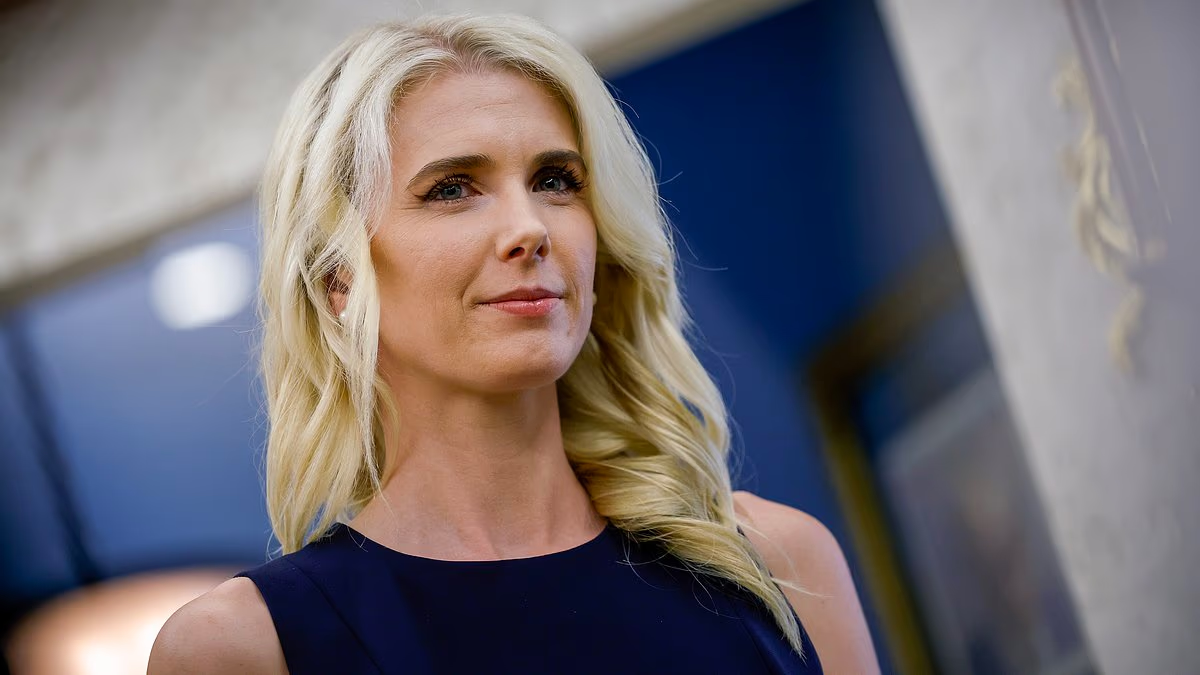
‘Where are you going with this?’ the businessman said, donning a ‘Utah National Security’ baseball cap for the appearance in reference to a proposed $100 billion data center in Utah to maintain the US’s competitiveness in AI he supports. ‘Whether or not you value that or not, there are people who bled, sweat, and died, and were in prison for access to the ballot box. And what we’re seeing,’ Sellers said, as the two men continued to talk over each other. ‘They still have access-,’ observed O’Leary. Sellers said: ‘What we’re seeing throughout the South is that their voice, their vote, their representation, and people who have lived experiences to represent them are not being sent to Congress or where they need to go.’
Brown v. Board of Education found that separating US public school students by race was unconstitutional, after nearly 60 years of states operating under the ‘separate but equal’ precedent created by Plessy v. Ferguson. The Supreme Court’s decision on Monday will likely remove a Democratic incumbent, Representative Shomari Figures, from office, detractors have said. Figures, a black man, was elected in 2024.
The year before, a group of black voters and civil rights organizations helped introduce a new congressional map on the basis that black voters in southern Alabama were previously being spread across three congressional districts unfairly. Monday’s ruling sets up Alabama to use the old congressional map, which was blocked on the ground that it violated laws that prohibit racial discrimination in voting. Midterms to elect the country’s congressmen are being held this November.