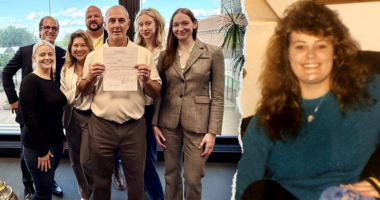


During her childhood in Atlanta in the 1940s and 1950s, Susan Levine’s trips to visit family in New York City included being featured in an impromptu novelty event: her cousin would gather friends and charge them 25 cents each to hear Levine’s Southern accent.
Although Levine’s two sons were also raised in Atlanta, having been born over 25 years later, they never adopted the accent, which is perhaps the most notable regional speech pattern in the U.S., characterized by its drawn-out vowels and gentle “r” sounds.
“My accent is nonexistent,” said Ira Levine, her oldest son. “People I work with, and even in school, people didn’t believe I was from Atlanta.”
This distinctive Southern accent, which varies widely, is becoming less common in some parts of the South as people move into the area from different regions of the U.S. and the world. A collection of research papers released in December highlighted the decline of this regional accent among Black residents in the Atlanta area, white working-class individuals near New Orleans, and those raised in Raleigh, North Carolina.
More than 5.8 million people have moved into the U.S. South so far in the 2020s, more than four times the combined total of the nation’s three other regions. Linguists don’t believe mass media has played a significant role in the language change, which tends to start in urban areas and radiate out to more rural places.
Late 20th century migration surge affects accents
The classical white Southern accent in the Atlanta area and other parts of the urban South peaked with baby boomers born between 1946 and 1964 and then dropped off with Gen Xers born between 1965 and 1980 and subsequent generations, in large part because of the tremendous in-migration of people in the second half of the 20th century.
It has been replaced among the youngest speakers in the 21st century with a dialect that was first noticed in California in the late 1980s, according to recent research from linguists at the University of Georgia, Georgia Tech and Brigham Young University. That dialect, which also was detected in Canada, has become a pan-regional accent as it has spread to other parts of the U.S., including Boston, New York and Michigan, contributing to the diminishment of their regional accents.
In Raleigh, North Carolina, the trigger point in the decline of the Southern accent was the opening in 1959 of the Research Triangle Park, a sprawling complex of research and technology firms that attracted tens of thousands of highly educated workers from outside the South. White residents born after 1979, a generation after the Research Triangle’s establishment, typically don’t talk with a Southern accent, linguist Sean Lundergan wrote in a paper published in December.
Often, outsiders wrongly associate a Southern accent with a lack of education, and some younger people may be trying to distance themselves from that stereotype.
“Young people today, especially the educated young people, they don’t want to sound too much like they are from a specific hometown,” said Georgia Tech linguist Lelia Glass, who co-wrote the Atlanta study. “They want to sound more kind of, nonlocal and geographically mobile.”
Accents change for younger people
The Southern dialect among Black people in Atlanta has dropped off in recent decades mainly because of an influx of African Americans from northern U.S. cities in what has been described as the “Reverse Great Migration.”
During the Great Migration, from roughly 1910 to 1970, African Americans from the South moved to cities in the North like New York, Detroit and Chicago. Their grandchildren and great-grandchildren have moved back South in large numbers to places like Atlanta during the late 20th and early 21st centuries and are more likely to be college-educated.
Researchers found Southern accents among African Americans dropped off with Gen Z, or those born between 1997 and 2012, according to a study published in December. The same researchers previously studied Southern accents among white people in Atlanta.
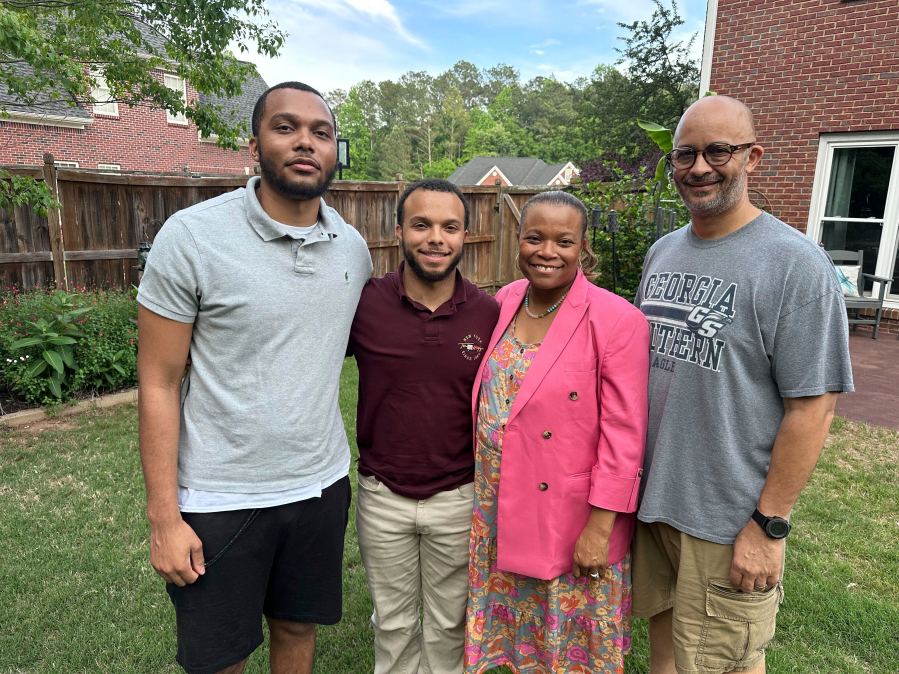
Michelle and Richard Beck, Gen Xers living in the Atlanta area, have Southern accents, but it’s missing in their two sons born in 1998 and 2001.
“I think they speak clearer than I do,” Richard Beck, a law enforcement officer, said of his sons. “They don’t sound as country as I do when it comes to the Southern drawl.”
New Orleans ‘yat’ accent diminished
Unlike other accents that have changed because of an influx of new residents, the distinctive, white working-class “yat” accent of New Orleans has declined as many locals left following the devastating Hurricane Katrina in 2005. The accent is distinct from other regional accents in the South and often described as sounding as much like Brooklynese as Southern.
The hurricane was a “catastrophic” language change event for New Orleans since it displaced around a quarter million residents in the first year after the storm and brought in tens of thousands of outsiders in the following decade.
The diminishment of the “yat” accent is most noticeable in millennials, who were adolescents when Katrina hit, since they were exposed to other ways of speaking during a key time for linguistic development, Virginia Tech sociolinguist Katie Carmichael said in a paper published in December.
Cheryl Wilson Lanier, a 64-year-old who grew up in Chalmette, Louisiana, one of the New Orleans suburbs where the accent was most prevalent, worries that part of the region’s uniqueness will be lost if the accent disappears.
“It’s kind of like we’re losing our distinct personality,” she said.
Southern identity changing
While it is diminishing in many urban areas, the Southern accent is unlikely to disappear completely because “accents are an incredibly straightforward way of showing other people something about ourselves,” said University of Georgia linguist Margaret Renwick, one of the authors of the Atlanta studies.
It may instead reflect a change in how younger speakers view Southern identity, with a regional accent not as closely associated with what is considered Southern as in previous generations, and linguistic boundaries less important than other factors, she said.
“So young people in the Atlanta area or Raleigh area have a different vision of what life is in the South,” Renwick said. “And it’s not the same as the one that their parents or grandparents grew up with.”
___
Follow Mike Schneider on the social platform Bluesky: @mikeysid.bsky.social.