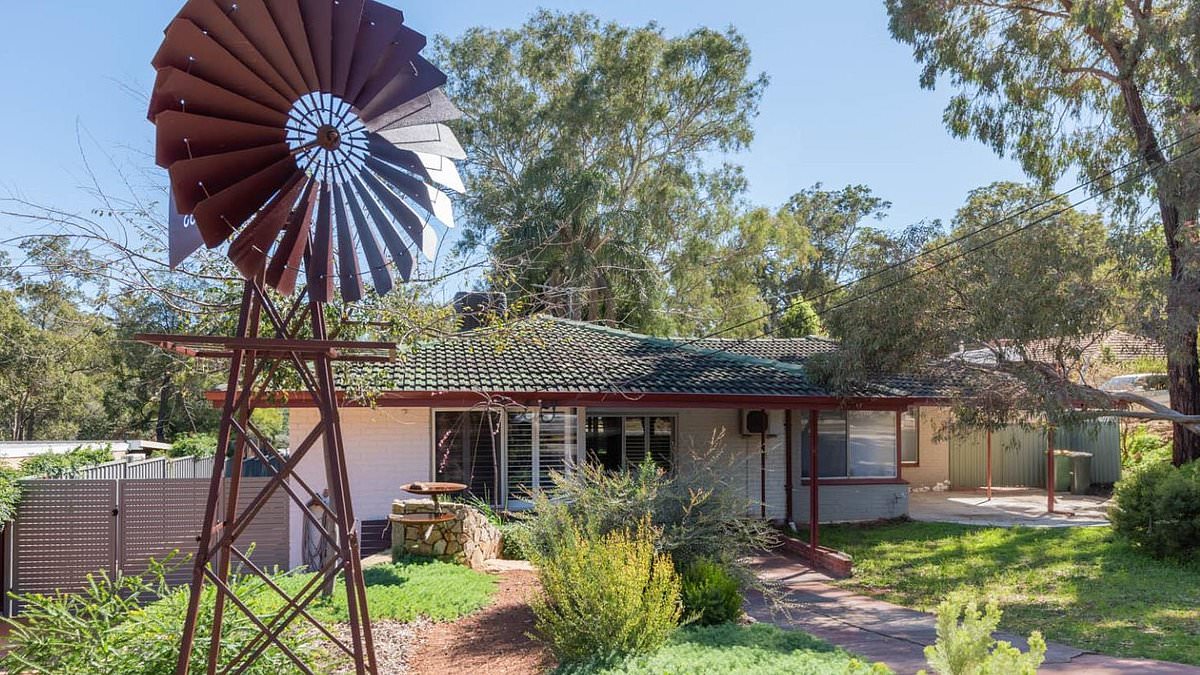

At just 24 years old, with an annual income of $37,000, I took a leap and signed the dotted line, becoming the owner of a rather dilapidated house in one of the most sought-after suburbs of the Perth Hills.
The house was far from glamorous. It was a classic case of a fixer-upper, sporting yellowing linoleum floors and a bathroom that seemed to have been untouched since the Whitlam era.
Everything about it screamed 1970s distress, and I could see why it lingered on the market in 2004 when more refined properties were available. Yet, for me, it was love at first sight.
For $175,000, I acquired not only the house but an acre of wild bushland, a creek that was more of a puddle, and kangaroos that considered my backyard their personal hangout.
Amidst the sea of bland walls and outdated fixtures, I envisioned a haven—a place to plant my roots and escape the scrutiny of overly watchful property managers.
Beneath the sea of beige walls and outdated fixtures I saw a place to put down roots and escape the eyes of overzealous property managers.
It was the place I could call home, nestled in the suburb I was born and raised and just a stone’s throw from my parents and cherished nannas, making Sunday roasts an easy expedition.
But now, as this Generation Xer watches her own Gen Z kids, aged 18 and 16, try to navigate a housing market that’s a world apart from the one I faced, the idea of them buying a home in the same suburb feels downright impossible.

Journalist Sarah Brookes (above)

Sarah bought her first home in 2004, a 1970s unrenovated relic with a beige colour palette and unkempt gardens

The Perth home was a classic renovate-or-detonate with yellowing lino floors and a kitchen that hadn’t seen a renovation since the Whitlam era
I can’t see how they’ll even scrape together a deposit if they are renting, let alone afford a house, unless I shuffle off this mortal coil and they get a nice windfall from selling my place.
It’s not just harder now, it’s borderline impossible for a single person to do what I did.
So could someone on the median income buy that house now?
Let’s do the math.
RP Data estimates the house I bought for $175,000 two decades ago is now worth $940,000.
Back in 2004, I was earning $37,000, about 15 per cent less than the median full-time wage of $44,000.
That means the house-to-income ratio at the time was 4.7 times my annual income.
Today, the median full-time wage is around $90,000. That same house, now valued at $940,000, would give a house-to-income ratio of 10.4, a level considered highly unaffordable.

Perth house prices have experienced a meteoric rise of 65 per cent since 2020
Many economists argue anything above 8 indicates a housing crisis.
Even if a single person used the federal government’s 5 per cent deposit scheme they’d need to scrape together a $47,000 deposit (you’d need a 20 per cent deposit or $188,000 without using the scheme).
Under the scheme, the government guarantees the difference between your 5 per cent deposit and the 20 per cent deposit required by most lenders.
If you have the $47,000 deposit the bank would then lend you $893,000.
Lenders typically prefer a loan-to-income ratio of 5 to 6 times your annual income, meaning on an income of $90,000 you could qualify for a loan between $450,000 and $540,000.
As a first homebuyer, I was exempt from stamp duty because my property was under $200,000, but today, that same home wouldn’t even qualify for the federal scheme, which is capped at $850,000 in Perth.
That means in practical terms, a single person today is unlikely to afford this house on their own without significant external support such as a large deposit, help from the bank of mum and dad, or shared ownership.
Historically in the 80s and 90s, houses in cities like Perth, Sydney and Melbourne cost three to four times the median household income.

This is the only property for sale below $850,000 in the same suburb Sarah purchased her first home
While wages have increased over time, house prices have outpaced income growth in many markets, especially since the early 2000s.
According to parliamentary documents homeownership peaked at 71 per cent in 1966, falling to 67 per cent in 2021.
The decline is most apparent for those aged 25 to 34 where home ownership has decreased from 61 per cent in 1981 to 43 per cent in 2021.
When Census night rolls around next year it is expected that figure will fall even further.
A Property Council of Australia report mapping Perth’s housing crisis released last month found buying a detached home in 2025 in undesirable suburbs like Armadale and Midland is now too expensive for frontline workers in single-income households.
The council’s WA executive Nicola Brischetto said buying a house was largely unaffordable for even relatively well-paid frontline workers in dual-income households.
‘This comes as no surprise, given that since 2020, median house prices in Perth have risen by more than 65 per cent, and rents have increased by more than 83 per cent,’ she said.
‘We need to dramatically increase the supply and diversity of new housing.’
So at this rate, the only way my kids will own a house in the postcode where they grew up, or even a nearby bridesmaid suburb, is if I leave my property to them in the will.
And that decision to buy the worst house in one of the best suburbs in Perth might end up being my greatest financial achievement.
For many young Australians, the great generational wealth transfer may be the only real path to home ownership.
So, for my kids, their best bet is to stay on my good side because at this rate, the inheritance will get them into a home faster than any deposit could.
This is why our country is broken.


