

According to a former hostage from the 1979 Iran crisis, dismantling the Iranian regime may prove nearly impossible, even if the United States opts for a military intervention. This insight comes from a New Yorker who endured torture during the infamous 444-day hostage ordeal.
Barry Rosen, who served as a press attaché at the US Embassy in Tehran, was among the 52 Americans held captive by fervent supporters of Ayatollah Khomeini starting November 4, 1979. Reflecting on those harrowing days, Rosen recalled how they “lived in darkness” during their long confinement.
At 81, Rosen shared with The Post his perspective on the resilience of the Iranian leadership. “This regime will fight fiercely to survive because it risks losing everything,” he remarked. Although he harbors hope for “a free and open Iran,” he confessed, “A regime change might be further away than many think.”
Rosen’s comments come amidst a significant military buildup by the United States in the region, orchestrated by President Trump as a preparatory measure for a potential “sustained” campaign against Iran.
This military posturing coincides with ongoing negotiations aimed at curbing Iran’s nuclear ambitions. Meanwhile, Supreme Leader Ali Khamenei, who succeeded Khomeini, is dealing with unprecedented domestic protests.
Nationwide demonstrations erupted in January, driven by the plummeting value of Iran’s Rial. It marked the largest uprising since the revolution, but the regime responded with severe crackdowns.
“Khamenei and his forces won’t give up their missilesunder any circumstances,” Rosen believes of the tenuous situation.
Rosen shared his unique insight into the brutal authoritarian actors, and how he believes the regime sees itself vis-a-vis the West, particularly the US.
“They see themselves as the oppressed. The regime believes it represents the moral rebellion of the oppressed against the arrogant powers – the West and the US specifically,” he said.
“The Iranians and Khamenei himself have said they have enough missile power to do damage to the American Navy,” he warned, adding, “The regime knows if they don’t have the power of the missiles themselves, they would be destroyed by the United States.”
While Rosen conceded the outsize military advantage of the US, he asserted “this regime will go down fighting if there is a military operation against Iran bought by the United States. It has everything to lose.
“It will fight, and it can cause tremendous damage all over the Middle East and really turn the entire region into flames.”
Citing Iranian President Masoud Pezeshkian’s vow on Saturday that Tehran will not “bow” to foreign pressure, Rosen said “it is now very aggressive in its stance toward the United States, which it sees as threatening its very existence.
“It will pull out as much as it possibly can, if it turns into a military situation – and it is not insignificant.”
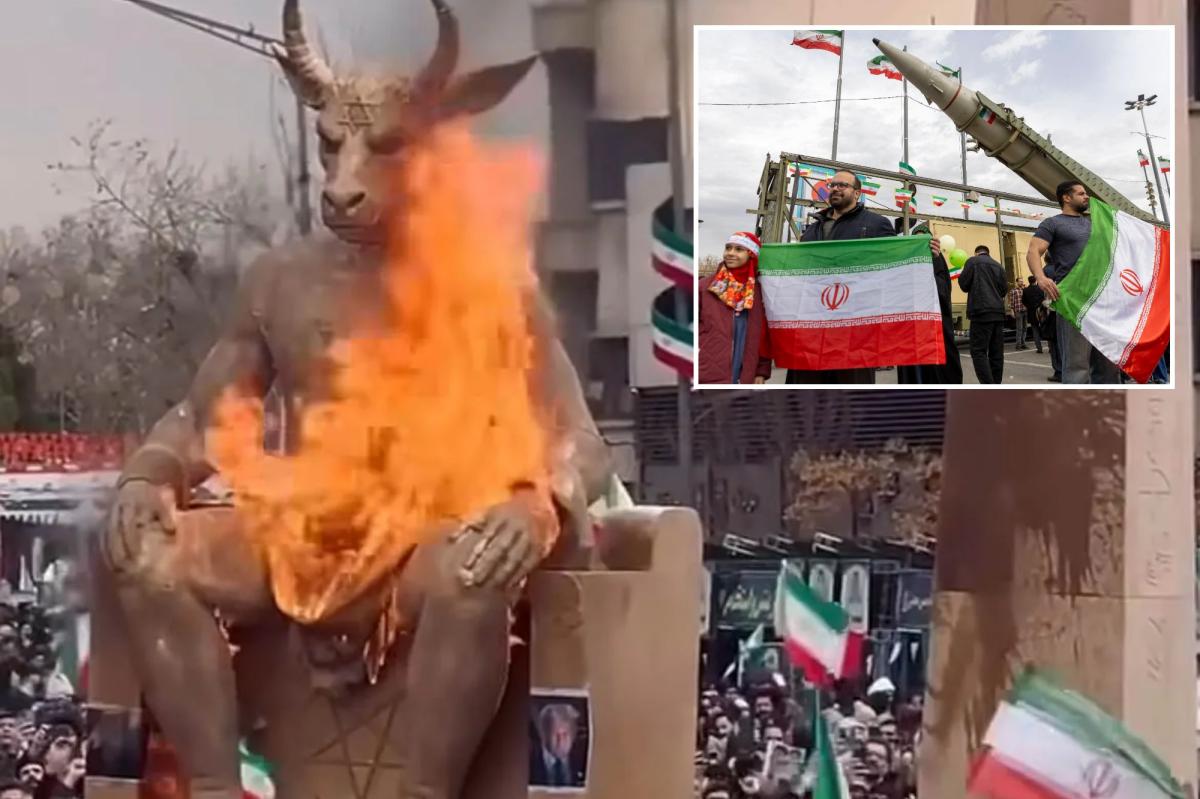
Iran has built up significant firepower over the last decade, including hypersonic missiles, thousands of cruise missiles and it manufactures Shahed drones, which have also been supplied to Russia for use on the battlefield.
While ongoing demonstrations from the “brave” Iranian people are heartening, the regime’s Islamic Revolutionary Guards and its attack dogs, the Basij voluntary militia, among others “will stick up with the regime.”
“They’re going to be as aggressive as possible with the Iranian people,” and the public doesn’t have “the weaponry or any way to stop the Revolutionary Guards from doing what they are doing,” he said.
The Revolutionary Guards “are so ideologically tied to Ayatollah Khamenei that I don’t see any split off from the regime itself.”
“The regime is taking the hardest stand it possibly can, but it has its back against the wall,” said Rosen, adding it’s “willing to play an aggressive role” if it sees military opportunities.
Knowing what he does about the regime and its determination, he hopes cooler heads prevail in the Trump administration rather than to wade into a war.
“I would hope the negotiation option will take place – that is lowering the nuclear situation, lowering the enrichment,” said Rosen.
The former hostage, who went on to a career in public affairs at various colleges and now travels the world advocating for the oppressed, added Iran’s post-revolutionary identity “was forged by resistance – against the United States, its sanctions and international isolation,” he said of the rogue state which has been living “under prolonged pressure, bred by a siege mentality.”
That maxim, according to Rosen is, “The world is against us, so survival depends on vigilance and unity.”
Rosen explained that psychology “justifies security dominance – the suppression of dissent in the name of preservation.”
Rosen had guns pointed to his head, was tied up, endured mock execution, was forbidden to speak for months and was forced to sign false admissions of being a spy as he was tormented at the hands of Iranian revolutionaries.
But he recognizes the regime treats its own citizens terribly too, and called on Americans to back everyday Iranians in their struggle against oppression.
“It is very disappointing for me to see that the American people are not supporting the Iranian people,” he said.
“The regime is so oppressive, and any progressive human being should be out there in the streets supporting the Iranian people.”