
Share this @internewscast.com
Foreign Minister Penny Wong has stated that the recent Iranian counterattacks, resulting in airspace closures, are expected to hinder the federal government’s efforts to arrange flights to bring Australians home from the Middle East.
Travel advisories have been issued for Australians, urging them to avoid several Middle Eastern nations such as Israel, Lebanon, Bahrain, Kuwait, Qatar, and the United Arab Emirates. This caution follows Iran’s retaliatory actions against US-Israeli offensives, which allegedly led to the death of Supreme Leader Ayatollah Ali Khamenei, though Iran has yet to confirm this report.
Iran launched missiles targeting key aviation hubs like Abu Dhabi, Dubai, and Doha. These cities are pivotal transit points for east-west flights and have seen an increase in American military presence prior to the strikes. Notably, Qatar hosts the largest US military base in the area.
A missile strike at Dubai International Airport on Sunday morning resulted in injuries to four individuals, causing significant disruption.
With airspaces shut down in regions including Qatar and the UAE, flight maps reveal a marked absence of aircraft over Iran, Iraq, Kuwait, Israel, and Bahrain since the attacks commenced.
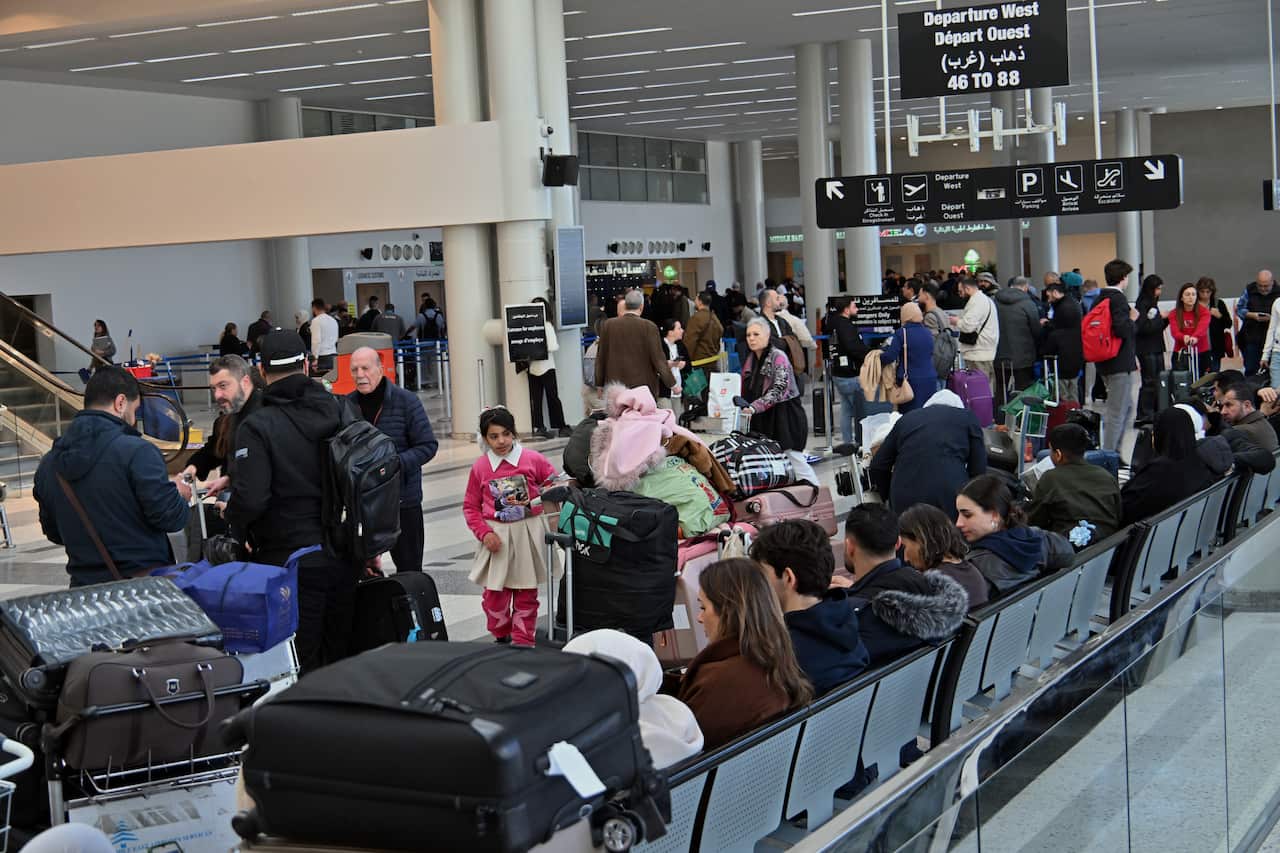
Wong noted that the government has previously assisted Australians abroad with repatriation efforts, illustrating a continued commitment to ensuring the safety and return of its citizens.
“The government’s very aware this is extremely distressing and concerning for the region, and particularly Australians in the region,” she told reporters in Adelaide on Sunday.
The minister said the government “will always” do what it can to support Australians, but added that airspaces were closed.
“Our focus is on the security and safety of Australians in the region. What I would also say is we do anticipate there being this being a difficult, difficult days ahead.
“Whatever information we have and that we are able to confirm, we will provide to Australians in the region as quickly as we can.”
Eric Schouten, head of aviation security advisory Dyami, told the Reuters news agency: “Passengers and airlines can expect airspace to be shut for quite some time.”
Flights in Australia to parts of the Middle East cancelled
A number of flights from Australia to the Middle East and Europe were cancelled amid the conflict.
Virgin Australia said four flights bound for Doha operated by Qatar Airways rerouted to Australia on Saturday night due to the closure of the Qatari airspace. These included flights from Sydney, Brisbane, Melbourne and Perth, which returned to various airports.
It also said seven flights were cancelled — including those arriving from Doha and others bound for the city.
“Guests scheduled to travel on Virgin Australia services between Australia and Doha in the coming days are advised to closely monitor their flight information and visit the Smartraveller website for the latest travel advice,” a Virgin Australia spokesperson told SBS News.
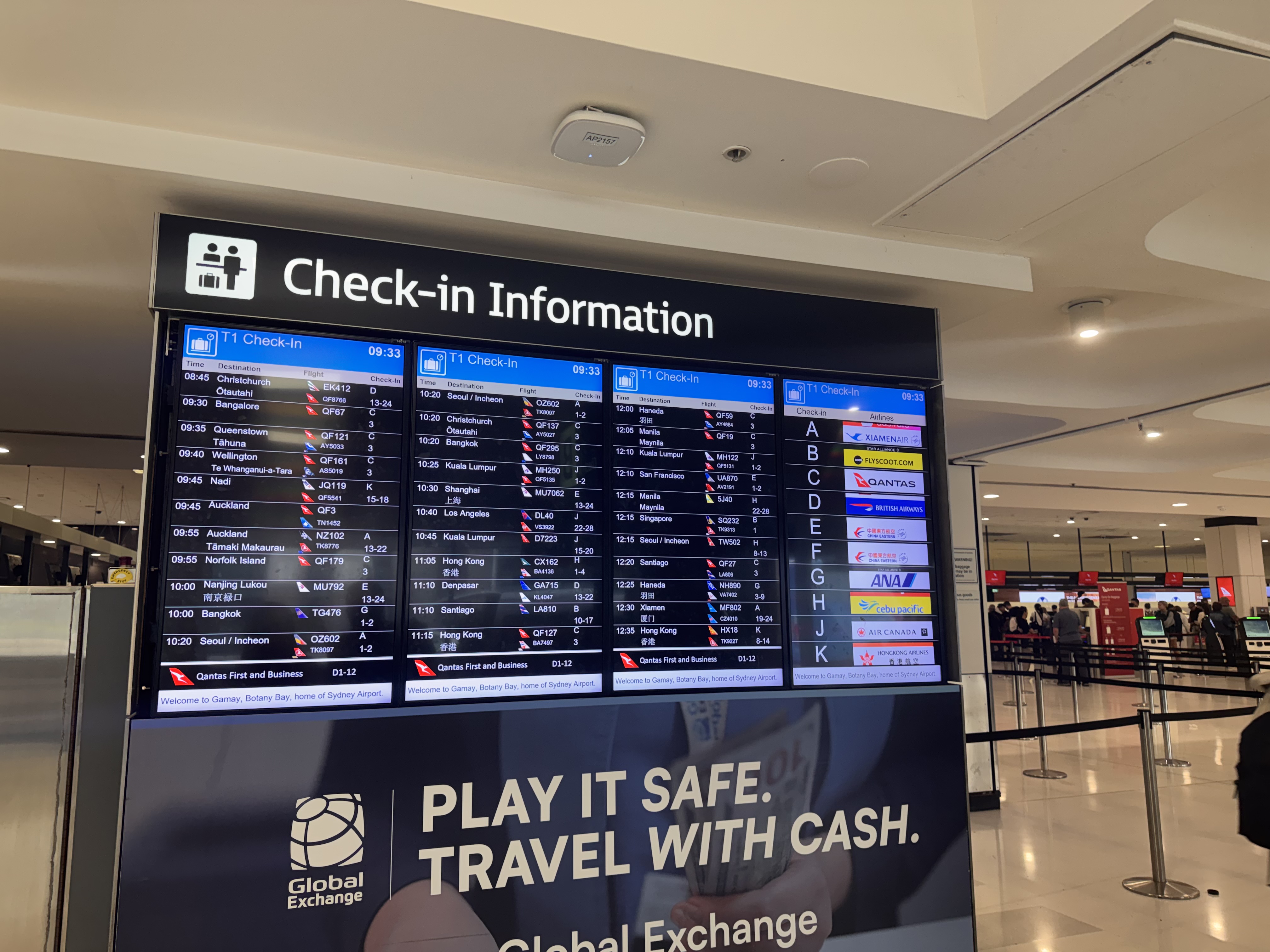
Qantas said it had not cancelled any of its flights to Europe at this stage. SBS News understands Qantas has a number of flight path options for flights to Europe.
The European Union’s aviation regulator EASA on Saturday recommended its airlines stay out of the airspace affected by the ongoing military intervention.
British Airways said it had cancelled flights to Tel Aviv, and Bahrain until 3 March, as well as Saturday’s flights to Amman.
Germany’s Lufthansa said it was suspending flights to and from Dubai on Saturday and Sunday and halting the Tel Aviv, Beirut and Oman routes until 7 March.
Air France and Iberia also cancelled flights to Tel Aviv and Beirut, while India put carriers on alert as Air India and IndiGo suspended services.
Hong Kong’s Cathay Pacific Airways operations in the region, affecting passenger flights to and from Dubai and Riyadh.
Qatar Airways and Kuwait Airways temporarily suspended flights, while Turkish Airlines also cancelled flights to several Middle Eastern destinations.
Qatar Airways said in a post on X that flight operations will resume at 1900 Doha time on Sunday (4am Monday, AEDT).
— With reporting by Reuters.
For the latest from SBS News, download our app and subscribe to our newsletter.