
PORTLAND, Maine — A private jet crash that claimed the lives of six people in Maine last January was the focus of a preliminary investigation report released Friday by the National Transportation Safety Board (NTSB). The report highlighted that the jet remained on the tarmac for an extended period after deicing in snowy conditions, which may have contributed to the tragedy.
According to Federal Aviation Administration (FAA) guidelines, the aircraft should have taken off within nine minutes of beginning deicing procedures. However, the NTSB’s findings revealed that it waited a total of 17 minutes before takeoff.
The cockpit voice recorder revealed the pilot mentioning that a wait time of 14 to 18 minutes was “standard” and that they would return for additional deicing if the delay exceeded 30 minutes. The copilot agreed with this assessment. Aviation safety consultant John Cox raised concerns, noting that the pilot’s comments suggested a potential misunderstanding of the FAA guidelines, which clearly indicated a shorter allowable wait time.
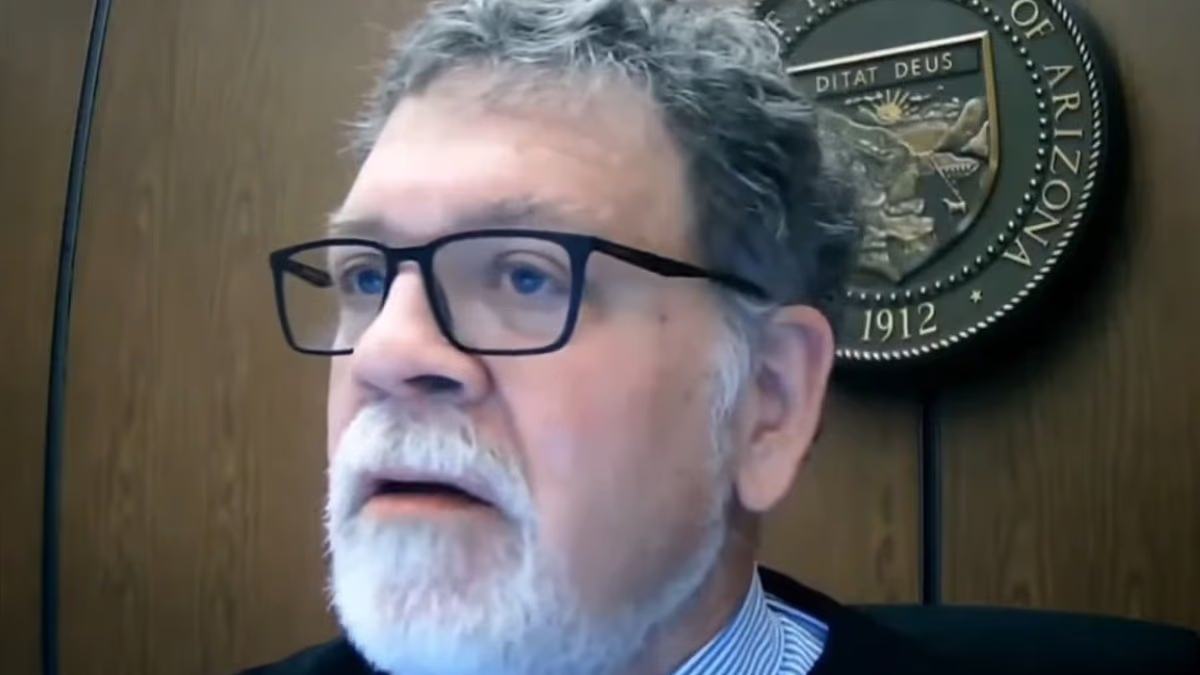
The preliminary report did not conclude the cause of the crash. A final report is expected next year. Former NTSB and FAA crash investigator Jeff Guzzetti remarked that the findings shed light on the incident’s circumstances.
“I am convinced that the loss of control during liftoff, accompanied by an aerodynamic stall warning and sudden rightward banking, was probably due to ice and snow accumulation on the right wing,” Guzzetti stated.
“There is no doubt in my mind that the loss of control at liftoff – which was accompanied by an aerodynamic stall warning and sudden right bank – was likely due to snow and ice contamination on the right wing,” Guzzetti said.
He said the pilots’ comments about how long they could wait before getting a second deicing treatment raise questions about how much experience the Texas-based crew had with flying in cold weather. The NTSB will examine that as well as the procedures the airport used in the deicing process, the quality of the chemicals applied, and every other factor that could have contributed to the crash.
Deicing guidelines designed to keep planes safe
The FAA guidelines on how long a plane can wait before taking off are an estimate of how long the deicing treatment will keep the wings free of ice, which is crucial to allowing it to fly. Regulations dictate that pilots should never take off with ice on their wings because countless crashes have been caused by ice buildup.
The deicing process includes treating a plane with two different chemicals. The first one is designed to remove any ice from the plane. The second chemical helps prevent ice from accumulating again. The FAA calculates the recommended holdover time from the start of the application of the second anti-icing chemical, which happened at 7:27 p.m., before this crash. The plane didn’t try to take off until 7:44 p.m.
The plane actually sat at the deicing pad for almost five minutes after it was treated while it restarted its engines. And even after it reached the runway, it sat for almost four more minutes before the pilots told the tower they were ready to take off.
“We know this much. The airplane exceeded the holdover time chart,” said Cox, who is the CEO of Safety Operating Systems and a former airline pilot.
A snowy stopover on the way to Europe
The luxury Bombardier Challenger 600 jet that was owned by a Texas law firm had stopped in Bangor to refuel en route to Paris amid light snow, mild winds, and near-zero temperatures as a massive storm began to reach Bangor. Another plane had just aborted takeoff, radioing to the tower that they chose not to fly because visibility wasn’t great and they would need another application of deicing fluid.
The snow would eventually accumulate to about 9.5 inches, but it was only beginning at the time of the crash. Investigators, who were initially hampered by the extreme weather conditions, recovered the cockpit voice and data recorders for analysis.
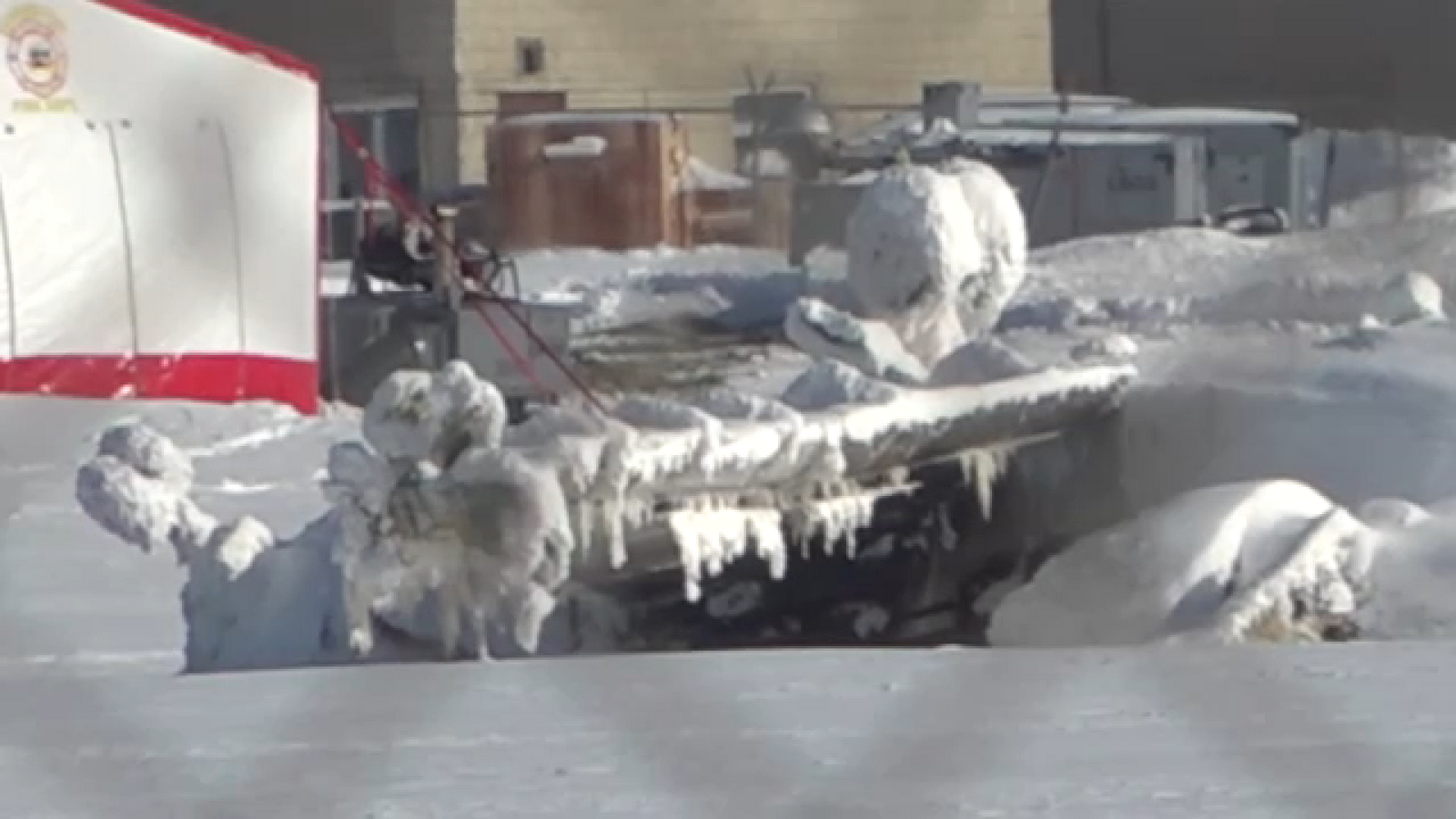
After it crashed, the plane landed upside down on the runway and burst into flames. The airport remained closed for several days afterward.
“There were multiple airport CCTV cameras that captured the airplane during the takeoff,” the report states. “Several of these cameras showed the airplane impact the ground, followed by multiple explosions as the impact sequence progressed.”
Two previous icing crashes involving this plane model
More than two decades ago, there were two other fatal crashes involving ice buildup on a Bombardier Challenger 600 like this one in Birmingham, England, and Montrose, Colorado. There have been several other incidents involving this plane model where icing contributed to an unexpected roll on takeoff in cold weather, but pilots were able to recover in those cases.
The FAA subsequently published new rules to make it clear to pilots and airports that even a small amount of frost on the wings can be a problem. The agency also clarified the deicing standards to ensure that all frozen particles are removed from the wings, and it required a combination of tactile and visual inspections.
Bombardier was also required to add a cold-weather operations warning to the plane’s flight manual, but more than 1,000 of these Challenger 600s have been delivered, and the planemaker said they are designed to be safe.
The four passengers and two pilots had stopped to refuel in Bangor on Jan. 25 as they traveled from Houston to France. The passengers included Houston lawyer Tara Arnold, 46, and three people who worked for her luxury travel company.
The other victims were event planner Shawna Collins, 53, of Houston; chef Nick Mastrascusa, 43, and sommelier Shelby Kuyawa, 34, both of Hawaii; and pilots Jacob Hosmer, 47, of Pearland, Texas, and Jorden Reidel, 33, of Texas.
The international airport in Bangor, about 235 miles north of Boston and 130 miles north of Portland, is one of the closest in the U.S. to Europe and is often used to refuel private jets flying overseas. The Bombardier was headed for the Champagne region of France when it crashed.
Copyright © 2026 by The Associated Press. All Rights Reserved.