“Imagine Mojtaba Khamenei as an intensified version of his father.”
This is how Kasra Aarabi, who leads research on the Islamic Revolutionary Guard Corps at the advocacy organization United Against Nuclear Iran, characterized Iran’s newly appointed supreme leader. Aarabi shared these insights with Fox News Digital after reports emerged that Ayatollah Ali Khamenei’s son would assume leadership of the Islamic Republic.
“Mojtaba has been functioning as a sort of ‘junior supreme leader’ within the Bayt-e Rahbari — his father’s office, which serves as the regime’s central power hub,” Aarabi explained.
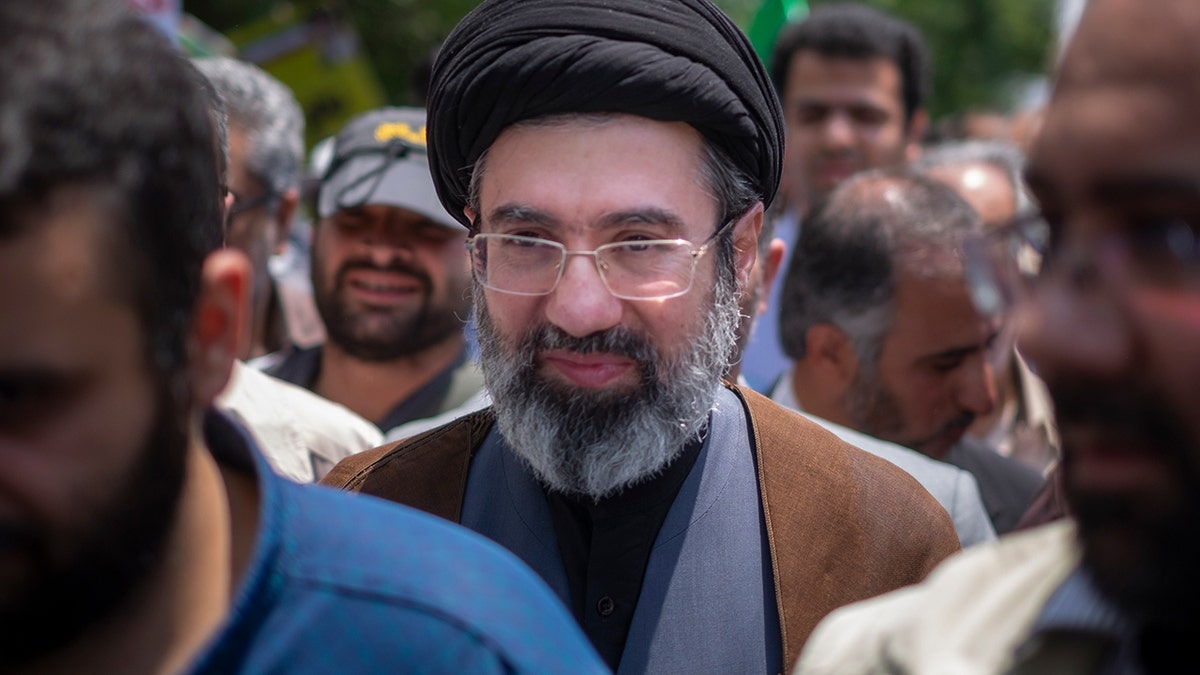
An archival image shows Mojtaba Khamenei, the son of Iran’s late Supreme Leader Ayatollah Ali Khamenei, participating in a demonstration to commemorate Jerusalem Day in Tehran. (Morteza Nikoubazl/NurPhoto via Getty Images)
“His father established the Bayt as a vast, clandestine power structure aimed at ensuring stability in case of his demise — and Mojtaba’s appointment is a continuation of that strategy,” Aarabi stated.
Former President Donald Trump also weighed in on Mojtaba Khamenei’s ascension. In a conversation with the New York Post, Trump expressed dissatisfaction with the younger Khamenei stepping into his father’s shoes to lead Iran’s theocratic regime but remained tight-lipped about potential U.S. actions. “Not going to tell you,” Trump replied when questioned about his approach towards the new supreme leader. “I’m not happy with him.”
Foundation for Defense of Democracies CEO Mark Dubowitz said Mojtaba’s appointment is unlikely to moderate Iran’s behavior.
“It’s unlikely Mojtaba Khamenei’s selection as supreme leader will change much,” Dubowitz told Fox News Digital. “As President Trump said, ‘he’s not going to last long’ — and judging by the president’s track record, he means it. Israel has already put a target on Mojtaba’s back. By elevating this brutal, corrupt, and incompetent figure, the regime shows contempt for its own people, which should strengthen their resolve to overthrow the Islamic Republic.
“Under Mojtaba, Iran is likely to be as dangerous to the world as it was under his father. That’s why this war must continue until the regime is stripped of its deadly capabilities,” he said.
An Iranian source with knowledge of the leadership transition told Fox News Digital that earlier speculation Mojtaba might pursue reforms now appears unlikely given the circumstances surrounding his appointment.
“Previously there were whispers suggesting that if Mojtaba were to become the leader, he might introduce reforms that would both open up the domestic political space and bring a more interactive approach to foreign policy,” the source said.
“However, now this possibility seems very weak.”
Mojtaba was chosen “amid disputes, controversies, and pressure from the IRGC,” according to the source, meaning he “owes his appointment to their support and therefore cannot act against their wishes.”
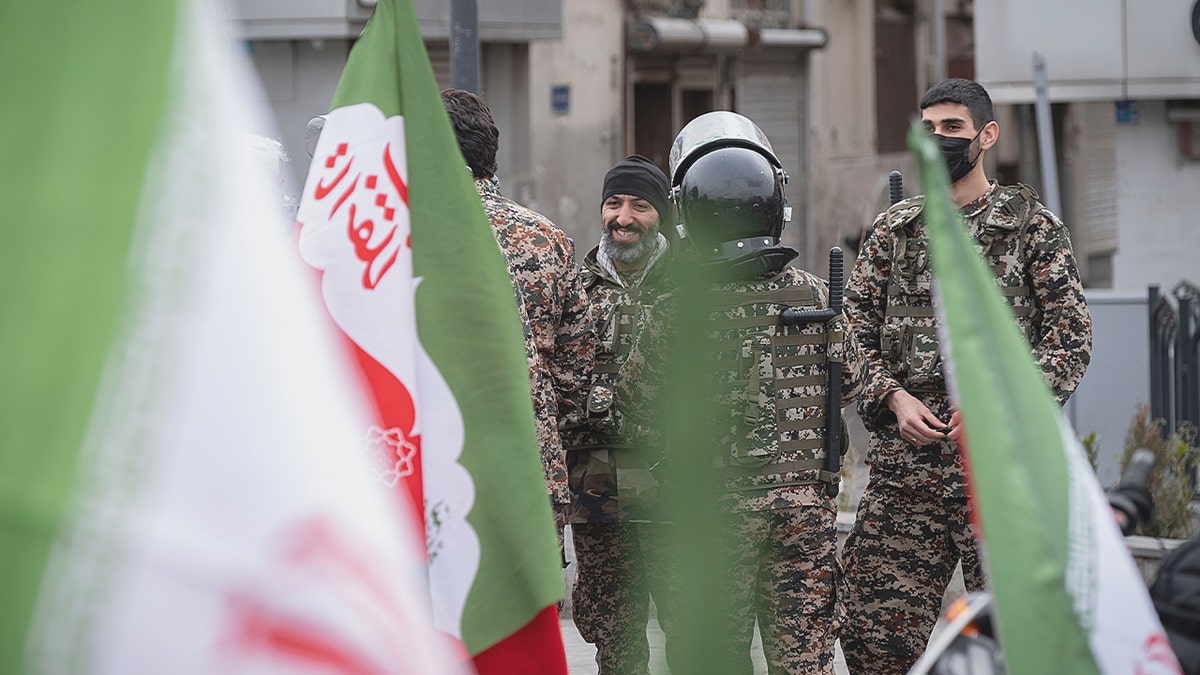
Military members of the Islamic Revolutionary Guard Corps (IRGC) in western Tehran, Iran (Morteza Nikoubazl/NurPhoto via Getty Images)
Built inside Iran’s security state
Mojtaba Khamenei, 56, has spent decades building influence inside the power structures surrounding Iran’s supreme leader.
Born in 1969 in Mashhad, he pursued clerical studies in Tehran, Iran, after the 1979 Islamic Revolution that brought his father to prominence. Over time, however, analysts say his influence developed less through traditional clerical authority and more through Iran’s security institutions.
In 2019, the United States sanctioned Mojtaba under Executive Order 13867. The U.S. Treasury Department said he had been “representing the supreme leader in an official capacity despite never being elected or appointed to a government position aside from work in the office of his father.”
Behnam Ben Taleblu, senior director of the Foundation for Defense of Democracies’ Iran Program, said Mojtaba’s background reflects a broader shift inside the Islamic Republic.
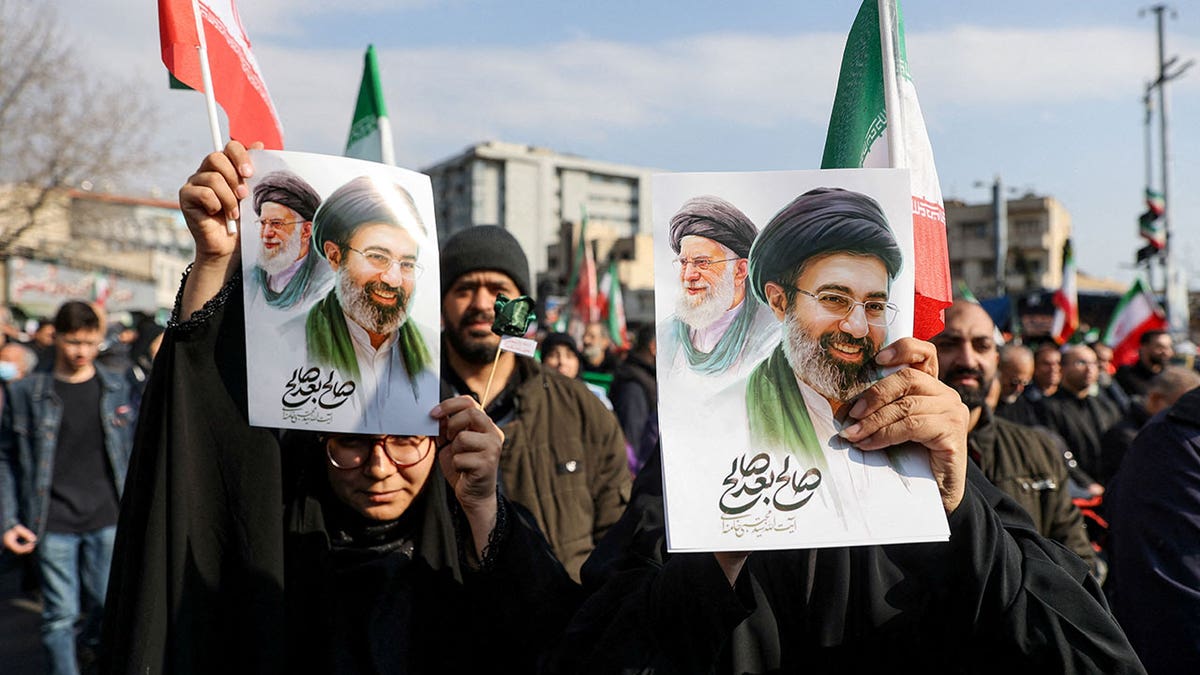
People hold placards with an image of Iran’s new supreme leader Mojtaba Khamenei with late Iranian Supreme Leader Ayatollah Ali Khamenei, during a gathering to support Mojtaba Khamenei, amid the U.S.-Israeli conflict with Iran, in Tehran, Iran, March 9, 2026. (Majid Asgaripour/WANA (West Asia News Agency) Via Reuters)
“Despite donning a turban, Mojtaba is the product of the regime’s national security deep state,” Ben Taleblu told Fox News Digital. “Expect him to work with and through the IRGC to keep his hold on power.”
Aarabi said Mojtaba has spent years consolidating influence behind the scenes.
“His past tells us he enjoys micromanaging every aspect of authority to satisfy his thirst for power,” Aarabi said, describing how Mojtaba allegedly relocated IRGC command centers to his office during protests, engineered election outcomes and installed loyalists across state institutions.
Since 2019, Aarabi added, Mojtaba has also been implementing what he described as his father’s effort to “purify” the regime by promoting ideological loyalists across the political system.
“Mojtaba is a deeply antisemitic, anti-American, and anti-Western ideologue,” Aarabi said. “He has personally been involved in repression in Iran and terror plots abroad.”
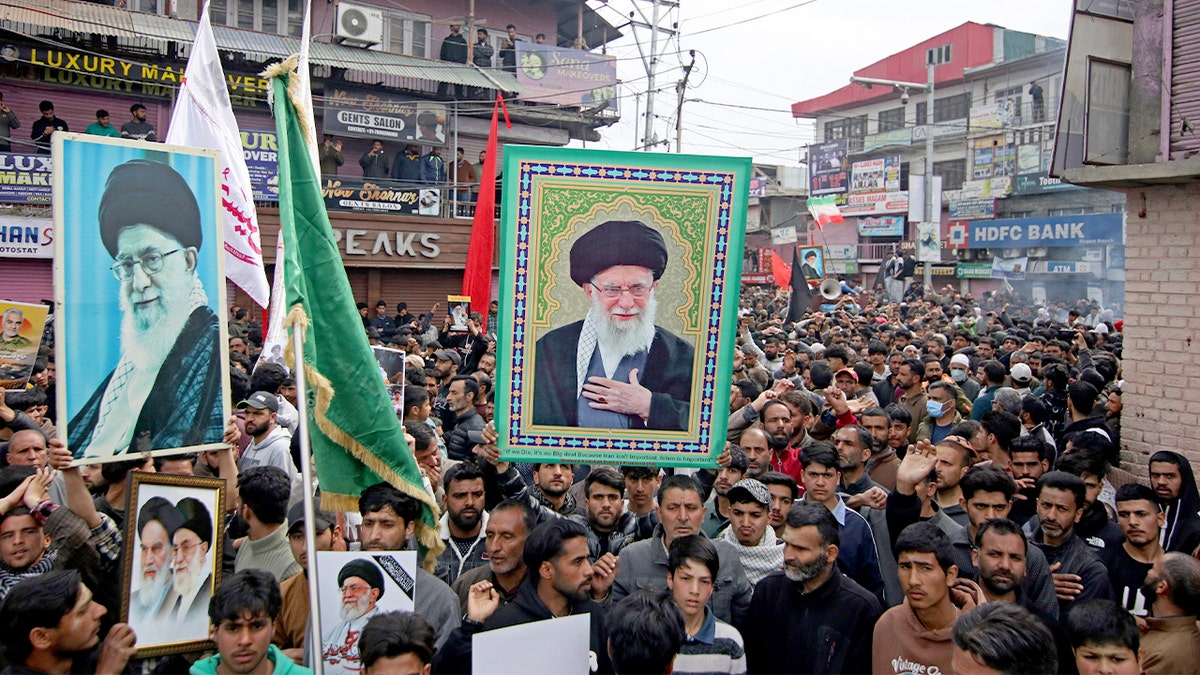
Kashmiri Shiite Muslims carry pictures of Iran’s Supreme Leader Ayatollah Ali Khamenei as they march in a protest rally on the fourth day of mourning in Magam, Jammu and Kashmir, on March 4, 2026. (Faisal Khan/Anadolu/Getty Images)
Analysts see harder line ahead
Analysts say Mojtaba’s rise may further strengthen the role of Iran’s security institutions.
“The rise of the younger Khamenei expedites trendlines seen in Iranian politics and national security for years,” Ben Taleblu said. “From one Khamenei to another, things in Iran can be expected to go from bad to worse if this regime survives.”
“And like the elder Khamenei, corruption runs in the family,” he added.
Ben Taleblu warned that the regime may also escalate tensions externally as a survival strategy.
“The regime knows it is weak, but believes it can extract a price and widen a crisis in order to survive,” he said.
For opposition groups inside Iran, the leadership transition signals continuity rather than reform.
“He’s the son of Khamenei and they have same ideology and they same strategy and they try to continue the same policy,” said Khalid Azizi, spokesperson for the Kurdistan Democratic Party of Iran.
“So far it’s very difficult to say what he will be done and is he going to have a different policy? I don’t expect this.”
The Iranian source who spoke with Fox News Digital said that while engagement with the United States and the West is theoretically possible in the future, the chances remain slim.

On March 1, 2026, in Sana’a, Yemen. pro-Iran protesters brandish billboards depicting the Iranian Supreme Leader Ali Hosseini Khamenei, flags of Yemen and Iran, weapons, and chant slogans at a rally held to condemn the U.S.-Israel aerial attacks on Iran and the killing of Khamenei and several military officials. (Mohammed Hamoud/Getty Images)
“As I mentioned,” the source said, “this possibility is very weak.”
“In short,” Aarabi said, “Mojtaba is his father on steroids. He’s certainly no MBS.”