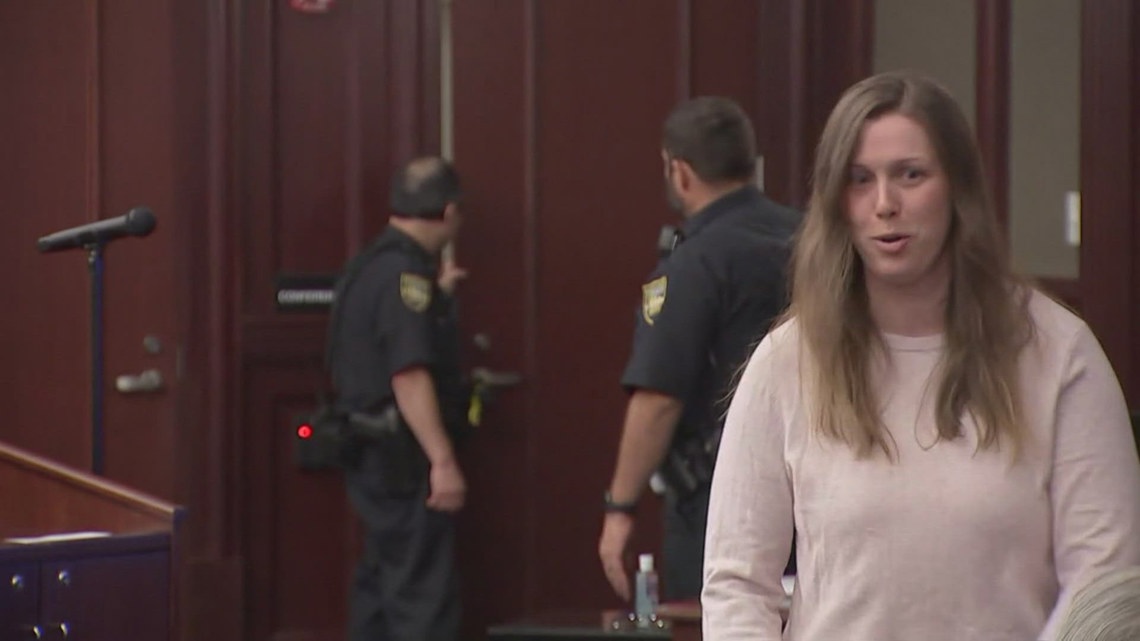

In a significant legal maneuver, Shanna Gardner’s defense team has moved to challenge the legality of wiretap evidence used against her. Filed in Duval County court on Wednesday, the motion contends that the authorization of wiretaps in 2023 violated Gardner’s constitutional protections.
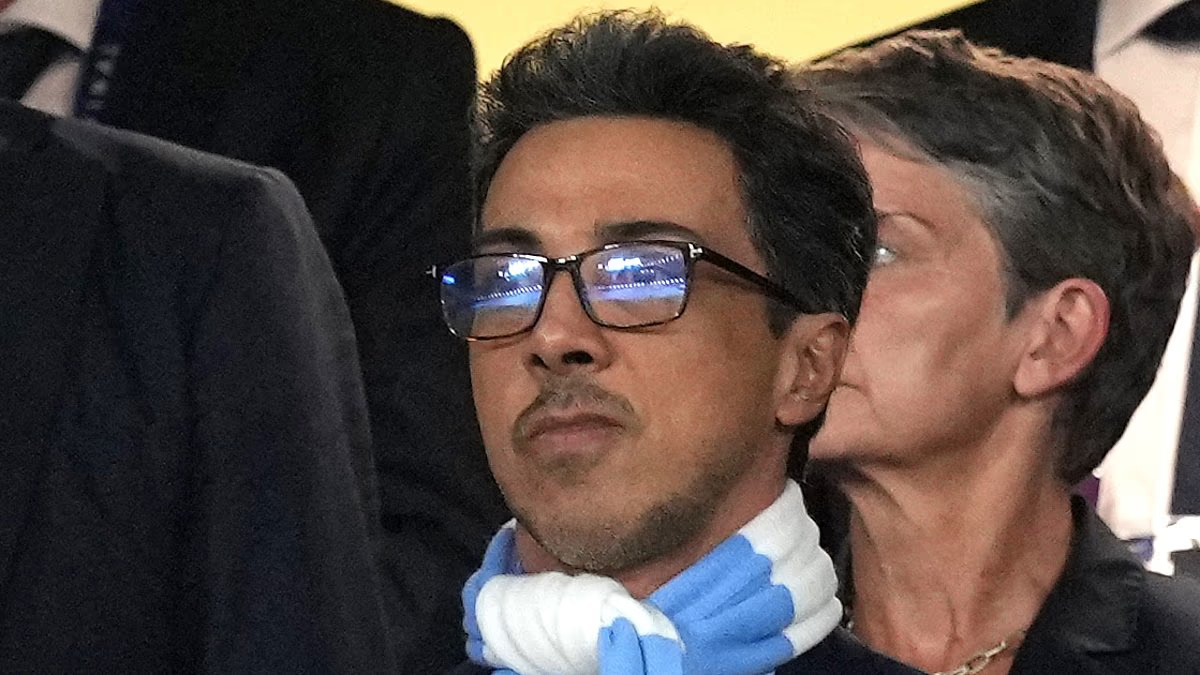
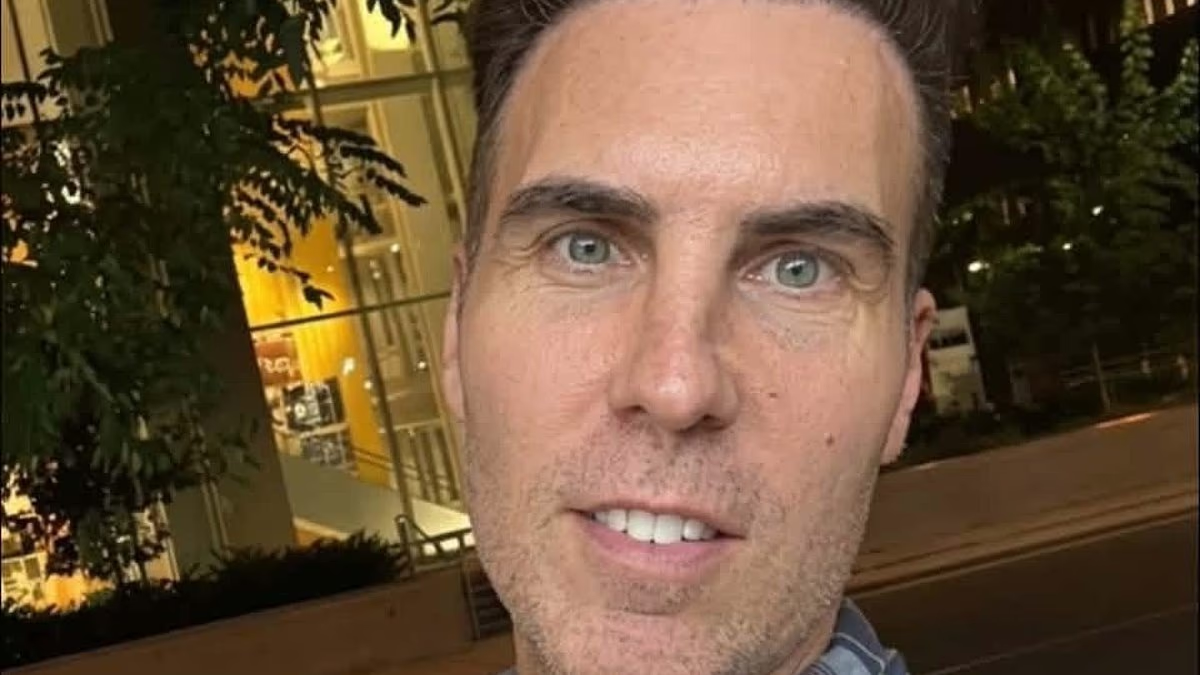
Gardner, who stands accused in the high-profile 2022 murder case of Jared Bridegan, faces multiple charges including first-degree murder and conspiracy. Prosecutors allege that she collaborated with her husband, Mario Fernandez-Saldana, to orchestrate Bridegan’s killing by hiring Henry Tenon, who reportedly carried out the fatal shooting on February 16, 2022.

This story continues below.
The defense’s motion seeks to suppress the evidence gathered from wiretaps on Gardner’s cellphone, her Apple Watch, and her sister’s phone, arguing that the surveillance lacked the necessary probable cause. This challenge is rooted in claims that the wiretaps breached Gardner’s Fourth and 14th Amendment rights, protections against unreasonable searches and the right to due process, respectively.
Attorney Patrick Korody, representing Gardner, asserts that the affidavits presented by Detective Christopher Johns from Jacksonville Beach did not meet the legal standard required to justify the wiretaps. As a result, the evidence obtained should be considered inadmissible.
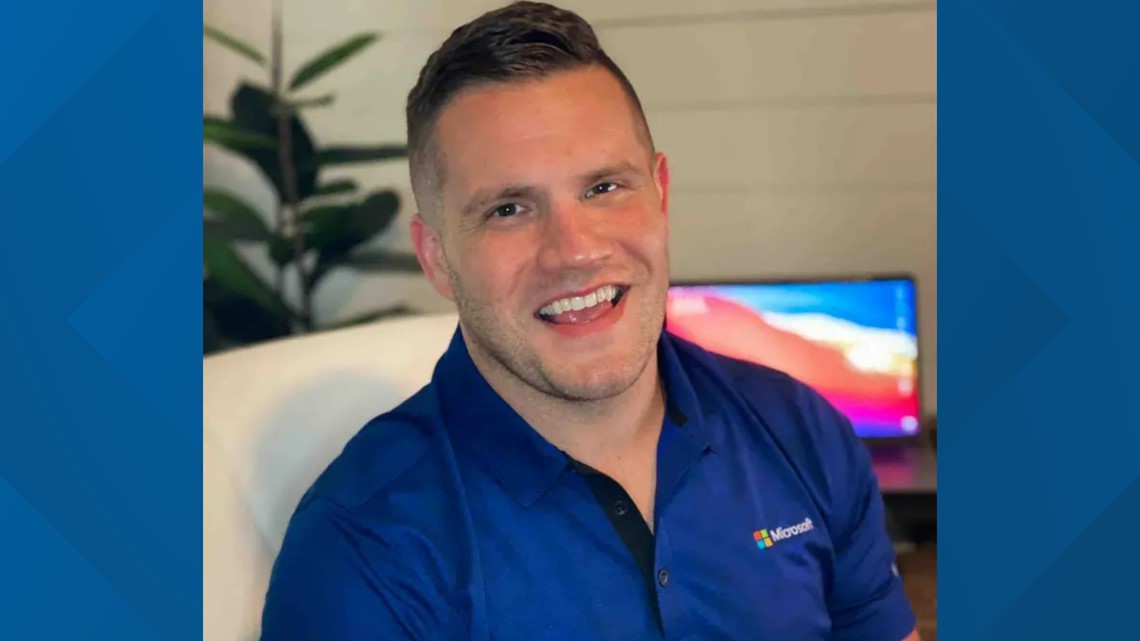
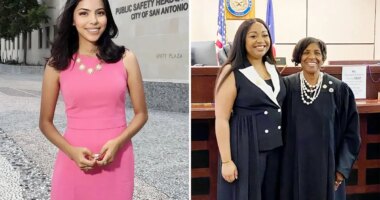
The wiretaps were authorized by Judge Meredith Charbula on January 21, 2023, targeting four individuals including Gardner and Fernandez-Saldana. Specifically, Gardner’s cellphone and Apple Watch were under scrutiny, as law enforcement sought to gather crucial evidence in the case.
Adding another layer of complexity to the case, Henry Tenon, initially admitting to the shooting, later retracted his guilty plea in early 2026, opting instead to plead not guilty. This development could further influence the court’s considerations surrounding the evidence and charges.
January Wiretap: Gardner’s Phone and Apple Watch
Judge Meredith Charbula authorized the first wiretap on Jan. 21, 2023, targeting four individuals including Gardner, Fernandez-Saldana, and two of his associates. Two of Gardner’s devices were specifically targeted: her cell phone and her Apple Watch.
Korody argues in the motion that the probable cause affidavit supporting the January wiretap was heavily focused on other suspects, including surveillance footage of a pickup truck linked to Tenon near the scene of the killing, cell phone and Google location data showing alleged “practice runs,” controlled calls between associates, and a Google search by one subject for a 10mm pistol — the same type of firearm used in the shooting.
By contrast, the motion argues the affidavit offered scant evidence against Gardner herself. What little was presented, the defense says, amounted to evidence of her relationship to Bridegan and Fernandez-Saldana, an alleged motive rooted in a years-old dispute, three checks written to Tenon that were signed by Fernandez-Saldana, and phone activity with her own husband, her attorney, and a crisis management firm she had retained.
The motion said the affidavit alleged no surveillance footage, location data, controlled calls, or incriminating statements linking Gardner directly to the crime.
February Wiretap: Sister’s Cell Phone
A second wiretap, authorized Feb. 3, 2023, targeted a cell phone registered to Gardner’s sister, identified in the motion only as S.H. The supporting affidavit leaned heavily on communications intercepted through the January wiretap, which the defense argues were themselves unlawfully obtained.
According to the motion, the January wiretap had intercepted conversations between Gardner and a friend, identified as K.J., in which they discussed various theories about the case and the arrest of Tenon — none of which, the defense notes, implicated Gardner in the murder. Investigators also intercepted a conversation in which Gardner expressed concern that her calls were being recorded and mentioned plans to use a different phone. Based on a subsequent call in which Gardner and K.J. discussed that S.H. would be visiting, law enforcement concluded Gardner would use her sister’s phone to discuss the case.
The defense called that reasoning deeply flawed, arguing that S.H. maintaining a relationship with her own brother-in-law, Fernandez-Saldana, is hardly grounds for suspicion, and that a detective’s subjective interpretation of the “tone and pace” of a phone call cannot substitute for actual probable cause. The motion also notes that the affidavit presented no evidence of a prior communication history between S.H. and the other parties, undermining the detective’s central inference.
The motion further argues that because the February wiretap was based largely on evidence gathered through what they say was an unlawful January wiretap, both sets of intercepted communications must be suppressed under Florida law. The motion also notes that Judge Charbula failed to notify Gardner within the legally required 90-day window that her communications had been intercepted.
Gardner’s attorneys are asking the court to suppress all evidence obtained from both wiretaps.
Fernandez-Saldana, 37, and Gardner, 39, are each charged with first-degree murder, conspiracy to commit murder, solicitation to commit a capital felony and child abuse in Bridegan’s murder. Tenon, 65, is charged with first-degree murder, child abuse, possession of a firearm by a convicted felon, conspiracy to commit murder and accessory after the fact.
As it now stands, Fernandez-Saladana’s trial will begin Aug. 17, with jury selection slated for Aug. 10, while Gardner’s trial will begin Sept. 8, with jury selection set to start Aug. 31.