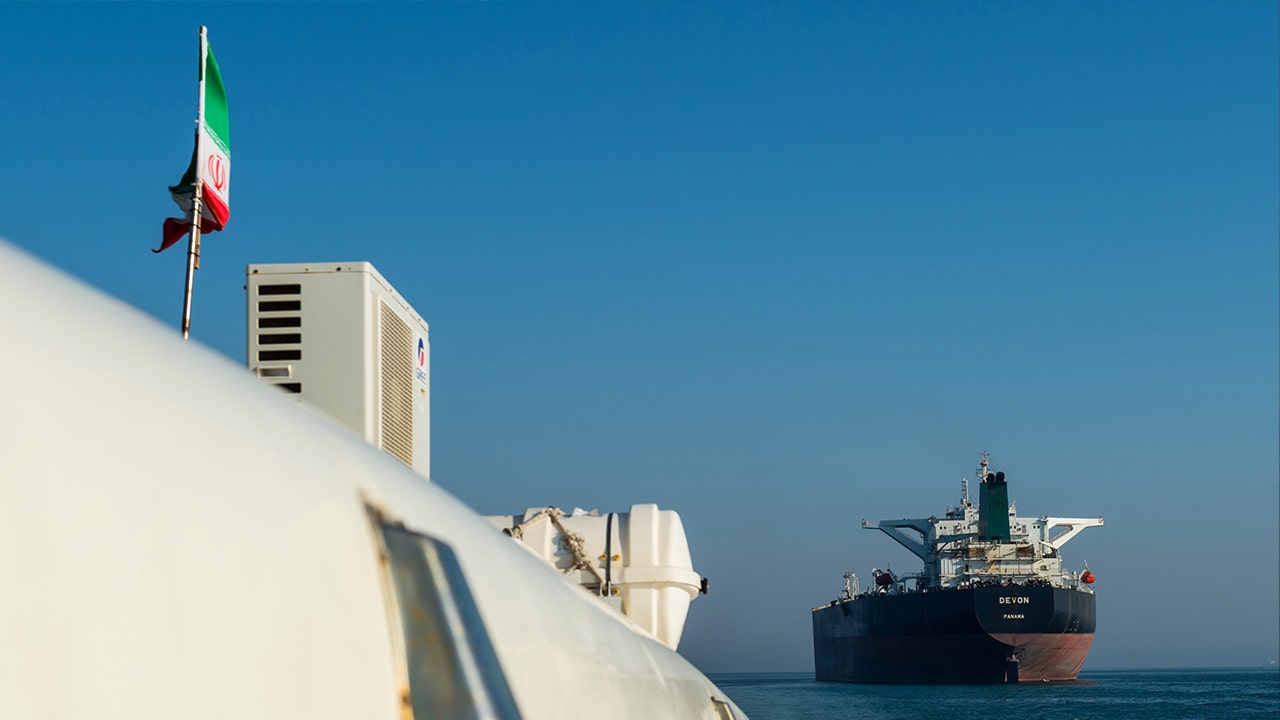

The U.S. Treasury’s Office of Foreign Assets Control (OFAC) announced on Friday a new wave of sanctions targeting a prominent Chinese oil refinery and numerous vessels linked to Iran’s so-called “shadow fleet.” This move marks an intensified effort to disrupt Tehran’s primary revenue stream.
In an official statement, it was revealed that the sanctions are aimed at Hengli Petrochemical, a major purchaser of Iranian oil. The actions also extend to a network of shipping firms and tankers that play a crucial role in funneling billions of dollars’ worth of petroleum products to international markets.
The Treasury Department described these “shadow fleet” vessels as a vital source of financial support for Iran’s “unstable regime,” highlighting their significance in sustaining the country’s economy.
This initiative is part of the larger Economic Fury campaign, which seeks to pressure Iran’s financial system by curtailing its ability to export oil. According to the U.S., such revenues bolster Iran’s military efforts and contribute to destabilizing activities throughout the Middle East.
“Economic Fury is effectively tightening the financial noose on the Iranian regime, reducing its aggressive actions in the Middle East and aiding in the restriction of its nuclear ambitions,” stated Treasury Secretary Scott Bessent.
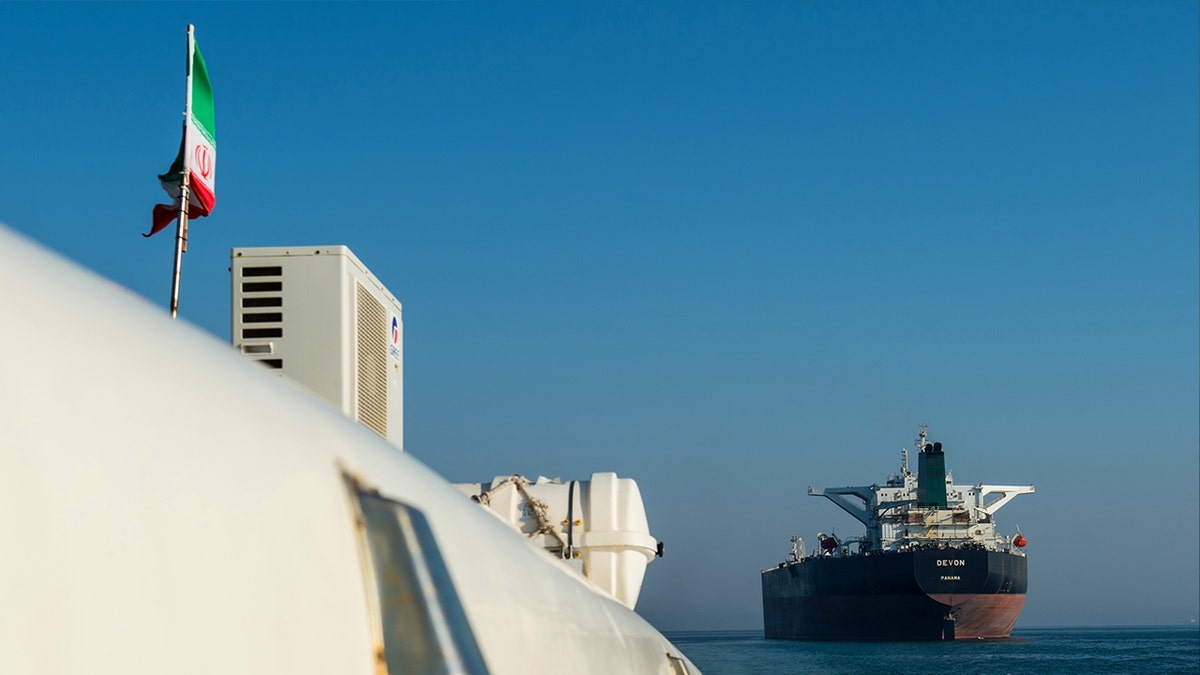
An oil tanker is seen anchored near the terminal at Kharg Island, Iran, as U.S. officials and analysts deliberate whether taking control of the island could significantly disrupt Iran’s oil exports. (Ali Mohammadi/Bloomberg via Getty Images)
Hengli Petrochemical (Dalian) Refinery Co. is a China-based “teapot” refinery, a term used for independent facilities known for purchasing discounted crude, including from sanctioned countries.
The refinery, one of China’s largest independent facilities, has received Iranian oil cargoes from sanctioned shadow fleet vessels since at least 2023. Hengli has also purchased oil tied to Iran’s armed forces, generating hundreds of millions of dollars for the Iranian military.
Hengli has also received shipments tied to Sepehr Energy Jahan Nama Pars Company, a firm identified by U.S. officials as a front for Iran’s armed forces that helps facilitate oil sales abroad.
The company operates on behalf of Iran’s Armed Forces General Staff, using a network of intermediaries and vessels to move sanctioned crude, with proceeds helping fund the country’s military programs and regional proxy groups.
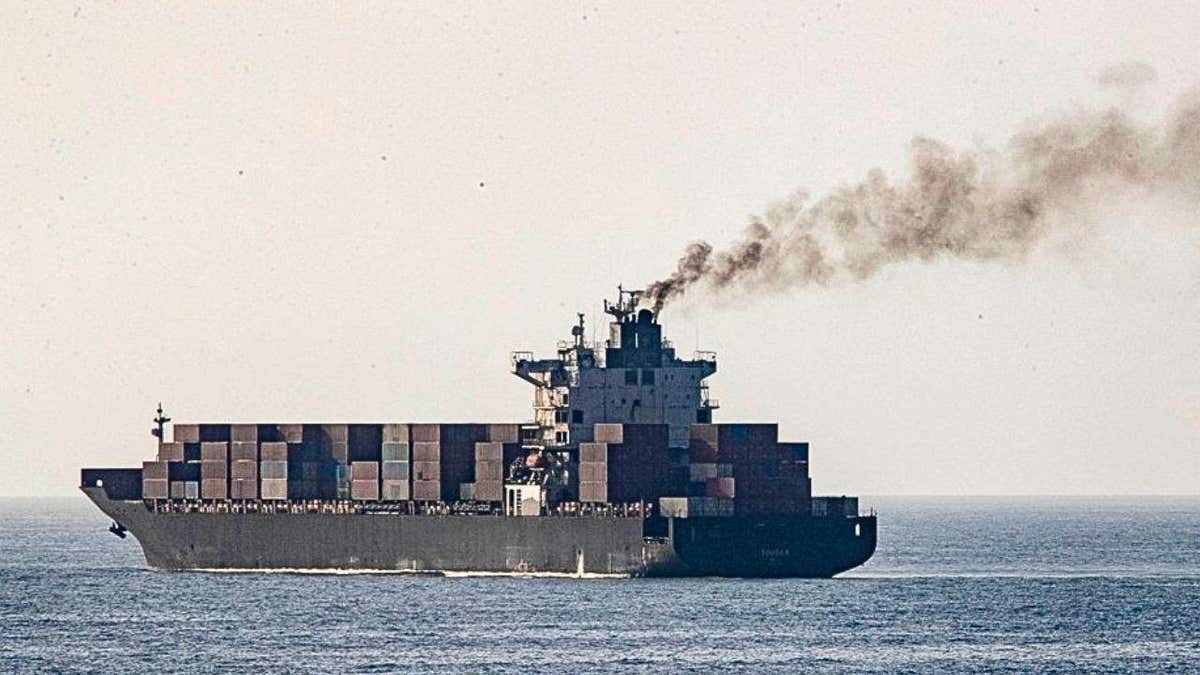
The Iranian-flagged Touska cargo ship after U.S. forces launched missiles at its control room after its violation of the U.S. blockade in the Strait of Hormuz April 20, 2026. (U.S. Central Command )
The new sanctions also target the network that makes these oil sales possible, a “shadow fleet” of aging tankers and shell companies that move petroleum across global markets while evading sanctions and obscuring the origin of shipments.
These ships avoid detection by transferring cargo from one tanker to another in the open ocean. Treasury officials said 19 vessels were targeted in the action.
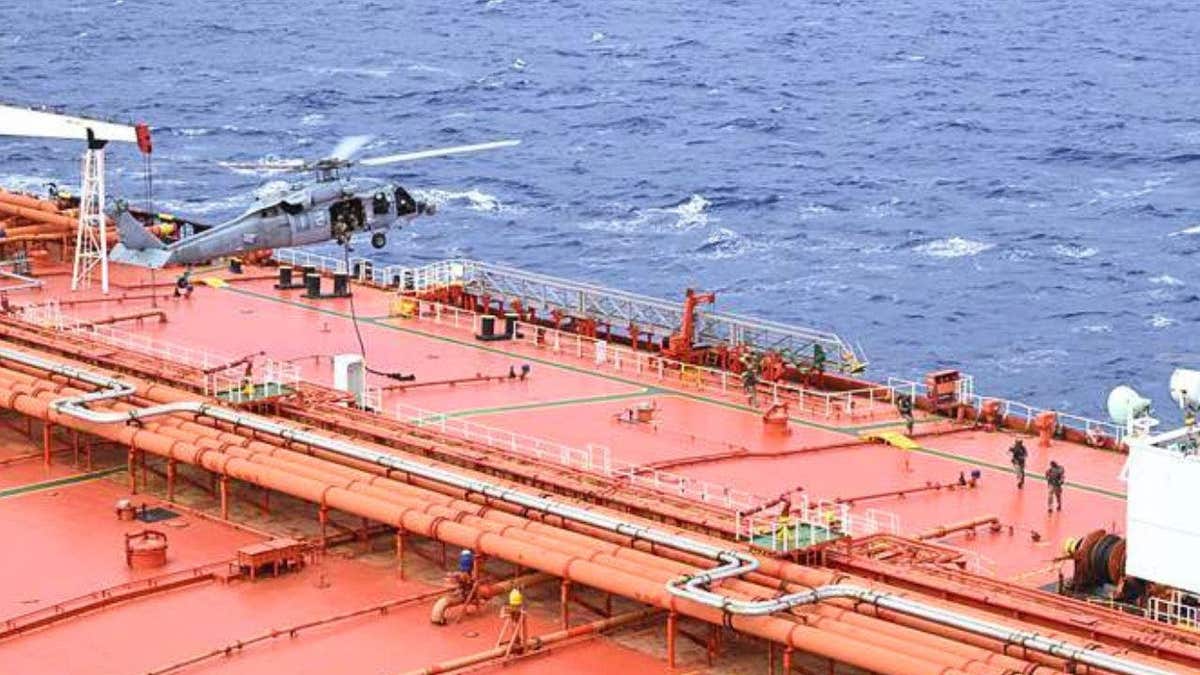
A U.S. military helicopter hovers over the sanctioned stateless crude oil tanker M/T Tifani during an interdiction April 21, 2026. (Department of War)
The move is part of the Trump administration’s renewed “maximum pressure” campaign against Iran, aimed at cutting off the regime’s primary source of revenue through oil exports and sanctions enforcement.
U.S. officials say oil exports remain the backbone of Iran’s economy, and efforts to restrict those flows are designed to limit the government’s ability to fund its military, support proxy groups and advance its nuclear program.
Treasury officials warned that additional sanctions are likely as the U.S. continues targeting the networks, intermediaries and buyers that enable Iran to move oil on the global market.