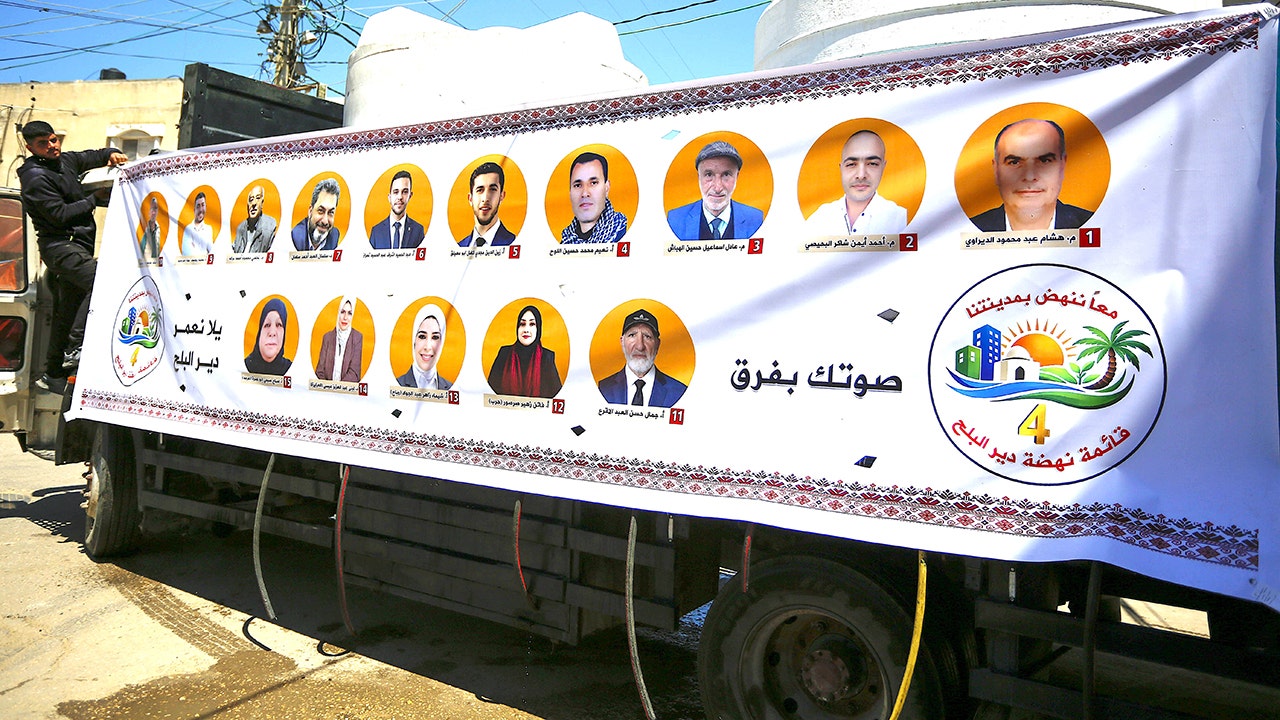

This Saturday marks a significant event for the people of Deir al-Balah in Gaza as they head to the polls to select new local leaders, an occurrence that hasn’t happened in two decades. However, experts caution that this electoral process might inadvertently provide Hamas with an opportunity to solidify its influence, as the group remains defiant against ceasefire disarmament agreements.
Jonathan Schanzer, Executive Director of the Foundation for Defense of Democracies, shared his insights with Fox News Digital, expressing concern over the timing of these elections. He remarked, “When elections are held in the Palestinian Authority under uncertain circumstances, it often results in Hamas victories.”
Reflecting on past political events, Schanzer pointed to the 2006 elections. He noted that the Bush administration’s push for democratic elections led to a Hamas victory, which subsequently escalated into a standoff and eventually civil war.
“Exercise caution when organizing elections in regions like Gaza,” Schanzer advised, “where Hamas exerts considerable control and terrorist organizations still hold legitimacy in the eyes of many.”
The challenges extend beyond political maneuvering, as Gazan journalists and media professionals are often retrospectively identified as affiliates of terrorist groups. This complicates efforts to distinguish between civilian and militant elements.
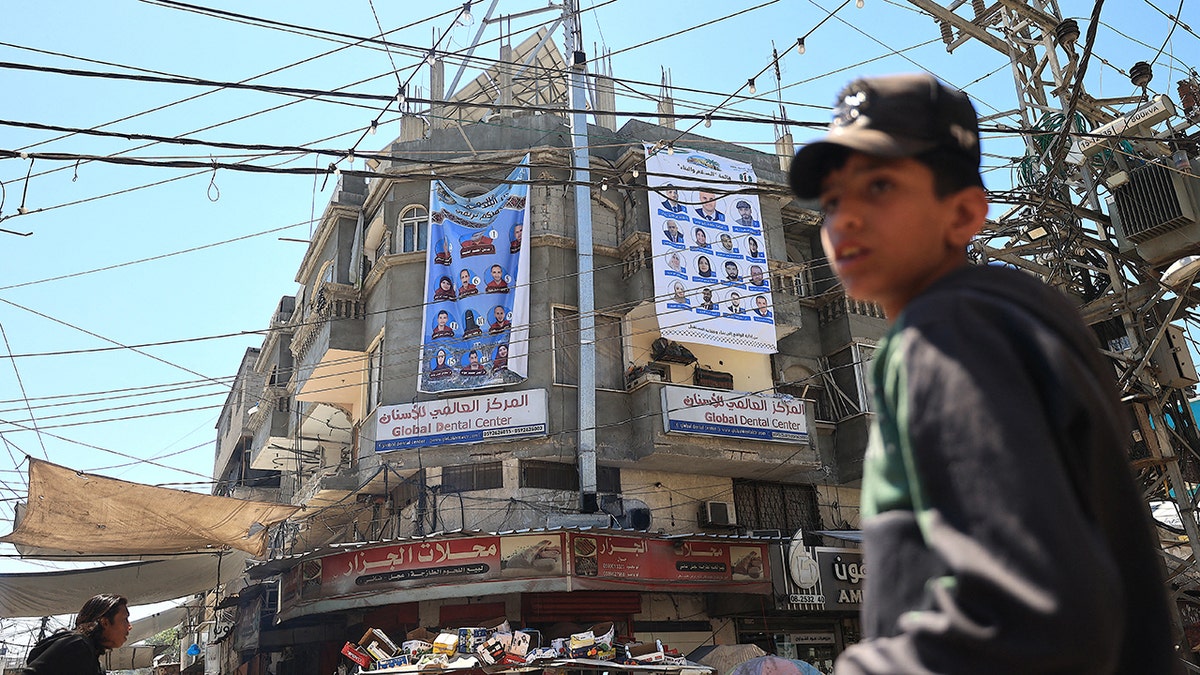
As anticipation builds, election campaign banners displaying candidates’ images are prominently displayed on buildings in Deir al-Balah, capturing the community’s attention as they approach this pivotal moment. (Photo credit: Eyad Baba/AFP via Getty Images)
Four parties are contesting the election in Deir al-Balah. To be eligible, candidates were asked to accept the Palestine Liberation Organization and the terms of agreements it has previously made, including recognition of the State of Israel and endorsement of a two-state solution, according to reporting by the Center for Peace Communications.
However, many are concerned that one party, Deir al-Balah Unites Us, is affiliated with Hamas. Two of its candidates have been pictured with Hamas officials or police officers.
Ahmed Fouad Alkhatib, resident senior fellow at the Atlantic Council, posted on X that “holding elections in Gaza at this time is extremely reckless and irresponsible,” noting that “Gazans are being arrested, jailed, tortured, shot, and killed daily for social media posts and anything they say that’s perceived as being critical of Hamas.
“These elections should be halted and prevented from proceeding, for they are meddling with the transition process that the Board of Peace, [National Council for the Administration of Gaza], and the international community have planned for Gaza, with Hamas’s disarmament and relinquishment of power being the first necessary step.”
Disarmament of Hamas, a key demand within the second phase of President Donald Trump’s ceasefire agreement, has yet to be completed. Reports indicate that Hamas has increased its hold in Gaza as of March, continuing to tax locals, building education system and placing police throughout the territory it holds.
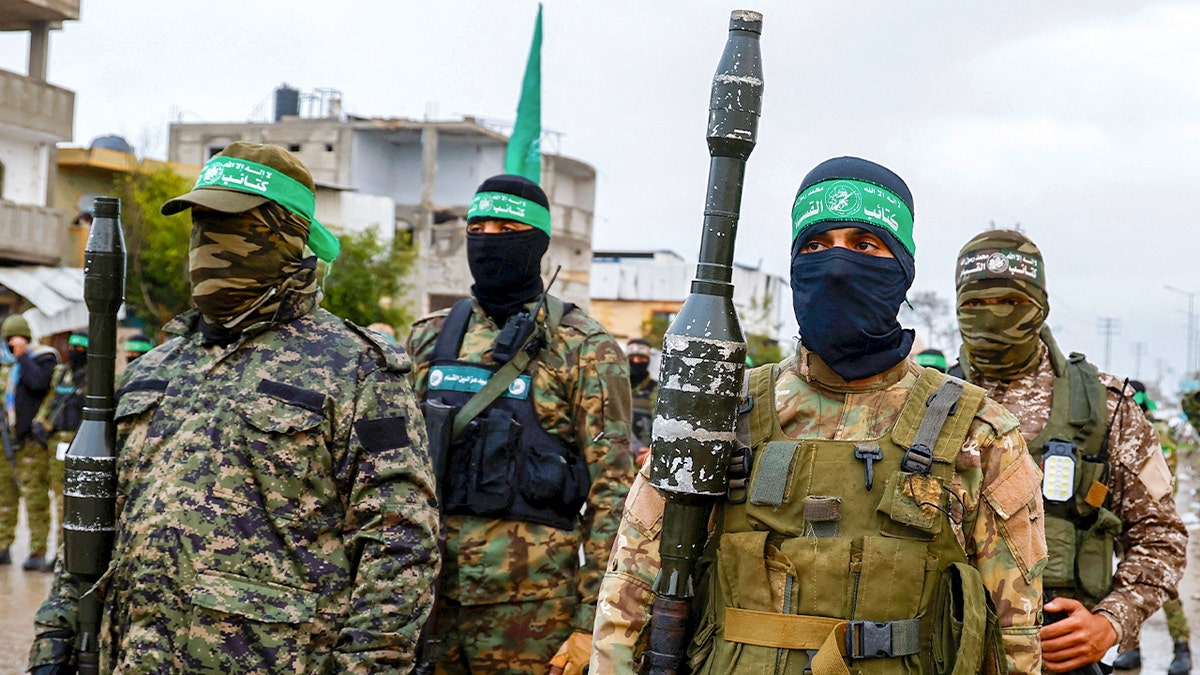
Hamas terrorists stand guard in Rafah in the southern Gaza Strip Feb. 22, 2025, during the handover of hostages as part of a ceasefire and hostage-prisoner swap deal with Israel. (Hatem Khaled/Reuters)
Schanzer said Hamas is unlikely to hand over its arms. If it were to do so, he said that they “will try to make distinctions between weapons,” possibly offering to give up heavy weapons like RPGs while maintaining a large arsenal of automatic weapons.
Hamas appears to have made a partial disarmament offer. The New York Times reported April 19 that two Hamas officials said they would hand over thousands of weapons from their police force and other security institutions. The officials “did not provide a clear answer” when asked if weapons from Hamas’ so-called military wing would be included.
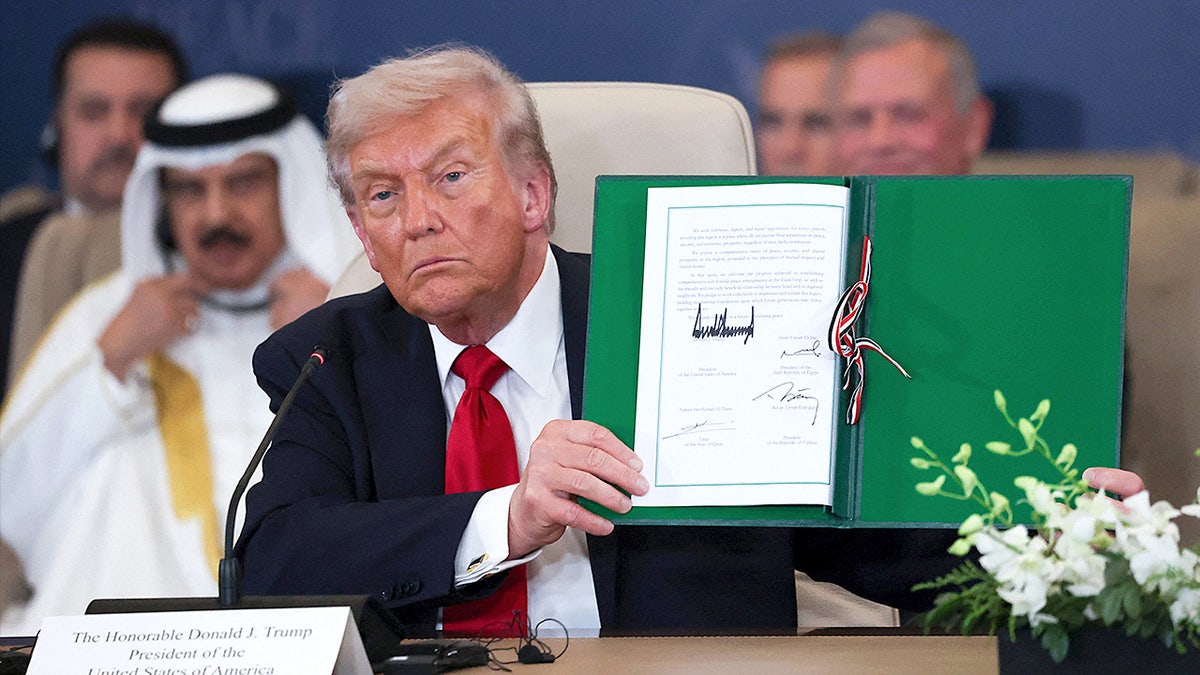
President Donald Trump holds up a signed agreement during a world leaders summit focused on ending the Gaza war in Sharm el-Sheikh, Egypt, on Oct. 13. (Suzanne Plunkett/Getty Images)
Schanzer pushed back on claims that Hamas’ political and military wings operate separately.
“That is a fiction. The idea that they are separate in any way or that there is a firewall between them is asinine.” He said that this is “a distinction that has been made up by the West in order to be able to have political relations with Hamas, or to justify elections. It’s a mistake to buy into that fiction.”
Schanzer said weakening Iran could be key to minimizing Hamas’ influence.
“The psychological impact of their top patron being defeated on the battlefield, I can’t overstate how important that event could be,” he said. “It would be a gut punch to Hamas.”
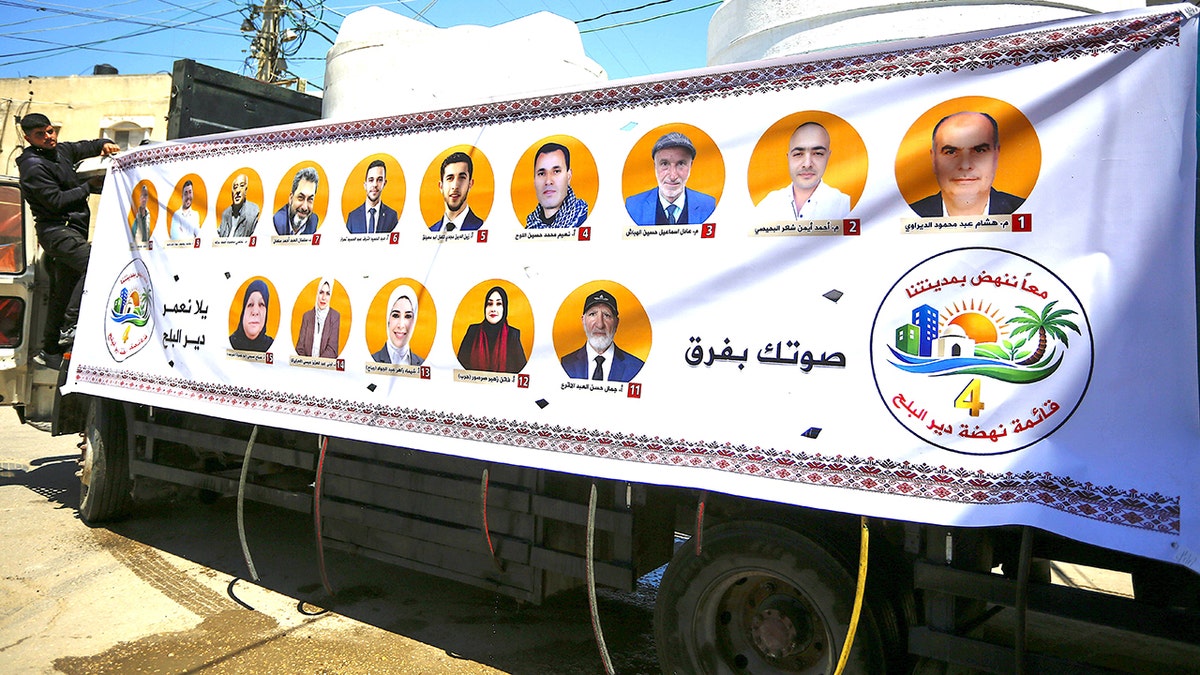
An election campaign starts in the city of Deir al-Balah, Gaza on April 12, 2026, as part of the local elections scheduled for April 25. (Mohammed Eslayeh/Anadolu via Getty Images)
With Israel controlling about 53% of the Gaza Strip and Hamas the remaining 47%, Schanzer said, “We could continue to see the erosion of Hamas control” amid the “slow and steady process of Israel winning on the ground.”
He said patience, though, is necessary, adding that “the enemies of the United States and Israel and the West have a very different timeline. They want to wait out everybody because they know that we’d like to move on.”
The Trump administration did not respond to Fox News Digital’s questions about whether a partial disarmament would satisfy its ceasefire terms or if it would take action to stall elections until there’s more stability in Gaza


